
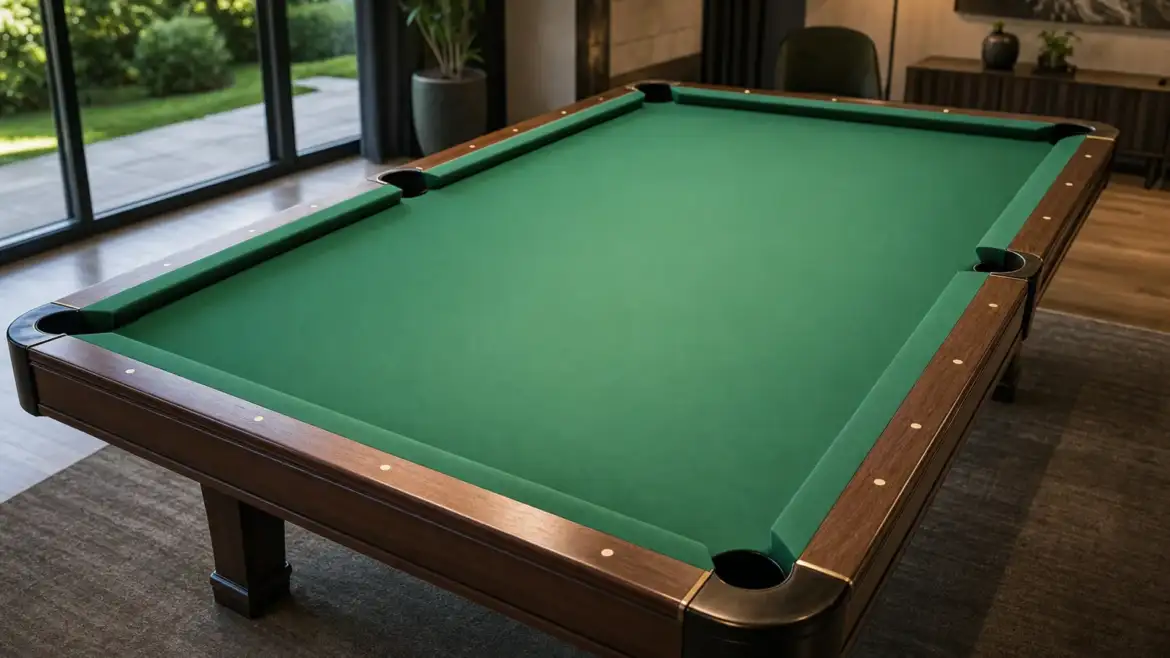
Playing pool at a tournament level demands far more than a standard recreational table. The difference between a casual home table and a tournament-grade setup lies in precision, consistency, and attention to countless small details that compound into a true competitive playing surface. Understanding what tournament setup requires helps homeowners and venue operators make informed decisions about their equipment.
The Foundation: Slate Quality and Thickness
Tournament play begins with slate. Not all slate is equal. Tournament tables use slate that is at least one inch thick, typically one and one-quarter inches or thicker. The slate must be quarried and milled to exacting standards, with a flatness tolerance of no more than one-eighth inch across the entire 9-foot playing surface.
The slate’s thickness matters because thinner slate flexes under the weight of the balls and cue impact, compromising consistency. Championship tables use heavy, rigid slate that maintains perfect flatness year after year. When slate is properly installed and supported, it creates the stable foundation that tournament play requires.
Seams between slate sections demand professional attention. Two or more pieces of slate must be perfectly flush where they meet. Even a hairline gap or slight step between seams affects ball roll and player confidence. Professional technicians use grinding equipment and specialized techniques to ensure seams are seamless and level across their entire length.
Leveling: The Critical Precision Step
A tournament table must be level to within one-quarter inch per nine feet of play. This is not casual leveling. This is precision work that requires specialized equipment and deep knowledge of how tables settle and shift over time.
Leveling involves placing the table on adjustable leg systems, using precision levels and often laser equipment, then fine-tuning the height of each leg until the entire surface meets tournament standards. The process accounts for floor conditions, humidity, temperature changes, and the table’s age and construction.
Many people think leveling happens once during initial setup. In reality, tournament tables require periodic releveling. Seasonal humidity changes, minor floor settling, and the cumulative impact of play can all shift a table slightly over months or years. Professional maintenance includes regular releveling checks to maintain that critical tournament tolerance.
Cloth Selection and Installation
Tournament play uses specific grades of billiard cloth. The cloth must have consistent nap, uniform ball response, and durability to withstand professional play without pilling or fading. Most tournament venues use worsted wool blends or all-worsted cloth in colors approved by competitive billiards organizations, typically dark green, blue, or burgundy.
Cloth installation matters as much as the cloth itself. It must be stretched perfectly tight, with no wrinkles or soft spots. The cloth on the rails must be wrapped smoothly around the rail cushions and secured with no visible creases or gaps. Professional cloth installation takes skill and experience to ensure the playing surface responds consistently everywhere on the table.
The cloth height at the rail edge is also critical. It must be consistent around the entire table. If the cloth sits too low on one rail or too high on another, the ball response changes, affecting both cushion rebound and the feel of bank shots. Tournament-grade installation brings everything into alignment.
Cushion and Bumper Performance
Cushions are the rails that border the playing surface. Tournament tables use cushions engineered to exacting specifications for rebound consistency. The cushion rubber compound, thickness, and curve angle all affect how balls respond when they hit the rails.
Tournament cushions typically return a ball at a predictable angle with consistent velocity. A worn, mismatched, or improperly installed cushion creates dead spots where the ball absorbs energy unevenly. Tournament play cannot tolerate this inconsistency.
Bumpers, the protective rails at the corners and sides, must be securely fastened and properly aligned. They should not rattle, shift, or absorb impact in ways that affect adjacent cushion performance. Professional installation and periodic inspection ensure cushions and bumpers function as a unified system.
Pocket Configuration and Sizing
Tournament pockets follow strict dimensional requirements. The pocket opening, angle, and depth must allow smooth ball entry while maintaining the challenge and strategy of the game. Standard pocket width at the opening is 4.625 to 4.875 inches for tournament play. This precision seems minor until you consider that an off-spec pocket either traps balls that should drop or rejects balls that should go in.
Pocket wear happens over time. The wooden pocket rails and rubber cushions at pocket openings gradually compress and deform from ball impact. Tournament venues must maintain or replace pockets periodically to preserve correct dimensions and consistent play.
The Setup and Disassembly Process
When a tournament table is first installed or moved to a new location, the setup process involves many steps beyond simply placing the table in the room. This includes base assembly, slate positioning and seaming, felt installation, rail and pocket assembly, leveling, and final play testing.
DFW Billiard Professionals provides professional pool table setup and disassembly services that handle these requirements for both residential and commercial installations. The process demands precision tools, technical knowledge, and experience with championship-level equipment.
Ongoing Maintenance and Inspection
Tournament-grade tables require ongoing care to maintain their condition. Regular maintenance includes brushing the cloth to remove dust and chalk, inspecting cushions for wear or damage, checking for level drift, and looking for signs of slate cracking or moisture damage.
Seasonal changes in humidity can affect cloth response and table stability, particularly in North Texas where temperature and moisture fluctuate significantly. Professional tables may need minor adjustments twice yearly, especially before major events or heavy tournament play.
Commercial venues and serious enthusiasts understand that tournament-grade setup is an investment in consistency and longevity. The precision required at the start determines how well the table will perform over years of play. When your table is used for competitive play or you simply want the best possible playing experience, tournament-grade setup and maintenance is the standard that matters.
If you own a tournament table or are planning to purchase one, working with experienced table mechanics ensures your investment delivers the performance and playability you expect. DFW Billiard Professionals has the expertise, equipment, and attention to detail required for championship-level billiard table setup and maintenance throughout the Dallas-Fort Worth region.