
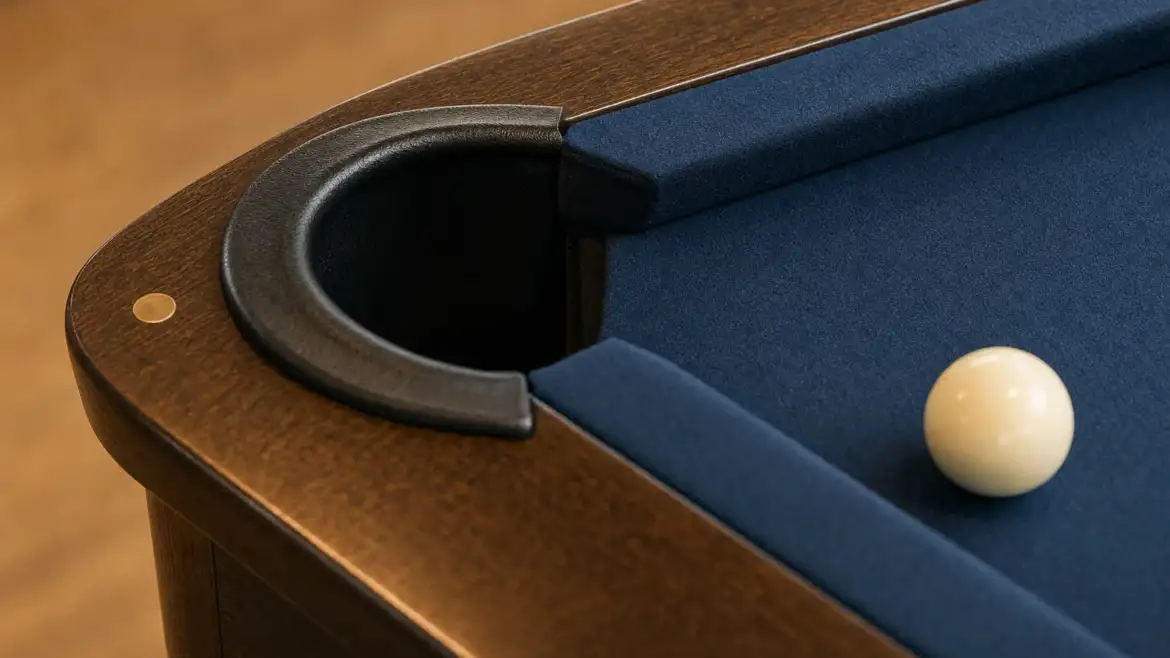
Your pool table’s pockets are far more than simple openings. They’re precision components that directly affect playability, and when they start to wear or fail, they can ruin your game experience. Whether you’re dealing with a loose pocket, torn leather, or a complete pocket replacement need, understanding what’s involved helps you make smart decisions about repair versus replacement.
Understanding Your Pool Table Pockets
Pool table pockets consist of several parts working together. The pocket opening is typically rimmed with leather or rubber, the interior may be lined with netting or a smooth surface, and the pocket bag beneath catches balls during play. The frame holding everything in place is usually screwed or glued to the table slate or wood rails.
When any of these components fail, it affects the table’s performance. Worn pockets can cause balls to bounce unexpectedly or fail to drop cleanly. Loose pockets create gaps where balls can escape, and torn leather allows moisture and debris to enter the mechanism. Since pockets see constant impact from balls and cues, wear and damage are inevitable over time.
Common Signs Your Pockets Need Repair or Replacement
You don’t need to guess whether your pockets are failing. Watch for these clear indicators:
- Torn, frayed, or missing leather around the pocket opening
- Loose pockets that shift or rattle when you bump the table
- Balls bouncing out unexpectedly or failing to drop cleanly
- Visible gaps between the pocket and the rail or slate
- Cracked or splintered wood around the pocket frame
- Sagging or deteriorated pocket bags that no longer catch balls properly
- Staining or odor from moisture trapped inside the pockets
If you notice any of these, professional inspection is your next step. Some issues can be repaired without full replacement, while others require removing and reinstalling the entire pocket assembly.
Pocket Repair vs. Replacement
Not every pocket problem requires a complete replacement. DFW Billiard Professionals can assess your situation and recommend the most cost-effective solution.
Repair is typically suitable for:
- Worn or torn leather that can be recovered or patched
- Loose pockets that need re-securing with screws or adhesive
- Minor damage to the pocket bag that can be patched or replaced without removing the pocket frame
- Moisture damage that requires drying and resealing rather than full replacement
Replacement is necessary when:
- The pocket frame is cracked, warped, or structurally compromised
- Multiple components are damaged simultaneously
- The pocket opening no longer aligns properly with the table rails
- Repair costs approach or exceed the cost of replacement
- The table is undergoing comprehensive restoration work
Your professional technician will examine the pocket construction, material quality, and overall table condition to guide your choice. On higher-end tables, preserving original pocket hardware may justify the cost of careful repair. On recreational tables, full replacement often makes more sense.
The Pool Table Pocket Replacement Process
If replacement is needed, here’s what the process involves:
-
Disassembly – The technician carefully removes the old pocket, which may require unscrewing fasteners or gently prying away adhesive-bonded components. Care is essential to avoid damaging surrounding slate or rails.
-
Surface prep – Once removed, the mounting surface is cleaned of old adhesive, dust, and debris. The area is inspected for damage that needs addressing before the new pocket is installed.
-
Installation – The new pocket is positioned for proper alignment with the table rails and slate. Fasteners are secured or high-quality adhesive is applied according to the pocket design and table construction.
-
Finishing – Leather or rubber trim is applied around the pocket opening for a seamless appearance. The pocket bag is tested to ensure it captures balls correctly.
-
Testing – Balls are rolled into the pocket from multiple angles to confirm proper drop and function.
The entire process requires precision tools, quality replacement parts, and expert technique. This is not a DIY project. Improper installation can damage your table’s slate seams, misalign the rails, or result in pockets that don’t function correctly.
Pocket Material Options
When replacing pockets, you have choices in how they’re finished. Your selection affects appearance and durability:
- Leather trim – Traditional, elegant appearance; requires more maintenance; generally more expensive
- Synthetic leather – Durable, easier to clean, good appearance; less maintenance than genuine leather
- Rubber – Highly durable, weather-resistant; often used on commercial tables and outdoor tables
- Canvas backing – Classic look for restoration projects; authentic to older table designs
Your technician can help you select materials that match your table’s original style or upgrade to more durable options depending on your budget and priorities.
Prevention and Maintenance
Prolonging your pocket lifespan is simpler than dealing with major repairs. Regular maintenance makes a real difference:
- Keep your table clean and dry; moisture is the primary enemy of pocket components
- Avoid excessive impact or stress on pockets during play
- Have loose pockets tightened immediately rather than waiting for worse damage
- Clean pocket openings regularly to prevent debris from causing jams
- Cover your table when not in use to protect against dust and moisture
- Include pocket inspection as part of your annual table maintenance routine
Professional maintenance services catch small problems early, preventing expensive repairs down the road. A technician can tighten fasteners, treat leather, and address minor wear before it becomes a major issue.
Working With Professional Technicians
Pool table pocket repair and replacement is one of many specialized services that separate true full-service billiard companies from basic movers. DFW Billiard Professionals combines mobile service teams with a dedicated workshop facility, giving us the capability to handle everything from simple pocket tightening to complex replacement work. We use quality parts, proven techniques, and precise measurements to ensure your table plays as it should after pocket service.
Our approach focuses on doing the job right the first time, using skilled technicians who understand how every component contributes to your table’s performance. Whether your pockets need repair or replacement, we work efficiently to minimize downtime and restore your table to full functionality.
If you’re noticing pocket problems or haven’t had your table professionally inspected in a while, reach out for a free estimate. We’ll assess your table’s condition, identify any pocket issues, and recommend the best solution for your situation.