
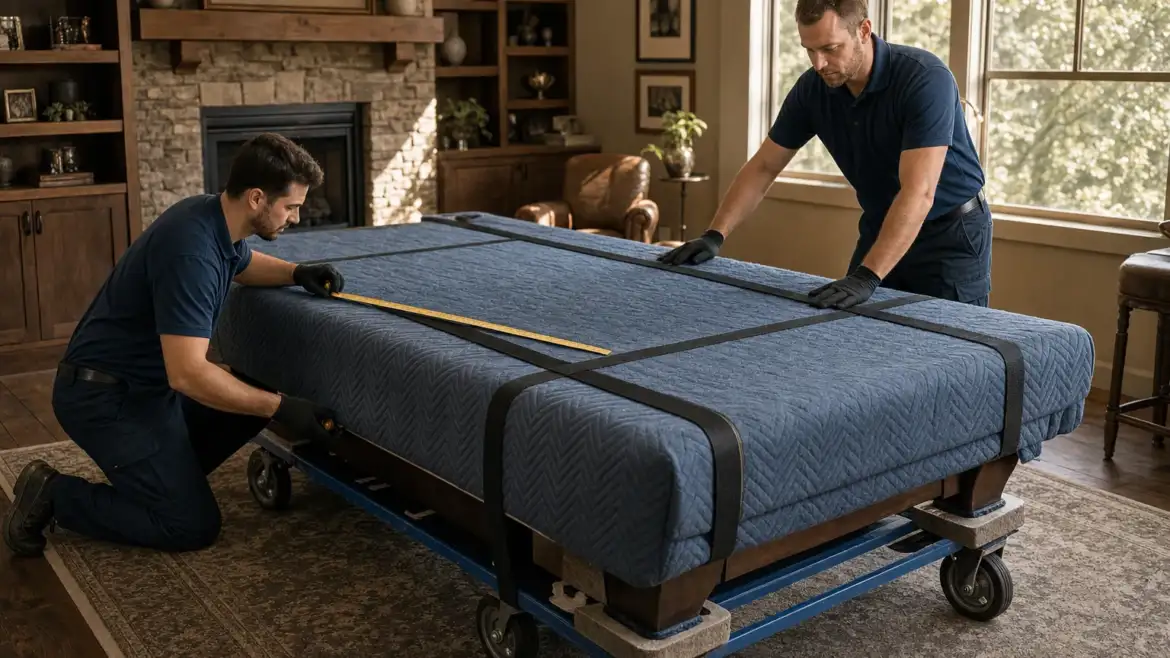
Moving a pool table is not a standard household moving task. The slate surface, precision leveling, felt, and heavy construction demand careful planning and technical skill. Whether you’re relocating across the Dallas-Fort Worth area or repositioning your table within your home, this checklist helps you prepare and understand what’s involved in a safe, successful move.
Plan Your Move in Advance
The first step in any pool table moving operation is planning. Don’t wait until moving day to think about your table. Ideally, contact a professional service 2-4 weeks before your move. This timeline gives you space to schedule the service, clarify logistics, and address any unexpected issues with your table before the move.
Key planning decisions include:
- Confirming the dimensions of your table and the doorways/hallways it must pass through
- Measuring the space in your new location to ensure the table fits and leaves proper playing room
- Checking for overhead obstructions, tight corners, or stairs that complicate transport
- Identifying the table’s current condition (level, felt condition, cushion wear)
- Deciding whether any repairs or upgrades should happen before or after the move
When you work with professionals like DFW Billiard Professionals, they handle these assessments as part of the consultation. Their online estimator and scheduler lets you get instant pricing and see what your move will involve.
Assess Your Table’s Condition
Before moving day arrives, evaluate your table’s current state. Is the felt intact, or are there tears or worn spots? Do the cushions respond consistently, or do some rails feel softer? Is the table level, or does it rock slightly?
This assessment matters because:
- A table in poor condition may need attention before moving to avoid further damage
- Pre-move repairs can be more cost-effective than addressing problems after relocation
- You’ll know whether re-felting or cushion replacement should happen before or after the move
- It helps technicians plan their approach and ensures nothing gets missed
If you own a pre-owned table or recently acquired one, understanding its baseline condition is essential. Many people discover leveling issues or cushion problems only after a move, when they have a fresh chance to inspect their table.
Prepare the Table and Space
In the days leading up to your move, take concrete steps to protect your table and prepare your spaces.
Clear the game room
- Remove all balls, cues, and accessories from the table and surrounding area
- Move furniture, wall décor, and other items that could impede access
- Ensure the path from the table’s current location to the exit is completely clear
- Protect doorframes, walls, and floor finishes with protective padding if moving through tight areas
Protect the table
- Let professionals handle the actual moving process, but you can help by removing personal items from drawers or storage compartments built into the table base
- If you’re storing the table temporarily, cover it with a clean, breathable tarp (not plastic, which traps moisture)
- Keep the table away from direct sunlight, extreme heat, or humidity changes during any waiting period
Plan the new space
- Measure the new room carefully and mark where the table will sit
- Ensure adequate clearance for cue play around all sides (typically 5-6 feet minimum depending on room shape and cue length)
- Confirm the floor is level, or note if it slopes, so technicians can compensate during setup
- Check that the new space has stable, level flooring (wood, tile, or concrete are best; avoid thick carpeting)
Understand the Moving Process
Professional pool table moving involves specific steps executed in sequence. Understanding this process helps you see why it requires skill and why DIY moving often causes damage.
Disassembly
Technicians carefully remove the felt, cushions, and rails, then disassemble the table into manageable sections. The slate bed, which can weigh 400-1,000 pounds depending on table size, is the heaviest and most fragile component. The pockets are removed, legs are detached, and all hardware is documented and organized for reassembly.
Transport
Professionals use specialized equipment including dollies, blankets, and straps designed for billiard tables. The slate is crated or heavily padded and secured to prevent shifting during transport. Temperature and humidity are monitored to prevent warping or felt damage.
Reassembly and leveling
At the new location, the table is reassembled in reverse order. This is where precision matters most. The slate is carefully positioned and re-leveled using precision tools. The cushions and rails are reattached, the felt is re-glued, and the entire playing surface is inspected to ensure consistent pocket height, rail rebound, and ball roll.
Know When to Call Professionals
Some moves are straightforward enough for DIY attempts, but most benefit from professional handling. Consider hiring professionals when:
- Your table weighs more than 400 pounds (most slate tables do)
- The table must pass through tight doorways, narrow hallways, or down stairs
- Your new location requires significant climate adjustment
- You’re moving long distances within or beyond the Dallas-Fort Worth area
- Your table is a valuable or heirloom piece
- You need the table ready to play immediately after arrival
- You lack proper moving equipment, hand trucks, or protective materials
DFW Billiard Professionals handles everything from simple same-room relocations to complex long-distance moves, including the disassembly, transport, and full setup needed to get your table level and game-ready.
Post-Move Inspection and Maintenance
After your table is installed in its new location, take time to inspect it thoroughly.
- Check that all balls roll smoothly without veering left or right
- Test the cushion response across all rails by shooting balls at various angles
- Verify that pockets are at consistent height
- Look for any visible seams in the slate that may need attention
- Feel the felt surface for any wrinkles, tears, or rough spots
If you notice any issues, report them to your moving service immediately. Many small problems are easiest to correct right after the move, before you’ve played the table extensively. Leveling adjustments are common after a move, especially if the new space has a different floor condition than the previous location.
For ongoing care after your move, establish a simple maintenance routine: brush the felt regularly, keep the table covered when not in use, and schedule professional leveling checks annually. If your felt shows significant wear or the table saw heavy use during the move, re-felting may be worth considering to restore the playing surface.
Trust the Experts for a Smooth Move
Moving a pool table successfully combines preparation, proper technique, and the right equipment. By following this checklist and recognizing when to call professionals, you protect your investment and ensure your table performs perfectly in its new home. DFW Billiard Professionals brings 8+ years of experience moving, installing, and leveling tables throughout North Texas. Their team handles everything from disassembly to final leveling, so your table is ready to play worry-free. Reach out today to get instant pricing, schedule your move, and enjoy peace of mind knowing your table is in expert hands.