
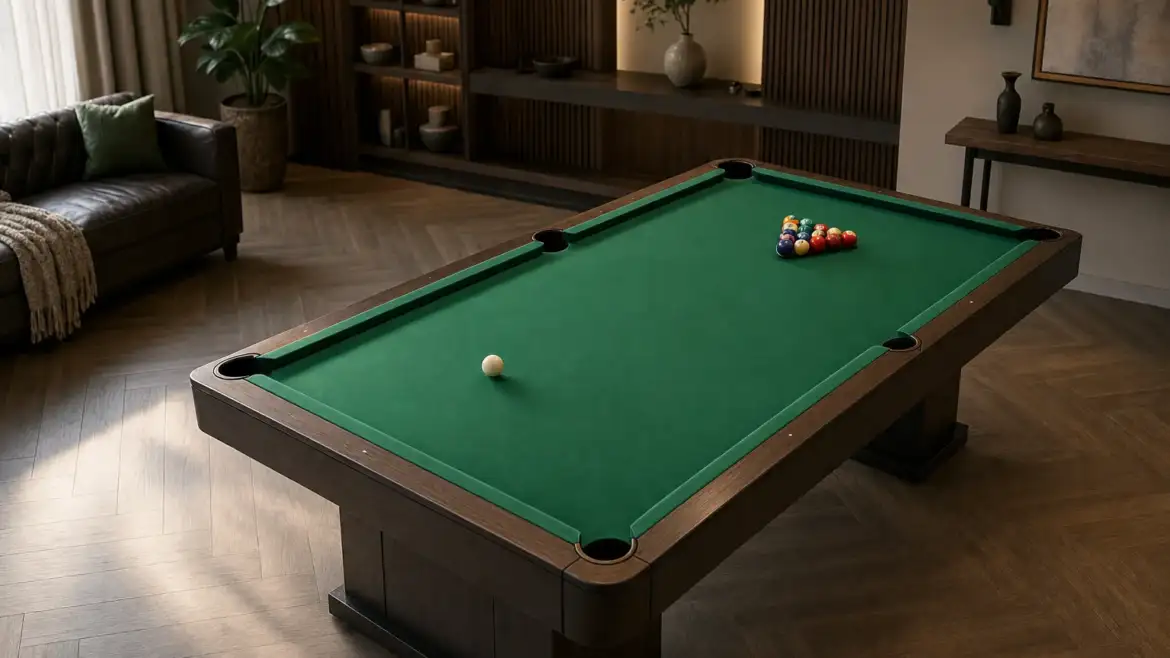
When you’re choosing or replacing the felt on your pool table, color might seem like a purely aesthetic decision. But the truth is that pool table felt color directly impacts how the game plays, how the table looks in your space, and even how long the cloth lasts. Understanding the relationship between felt color and performance helps you make a choice that works for both your game and your décor.
Whether you’re setting up a new table, planning a cloth replacement, or designing a game room, the color you pick matters more than you might think. Let’s explore how different felt colors affect play quality and what professionals recommend.
The Impact of Pool Table Felt Color on Ball Visibility
The most obvious reason felt color matters is visibility. When the balls contrast sharply with the felt, you see clearer shots and can track movement better. This is why professional tournaments almost universally use specific shades of green felt. The color provides ideal contrast with standard white cue balls and numbered object balls.
Green felt works because it sits in the middle of the visible light spectrum. Your eyes don’t strain looking at it for extended periods, and the white balls pop against the background. This is why most high-end tables and tournament venues stick with traditional green.
That said, some modern variations like navy or dark blue felt have gained popularity, especially in casual game rooms. These darker tones still provide good contrast but create a different aesthetic. The trade-off is that visibility isn’t quite as sharp as traditional green, though for recreational play this rarely matters.
Red, burgundy, and black felt exist on the market, but they’re generally avoided by serious players. Black felt, in particular, makes it difficult to see the balls clearly and can cause eye fatigue during longer sessions. If you’re serious about your game, stick with green or blue tones.
How Felt Color Affects Play Speed and Consistency
Felt color and play speed are linked through the weave and nap of the cloth. Most commercial felts come in similar constructions regardless of color, so the color itself doesn’t determine how fast or slow the table plays. What does matter is the quality and condition of the cloth.
However, lighter felts show wear more easily than darker shades. A light green or cream-colored felt will display dust, chalk marks, and ball marks more prominently. This visibility can actually be helpful because you’ll notice when the table needs cleaning and maintenance more quickly.
Darker felts like navy or charcoal hide these imperfections, which can be a drawback. You might not maintain the cloth as frequently because visible signs of wear are less obvious. Over time, this can lead to a playing surface that’s less consistent than it appears.
The real key to consistent play speed is professional leveling and proper cloth maintenance, regardless of color. When DFW Billiard Professionals handles cloth replacement or leveling, we ensure the table performs at its best no matter what color you choose.
Pool Table Felt Color and Game Room Design
Beyond performance, pool table felt color is a major design element in your space. The color sets the tone for the entire room and needs to coordinate with your décor.
Green remains the most versatile choice because it works in nearly any setting. Traditional green complements wood furniture, leather seating, and both modern and classic décor styles. Darker greens create a more formal, sophisticated look, while brighter greens feel more casual and energetic.
Blue felts work well in contemporary spaces and nautical-themed rooms. They pair nicely with gray or white furnishings and modern lighting. Navy blue in particular adds elegance without the formality of traditional green.
Burgundy and wine-colored felts can work in upscale game rooms with rich wood tones and warm lighting, but they’re less flexible for different décor schemes. Dark charcoal or black felts look sleek but require careful lighting and spacious rooms to avoid a cramped feel.
When planning your game room layout, consider how the felt color interacts with wall color, lighting, and furniture. A professional game room design consultation can help you choose a felt color that enhances both play quality and the overall aesthetic of your space.
Professional Tournament Standards for Felt Color
Professional and tournament play has strong preferences when it comes to pool table felt color. The World Pool Association and major tournaments specify cloth that meets strict standards. Almost universally, this means a specific shade of green felt that provides optimal visibility and consistency.
These standards exist because felt color and cloth quality directly affect competitive fairness. When players compete at high levels, every variable matters. The color and condition of the felt influence ball speed, spin characteristics, and overall playability.
If you aspire to competitive play or host serious players regularly, green felt remains your best choice. It’s what serious players expect and what gives you the most accurate performance feedback.
For casual home play, you have more flexibility. But understanding why professionals choose green can inform your decision even for recreational tables.
Maintenance and Durability by Felt Color
Different felt colors show wear patterns differently, which affects how you perceive table condition and when you should replace the cloth.
Light green and cream felts show every mark, dust particle, and chalk dust. This means you’ll see when cleaning is needed and can stay on top of maintenance. The downside is that the table might look dingy faster, even if it plays well.
Medium green felts strike a balance. They hide some wear while still showing significant damage or soiling. They’re durable workhorses for both home and commercial use.
Dark felts, including navy, charcoal, and black, hide dirt and minor wear effectively. This makes them appealing if you want your table to look pristine between cleanings. However, this can lead to neglect. If you can’t see that the cloth needs attention, you might let maintenance slide, which actually shortens cloth lifespan.
Regardless of color, professional cloth replacement every three to five years keeps your table in top condition. When you’re ready for a new cloth, DFW Billiard Professionals can guide you through color options and handle the installation.
Making Your Felt Color Decision
Here’s a practical approach to choosing pool table felt color:
- Start with your game room’s existing décor. What colors dominate the space?
- Consider your play level. Casual players have more flexibility. Serious or competitive players should lean toward traditional green.
- Think about maintenance. Can you commit to regular cleaning, or would a darker felt suit your lifestyle?
- Visit the table in person if possible. Feel the cloth, see how the balls look, and imagine the table in your space.
- Consult with a professional. Experienced technicians can recommend colors that balance playability with your room design.
Pool table felt color is a choice that affects your game, your décor, and your maintenance routine. By understanding how color influences performance and appearance, you can choose felt that you’ll enjoy for years to come.
Ready to replace your cloth or explore felt color options? DFW Billiard Professionals helps homeowners and businesses throughout the Dallas-Fort Worth area select the perfect felt and install it with precision. We handle everything from color consultation to professional installation, ensuring your table performs and looks great in your space.