
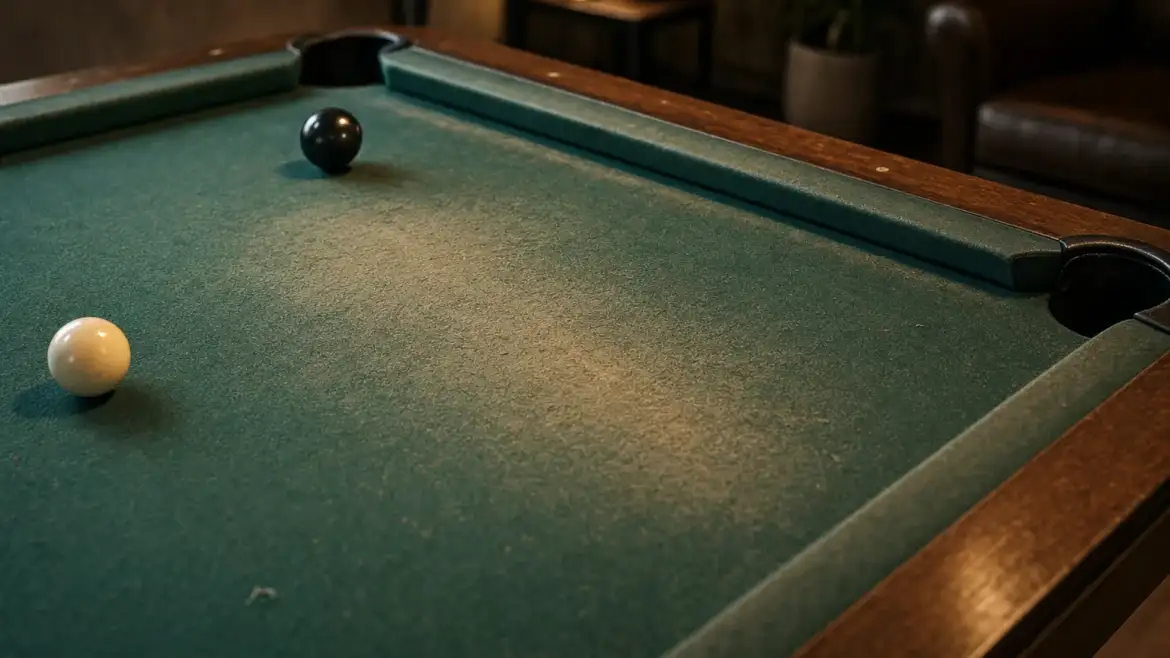
Pool table cloth wears differently depending on how the table is used, how well it is maintained, and what kind of play happens on its surface. Understanding wear patterns is crucial because they tell you a lot about the health of your table, how much longer the cloth will last, and whether you need professional service soon.
At DFW Billiard Professionals, we work with tables across the Dallas-Fort Worth region, from casual home installations to high-traffic commercial venues. We’ve seen every kind of cloth wear pattern imaginable, and we can read them like a map to your table’s condition and future care needs.
Normal vs. Premature Wear Patterns
Some wear on pool table cloth is inevitable. Tables that are played regularly will show signs of use, and that is completely normal. The question is whether the wear you are seeing matches the age and usage level of your table, or whether something is causing accelerated deterioration.
Normal wear usually appears as gradual fading and slight napping loss distributed fairly evenly across the playing surface. If your table is five years old and sees regular family use, you might expect modest fading and very subtle texture changes.
Premature wear, on the other hand, appears in concentrated areas, happens quickly, or shows visible damage like rips, stains that won’t come out, or significant napping loss that affects playability. If your table is only two years old and the cloth in the center diamond looks significantly thinner than the corners, that suggests an issue worth investigating.
Reading the Hot Spots
The most common wear pattern on any pool table appears directly below the center of the table, in the middle diamond area. This is where most shots begin and where cue tips make the most contact with the cloth over time. Some dimming and napping loss in this zone is normal and expected.
Likewise, the areas around the foot spot and along the rails near the pockets tend to show more visible wear because that is where balls spend the most time during play. These high-traffic zones will fade and thin slightly faster than areas along the rails that see less action.
What you want to watch for is whether this wear is even or if it is creating a pattern that affects ball roll. When cloth begins to wear unevenly, it can cause balls to behave inconsistently, which signals that re-clothing is becoming necessary.
Stains, Discoloration, and Surface Damage
Not all cloth problems are wear from use. Stains, dark marks, or discolored patches can indicate spills, environmental damage, or contact with substances that have affected the cloth’s finish.
Water damage creates dark, spreading stains that often look blotchy. Smoke damage typically causes overall yellowing or browning, especially visible on light-colored cloths. Food or drink spills may leave localized marks that cleaning cannot fully remove. If you notice these kinds of discoloration, especially if they are spreading or affecting multiple areas, the cloth may be compromised and professional assessment is worthwhile.
Small rips, snags, or torn areas are also problems that worsen over time. Even tiny damage tends to expand with continued play, which is why addressing cloth damage early is important.
The Role of Maintenance in Cloth Longevity
How you care for your table dramatically affects how long the cloth lasts and what kinds of wear patterns develop. Tables that are brushed regularly and kept free of dust and debris will show slower wear. Tables that are neglected or exposed to moisture, sunlight, or smoke will deteriorate faster.
Regular brushing removes chalk dust, which can build up and cause the cloth to feel rough and play slower than intended. Dust also settles into the fibers and can accelerate wear by creating a slightly abrasive surface that increases friction.
Keeping your table in a climate-controlled environment away from direct sunlight also helps preserve cloth color and condition. Sunlight fades cloth over time, and excess moisture can lead to mildew or mold, which creates both appearance and playability problems.
Commercial venues and frequently-used home tables benefit significantly from periodic professional cleaning and maintenance, which helps extend cloth life and keeps wear patterns minimal and even.
When Wear Means It is Time for Re-Clothing
Most quality pool table cloth lasts between five and seven years with regular use. Some premium cloths last longer, and heavily-used commercial tables may need re-clothing sooner.
You should consider re-clothing when:
- The cloth shows significant fading or color change across multiple areas
- Napping loss is visible and the cloth feels thin or worn to the touch
- Balls no longer roll true because of uneven wear affecting playability
- Stains are visible and cannot be removed with cleaning
- Small rips or damaged areas are present, or cloth is beginning to tear
- The table simply looks tired and old compared to when it was new
Re-clothing is one of the most transformative services you can perform on an aging table. It restores playability, improves appearance, and gives your table years of additional useful life. Whether you choose to keep your current table or upgrade to a different cloth color or style, professional re-clothing makes a dramatic difference.
Wear Patterns in Commercial vs. Home Settings
Commercial tables often show more pronounced wear patterns because they see heavy daily use. Bars, billiard halls, and recreation centers typically experience constant play from many different players with varying skill levels and care habits.
Commercial cloth wear often appears as deep fading in the center diamond and around pockets, sometimes with visible thin spots developing within two to four years. This is normal for that setting, and professional operators typically budget for regular re-clothing as part of routine maintenance.
Home tables show slower, more even wear because use is lighter and more controlled. However, home tables that sit in sunny rooms, receive spills, or are used heavily by families with children may show accelerated wear that is disproportionate to their age.
Regardless of setting, understanding your table’s specific wear pattern helps you predict when service will be needed and whether the pattern you are seeing is normal or a sign of a deeper issue.
What to Do When You Notice Unusual Wear
If you see wear patterns that concern you, the best step is to have the table inspected by a professional. DFW Billiard Professionals can assess your cloth condition, determine whether wear is normal for your table’s age and use level, and recommend the right service and timing.
Sometimes what looks like cloth damage is actually a leveling issue, where the table has shifted and is causing balls to roll unevenly. Other times, cloth that appears worn may simply need professional cleaning rather than replacement. A qualified technician can read these signs accurately and give you clear, honest guidance about what your table needs.
If you are uncertain about your cloth’s condition or notice wear patterns developing faster than expected, reaching out for professional assessment is a smart investment in your table’s long-term playability and appearance.