
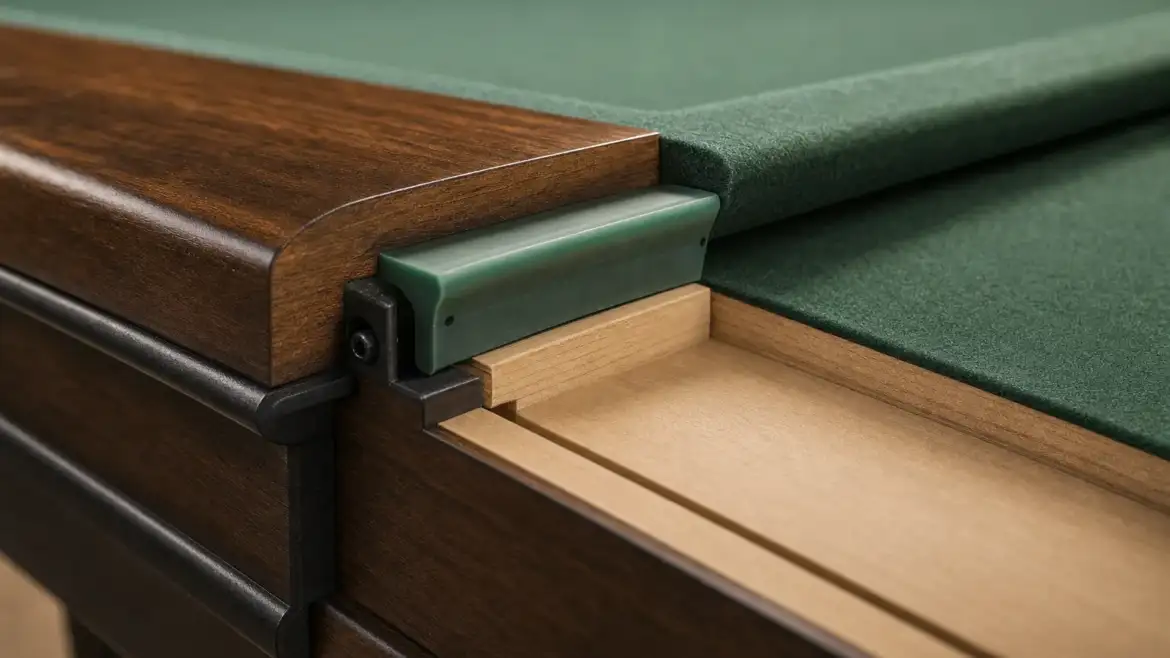
Pool Table Bumpers and Cushions Explained
If you own a pool table, you know that a good shot requires the right setup and equipment. One of the most overlooked yet critical components is the rail system: the bumpers and cushions that send the cue ball and object balls back into play. Understanding the different types of pool table bumpers and how they work will help you maintain your table and improve your game.
What Are Pool Table Bumpers and Cushions?
Pool table bumpers and cushions are the rubber or synthetic materials that line the rails of a pool table. The terms are often used interchangeably, but they serve the same essential function: they absorb energy from moving balls and send them back across the playing surface in a predictable direction.
The bumpers sit on top of the wooden rail frame and are attached to the slate or playing surface. When a ball hits the rail, the cushion absorbs the impact and returns the ball to the table. The quality, thickness, and material of your pool table rail cushions directly affect how the ball behaves, how consistent your shots feel, and how much enjoyment you get from playing.
Well-maintained bumpers and cushions are essential for tournament-quality play. Poor cushions create unpredictable bounces, dead spots, and frustrating inconsistency that makes the game less fun and harder to control.
Types of Pool Table Bumpers
Not all pool table bumpers are created equal. The market offers several distinct types, each with different performance characteristics and durability.
Rubber Cushions
Traditional rubber cushions have been used on pool tables for decades. They are made from natural or synthetic rubber and offer a classic feel and reliable performance. High-quality rubber cushions provide consistent rebound and are relatively durable, though they do wear over time with heavy use.
Rubber cushions are affordable compared to some alternatives and remain popular in homes and recreational venues. However, they can harden over time and lose their responsiveness if exposed to heat or direct sunlight.
Synthetic and Urethane Cushions
Modern synthetic and urethane bumpers represent an upgrade in performance. These materials are engineered to maintain consistent rebound properties longer than traditional rubber. Urethane cushions are particularly popular in professional and tournament settings because they provide predictable, uniform ball response regardless of the angle or speed of the shot.
Synthetic cushions also resist hardening and degradation better than natural rubber, making them a better choice for tables in busy commercial venues or homes where the table sees heavy play.
Competition-Grade Cushions
Competition-grade pool table rail cushions meet strict standards set by billiard governing bodies. These bumpers must deliver precise rebound angles and consistent performance. They are typically made from premium urethane or synthetic compounds and are used on tournament tables and high-end residential tables.
If you play competitively or want a table that plays like a tournament table, competition-grade cushions are worth the investment.
How Cushion Quality Affects Your Game
The performance of your pool table bumpers directly influences how your game feels and plays. Here’s what changes with quality:
- Ball Response: Quality bumpers return the ball at a predictable angle with consistent speed. Poor cushions create dead spots where the ball returns slower or at unpredictable angles.
- Shot Accuracy: When bumpers are worn or of low quality, shots become harder to control and predict. Professional players notice immediately.
- Table Feel: A well-maintained table with quality cushions feels responsive and rewarding. A table with worn bumpers feels sluggish and frustrating.
- Longevity: Premium cushions last longer, reducing the frequency of replacement and saving money over time.
When to Replace Pool Table Bumpers
Rail cushions don’t last forever. Several signs indicate it’s time for a replacement:
- Visible Hardening or Cracks: If your bumpers look hard, brittle, or show visible cracks, replacement is overdue.
- Dead Spots: If balls consistently come off the rail slower in certain areas or at unexpected angles, the cushions are likely wearing unevenly.
- Loss of Rebound: If balls that once bounced back with energy now seem to fall flat against the rail, cushion degradation is the likely cause.
- Age and Heavy Use: Tables used frequently in commercial settings or homes with multiple players should have cushions inspected every 2-3 years.
- Sound Changes: If the sound of balls hitting the rail has changed or become muted, the cushion material is breaking down.
Replacing pool table rail cushions is a job for experienced technicians. Proper installation requires removing the old bumpers, prepping the rail, and ensuring the new cushions are perfectly aligned and secured.
Professional Cushion and Bumper Replacement
While some pool table owners attempt DIY cushion replacement, this is one area where professional service makes a real difference. Installing new bumpers requires precision tools, proper alignment, and knowledge of how different cushion materials perform.
DFW Billiard Professionals offers professional cushion and bumper replacement for tables throughout the Dallas-Fort Worth region. The team ensures that your new bumpers are correctly installed, properly aligned, and matched to your table’s specifications and your playing preferences. Whether you need basic replacement or an upgrade to competition-grade cushions, experienced technicians will restore consistent, reliable rail performance to your table.
Materials and Durability Comparison
Different bumper materials offer different lifespans and performance characteristics. Natural rubber typically lasts 5-10 years with regular use before hardening and losing responsiveness. Synthetic and urethane compounds can last 10-15 years or longer, especially in homes with moderate play. Competition-grade cushions are built to last even longer and maintain their performance characteristics more consistently throughout their lifespan.
The environment matters too. Tables exposed to heat, humidity, or direct sunlight experience faster cushion degradation. Keeping your table in a climate-controlled room and protecting it from direct sun will extend the life of your bumpers regardless of the material.
Upgrading Worn Bumpers
If your table is showing signs of wear, a cushion upgrade is often the best first step before considering a full table replacement. New bumpers can transform how a table plays and feels, sometimes making an older table perform like new.
Upgrading to higher-quality cushion materials is also an option if you want to improve the play quality of your existing table. Many players who initially invested in a more affordable table later upgrade the bumpers and cloth to achieve better performance without replacing the entire table.
Proper maintenance of your pool table starts with understanding its components. The bumpers and cushions you choose will shape your experience every time you step up to the table. Whether you’re playing casually at home or pursuing a more competitive game, giving your bumpers the attention they deserve will pay dividends in performance and enjoyment.
If you’re unsure about the condition of your table’s cushions or you’re ready to upgrade to better-performing bumpers, reach out to the team at DFW Billiard Professionals for a professional evaluation and expert service.