
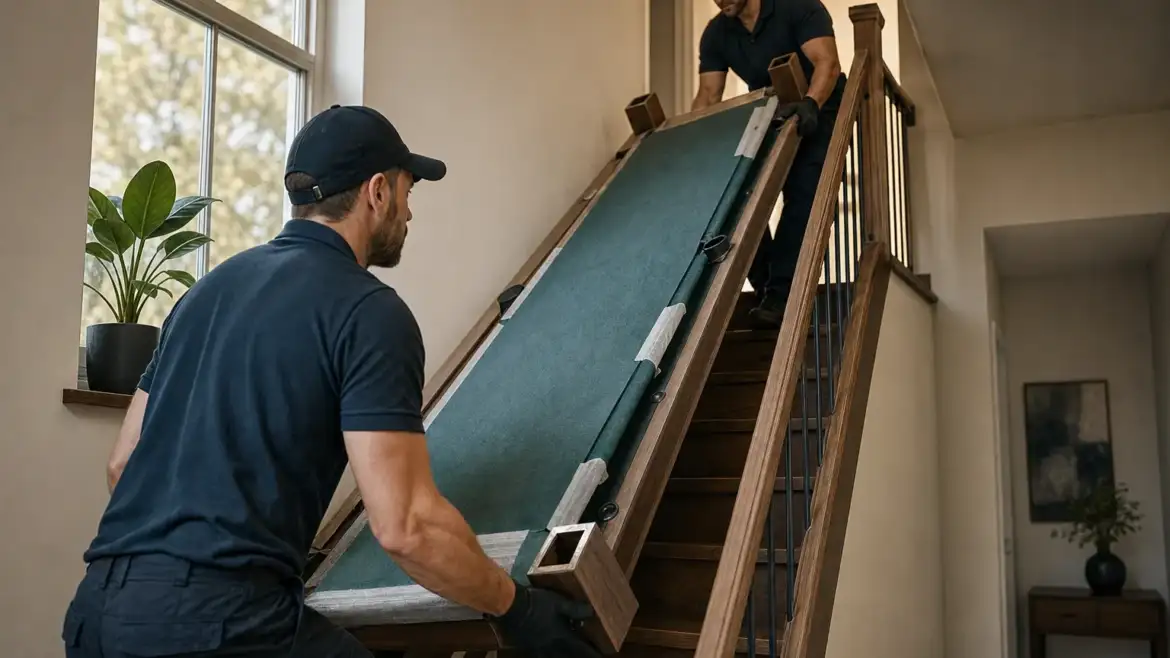
Moving a pool table through a tight hallway, up a flight of stairs, or into a confined basement requires more than brute strength and a truck. These moves demand planning, experience, and the right equipment. If you own a pool table in the Dallas-Fort Worth area and face a challenging installation or relocation, understanding what makes these moves possible will help you appreciate why professional service matters.
Why Stairs and Tight Spaces Are So Difficult
Pool tables are heavy, delicate, and often larger than the spaces you need to fit them through. A standard slate table weighs 700 to 1,000 pounds and measures roughly 5 by 9 feet or 7 by 14 feet depending on the size. The real problem starts when you look at doorways, stairwells, and hallways that are typically 30 to 36 inches wide.
The slate bed of a pool table is the playing surface and the heart of the investment. It cannot be tilted, bent, or strained during a move. Even a slight shift in angle can crack the slate or cause it to separate from its supporting frame. Stairs add another layer of complexity: every step becomes a potential stress point, and any miscalculation in angle or weight distribution can lead to damage that requires costly restoration.
Many DIY movers and less experienced services damage tables in tight spaces because they lack the proper disassembly technique, don’t have specialized moving equipment, or underestimate the geometry of the route.
Proper Disassembly Is the First Step
Before a pool table can navigate stairs or tight spaces, it must be disassembled correctly. This is not the same as simply removing the legs. Professional technicians break the table down into manageable pieces while protecting every component:
- Slate bed removal and wrapping in protective blankets and padding
- Rail and cushion removal
- Frame and support structure separation
- Leg removal and organization
- Cloth and felt protection
Each piece must be handled with care and marked so reassembly is accurate. The slate especially needs to be secured in a way that protects both the playing surface and the wood frame underneath. At DFW Billiard Professionals, this process is performed by master level table mechanics who understand how every component relates to table performance.
Measuring and Planning the Route
Before a single piece moves, the route must be measured and assessed. This includes:
- Width of doorways and hallways
- Height clearance at each point
- Stair dimensions: width, height, depth, and angle
- Corners and turns that might require angling pieces
- Floor condition and protection needs
- Placement of utilities, HVAC vents, or other obstacles
A careful technician will visit the site ahead of time or ask detailed questions about the space. They will determine whether pieces can move straight through or must be angled, tilted, or rotated at specific points. This planning prevents damage and wasted time on the day of the move.
Equipment and Technique Matter
Moving a slate table up stairs or through confined spaces requires specialized equipment that most homeowners do not own. Professional moving teams use:
- Heavy-duty furniture dollies and sliders designed for billiard tables
- Four-point lifting harnesses that distribute weight evenly
- Protective blankets and corner guards to prevent impact damage
- Ratchet straps that secure pieces during transport
- Experience reading how a piece will fit through a given space
Technique is equally important. The angle at which a wrapped slate bed is tilted as it goes up stairs, the number of people needed to control it safely, and the pace of movement all affect whether the move succeeds without damage. A team that has moved dozens of tables through tight spaces knows how to adjust in real time if something is not fitting as expected.
Reassembly and Leveling on the Other Side
Once pieces are safely moved, the table must be reassembled with precision. The slate must be placed on a perfectly level surface, the frame must be aligned, and all components must be secured so the table plays true. Any movement or settling during the relocation can throw the entire table out of level.
At the new location, professional technicians will use precision leveling tools to ensure the playing surface is tournament grade. This step is critical: even a table that made it through a tight move intact will not play well if it is not level during reassembly. The cloth or felt is then inspected, cleaned, and secured, and the table is ready to use.
When to Call the Professionals
If your pool table needs to move up stairs, through a narrow hallway, into a basement, or around tight corners, do not attempt it without professional help. The cost of damage to a slate table often exceeds the cost of professional moving by a significant margin. A cracked slate can cost hundreds or thousands of dollars to replace, and structural damage to the frame compounds the expense.
DFW Billiard Professionals operates both mobile service teams and a professional shop facility, which means we handle everything from the initial assessment through final setup. We have moved tables through narrow spaces in Dallas-Fort Worth homes and businesses for over eight years, and we understand the layout challenges across the entire North Texas region.
Protecting Your Investment
Your pool table is an investment in your home or business. Tight spaces and stairs are not reasons to avoid the move you need to make, but they are reasons to work with experienced professionals who know how to handle the challenge. Clear communication, proper planning, and master level mechanics are what separate a successful move from a costly mistake.
If you are facing a pool table move through stairs or tight spaces in the Dallas-Fort Worth area, reach out to DFW Billiard Professionals. We will assess your situation, provide transparent pricing, and ensure your table arrives safely and plays perfectly.