
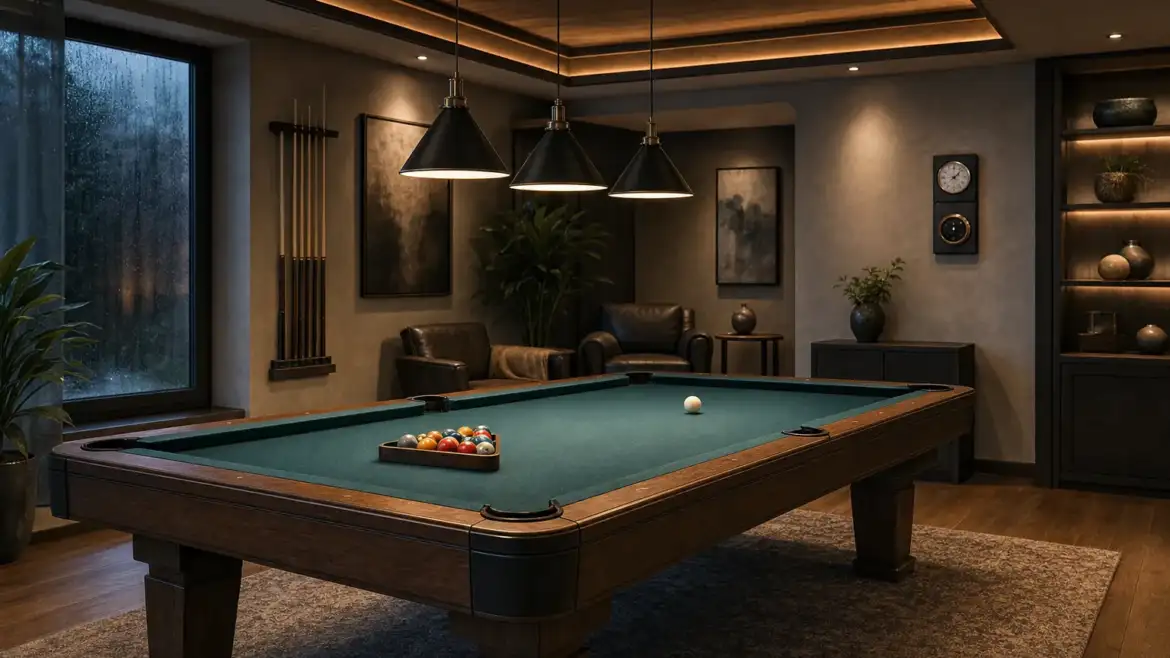
Your pool table is a significant investment, and environmental conditions play a much larger role in its longevity and performance than many owners realize. Humidity and temperature swings create real, measurable damage to the slate, felt, wood frame, and mechanics of a billiard table. Understanding these effects is the first step to protecting your table from unnecessary wear and costly repairs.
How Humidity Damages Pool Tables
Moisture is one of the most destructive forces affecting pool tables. Slate, while naturally dense, still absorbs and releases moisture depending on humidity levels. When humidity fluctuates, the slate shifts slightly. These tiny movements accumulate and cause several problems:
Slate seams separate or warp out of level. Felt shrinks and stretches unevenly, creating bubbles or wrinkles across the playing surface. Wood frames swell and contract, warping the rails and sometimes cracking the frame itself. Cushions and bumpers lose their resilience as moisture degrades the rubber compounds. Leather pockets and trim rot or develop mold.
High humidity, above 60 percent, is especially risky. Dallas-Fort Worth summers can push indoor humidity beyond safe levels, particularly if your air conditioning system cannot keep up. Basements, game rooms without proper dehumidification, and spaces near water sources are particularly vulnerable.
Low humidity below 30 percent creates the opposite problem. Dry air causes slate, felt, and wood to shrink, opening seams and warping joints. The felt becomes brittle and prone to tearing. In winter, when heating dries out indoor air, many DFW homeowners encounter this issue without realizing the connection.
Temperature Swings and Structural Stress
Temperature changes stress every material in a pool table. Unlike humidity, which affects mainly absorption, temperature directly changes how materials expand and contract.
Slate expands when warm and contracts when cold. Repeated cycling eventually creates hairline cracks, especially at stress points like pocket corners and the center seam. These cracks are expensive to repair and can compromise the table’s levelness permanently.
Felt responds to temperature as well. Warm temperatures make felt slightly more supple, while cold makes it brittle. Rapid swings between these extremes speed up felt degradation and can cause it to separate from the slate underneath.
Wood frames are equally sensitive. A pool table exposed to a 20-degree temperature swing daily will experience frame movement within hours. If your game room has windows facing the sun or is located near heating vents, temperature swings are likely more extreme than you think.
The Ideal Climate for Pool Tables
Keeping your table in stable environmental conditions is far simpler than managing damage after the fact. Aim for these ranges:
- Temperature: 68 to 72 degrees Fahrenheit, with minimal daily variation
- Humidity: 35 to 55 percent relative humidity
These ranges mimic the conditions in professional pool halls and tournament venues, where tables perform at their best. Stability matters more than hitting exact numbers. A table that stays at 70 degrees and 45 percent humidity will perform far better than one that swings from 65 to 75 degrees and 30 to 60 percent humidity, even if the second scenario includes some "ideal" readings.
For homeowners in DFW, this means investing in a quality HVAC system with consistent temperature control and a dehumidifier during humid months. Commercial venue operators should consider dedicated climate control in their pool halls.
Seasonal Humidity Challenges in DFW
North Texas presents specific challenges throughout the year. Summers bring sustained high humidity, especially in July and August. If your game room lacks adequate air conditioning or dehumidification, humidity can exceed 65 percent for weeks at a time. This is when slate seams separate most commonly.
Winter brings the opposite extreme. Heating systems dry out indoor air dramatically. Many homeowners do not use humidifiers, and winter humidity can drop below 25 percent. This causes felt to shrink and wood frames to warp.
Spring and fall are generally more forgiving, though rapid weather changes can still create daily swings. The key is recognizing that DFW’s climate requires active environmental management year-round, not just in the most extreme months.
Signs Your Table Has Suffered Environmental Damage
If you have not been managing environmental conditions carefully, watch for these warning signs:
- The table is no longer level, especially near the center seam or at pocket corners
- Felt bubbles, wrinkles, or has separated from the slate
- Seams are visible or have opened slightly
- The frame cracks or makes creaking sounds when weight is applied
- Cushions feel soft or do not return the ball consistently
- Pockets are damaged, warped, or cracking
If you notice any of these problems, contact a qualified technician. Environmental damage often appears gradually and compounds over time. A professional can evaluate the severity and recommend whether your table needs leveling, felt replacement, or more extensive restoration work.
Protecting Your Investment Going Forward
Environmental protection is an ongoing practice, not a one-time setup. Here are practical steps you can take:
- Install a programmable thermostat to maintain steady temperature 24 hours a day
- Use a dehumidifier in summer and a humidifier in winter to stay within target humidity ranges
- Monitor conditions with an inexpensive digital thermometer and hygrometer placed near your table
- Avoid placing your table near windows, exterior doors, heating vents, or supply ducts
- Keep your table covered when not in use to reduce dust and protect from temperature spikes
- Have your table leveled professionally once per year if environmental conditions are challenging
Commercial venue owners should invest in dedicated climate control systems. The cost is recovered quickly through reduced maintenance and higher customer satisfaction.
DFW Billiard Professionals specializes in slate pool table maintenance and care and can help you understand your specific environmental challenges. Our team has seen every type of humidity and temperature damage across the Dallas-Fort Worth region and can recommend solutions tailored to your space.
If you suspect environmental damage or want to understand your table’s current condition, reach out to our team. A professional assessment takes the guesswork out of deciding whether your table needs leveling, felt replacement, or restoration work. With proper environmental control and regular professional care, your pool table will perform reliably for decades.