
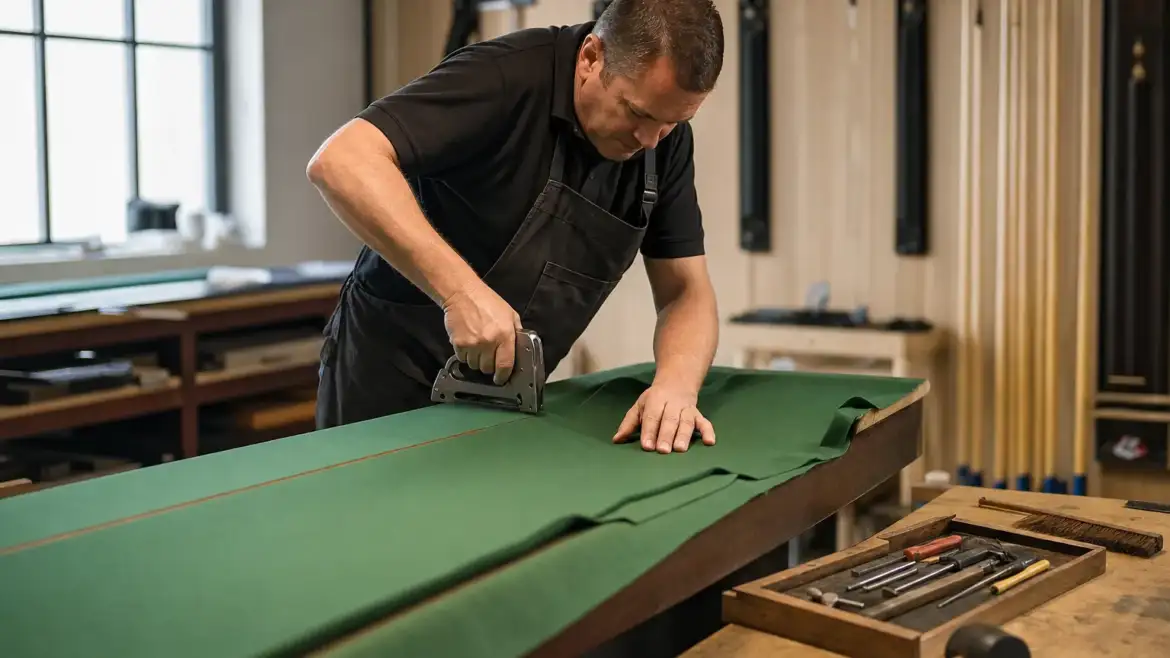
Re-felting a pool table is one of the most rewarding upgrades you can make to your game room. Fresh cloth changes the way the ball rolls, improves cue ball control, and makes the table look brand new. But the process involves more steps than most people expect, and small mistakes can leave you with wrinkles, dead spots, or a cloth that peels away after a few weeks.
This guide walks through what re-felting actually involves, what tools and materials are needed, and where the process gets technical enough that calling a professional pays off.
What Does Re-felting Actually Mean
The word ‘felt’ is used loosely in the billiard world. Most quality pool tables use a woven worsted wool cloth, not traditional felt. Felt is a pressed material with no weave, and it creates more friction and slower ball speed. Worsted cloth has a tighter, smoother surface that allows consistent, fast play.
When people say re-felting, they usually mean replacing the cloth on the slate bed and the cushion rails. Both surfaces wear out over time from chalk buildup, sun exposure, spills, and general play. You can explore the differences between pool table cloth styles and brands before choosing a replacement fabric, since the options range widely in durability and performance.
Tools and Materials You Will Need
Before starting, gather everything you need. Stopping mid-job to find a staple gun or the right adhesive causes problems that are hard to undo.
Here is a general list of what the job requires:
- New pool table cloth cut to size for both the playing surface and the rails
- Staple gun with fine staples (for the underside of the slate or rail frames)
- Contact cement or iron-on adhesive strips (depending on the table and cloth type)
- A sharp utility knife or scissors
- A soft brush or roller for smoothing cloth during installation
- A flathead screwdriver and rail bolts wrench for removing the rails
- Clean rags and a vacuum for prepping the slate surface
The exact tools vary depending on the table brand and how the rails are attached. Some tables use staples for the slate bed cloth. Others use adhesive. Most rail cushion cloth is stapled or glued on the underside of the rail frame.
Step-by-Step Overview of the Re-felting Process
Here is how the process works from start to finish.
Step 1: Remove the Rails
The six cushion rails bolt onto the slate frame. Loosen and remove all bolts, then carefully lift each rail off. Set them aside without stacking them in a way that scratches the wood finish.
Step 2: Strip the Old Cloth
Peel the old cloth off the slate bed. If it was stapled, use the flathead screwdriver to pry out staples completely. If adhesive was used, scrape off any residue so the new cloth lays flat. Any bumps or dried adhesive left on the slate will show through the new cloth and affect play.
Step 3: Clean and Inspect the Slate
Vacuum the slate thoroughly and wipe it down with a clean, dry rag. While the slate is exposed, check for any cracks or loose seams. A three-piece slate table has seams that need to be properly filled and leveled. If those seams have shifted, this is the time to address them. Uneven seams will throw off the ball roll regardless of how well the cloth is installed.
Step 4: Cut and Position the New Cloth
Lay the new cloth over the slate and center it carefully. Leave enough material hanging over each edge to wrap underneath and staple or glue. Do not cut it to exact size before it is fully stretched and positioned, or you will run short on one side.
Step 5: Stretch and Secure the Cloth
This step is where most DIY re-felts go wrong. The cloth needs to be stretched evenly in all directions before it is secured. Too loose and it wrinkles. Too tight in one direction and the weave distorts, which affects how balls travel across the surface.
Work from the center of each long side outward, securing a few inches at a time. Do the same on the short ends. Check the surface frequently by running your hand across it to feel for any gathering or unevenness.
Step 6: Re-cloth the Rails
Strip the old cloth from each cushion rail. The cloth wraps tightly around the rubber cushion and onto the underside of the rail frame. Stretch it snugly over the cushion nose and secure the edges underneath. Loose cloth on the cushion will affect how the ball rebounds off the rail.
Step 7: Reinstall the Rails and Level the Table
Reattach the rails and torque the bolts evenly. Then check the table level and adjust the leg levelers if needed. A properly leveled table is essential for fair play, and even minor slope causes balls to drift toward the low end.
Where DIY Re-felting Gets Difficult
The steps above sound straightforward. In practice, several parts of the process require a trained eye and experience to get right.
Slate seam work on three-piece tables is one of the most common problem areas. If the seams are not filled, leveled, and feathered correctly, the ball will deflect at those points every time. Most homeowners do not have the bondo, the leveling tools, or the technique to correct this properly.
Cloth tension is another challenge. A professional table mechanic knows how much stretch to apply based on the cloth type and the table manufacturer. Getting it wrong means the cloth may look fine at first but develop wrinkles or loose spots within weeks.
For a cleaner result with fewer risks, professional re-cloth and re-felting service from experienced technicians is worth the investment, especially on a quality or high-use table.
Choosing the Right Cloth
Not all cloth is equal. Worsted wool cloth plays faster and is easier to keep clean than napped felt. Simonis and Championship are two well-known brands in the industry. Cloth also comes in a range of colors, so a re-cloth is a good opportunity to update the look of the table along with its performance.
Thicker cloth tends to last longer under heavy use but plays slightly slower. If the table is in a commercial location or used daily, durability may matter more than speed. For a home game room with occasional play, a performance cloth in a premium color can make the whole room feel upgraded.
Getting the Best Result on Your Table
Re-felting a pool table is absolutely a job a skilled and patient person can attempt on a basic table. But on a slate table with real value, whether that is a family heirloom, a high-end brand, or a table in a business, the precision required for a truly level, perfectly tensioned playing surface is hard to achieve without training and experience.
DFW Billiard Professionals provides expert re-cloth service throughout the Dallas-Fort Worth area, from simple one-piece table refreshes to full three-piece slate installations with custom cloth selection. If you want the job done right the first time, reach out through the online estimator to get fast, accurate pricing and schedule service at your convenience.