
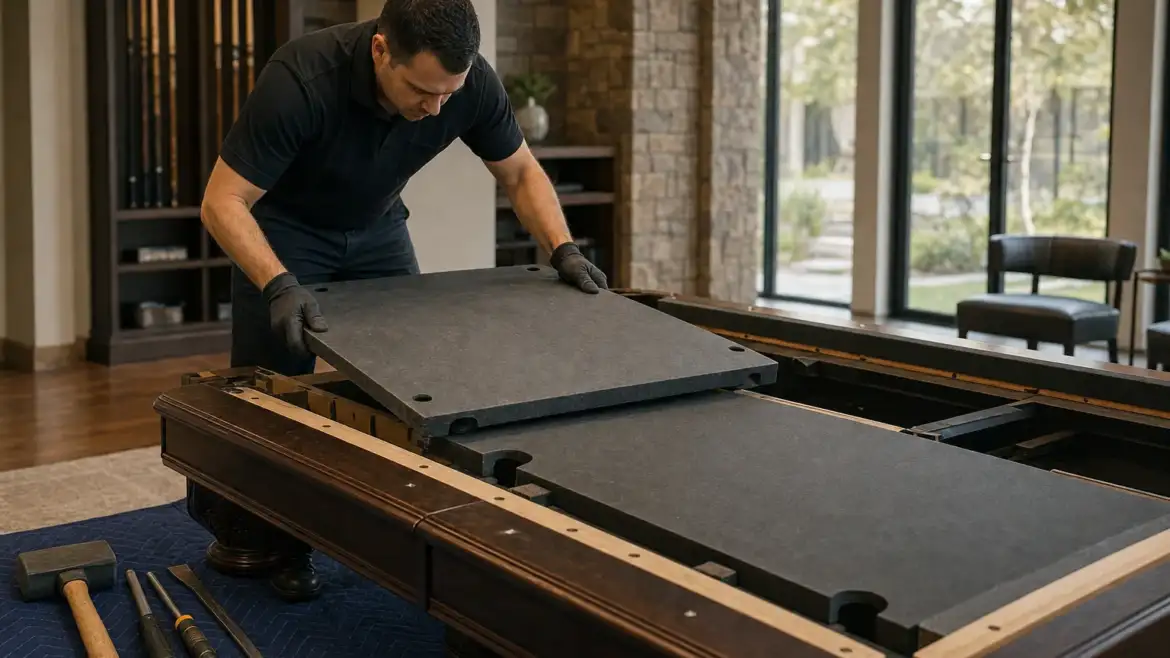
A slate pool table is one of your game room’s most valuable assets. Unlike smaller furniture, moving it is a significant undertaking that demands respect and precision. A mistake during the move can crack the slate bed, warp the frame, or misalign the entire table, turning a one-day project into an expensive restoration job. This guide walks you through the fundamentals of protecting your slate table during relocation.
Why Slate Tables Need Special Handling
Slate is incredibly durable when stationary but fragile when subjected to impact, uneven pressure, or stress during transport. A slate bed is typically made of one, two, or three pieces of slate, each weighing between 500 and 1,000 pounds depending on table size. If the table shifts even slightly during the move, the weight can bear down unevenly, causing small cracks that spread over time. These cracks are permanent and directly affect how the ball rolls. That is why understanding slate pool table movement is so critical before you attempt any relocation.
Assess Your Table and Space
Before you plan the move, inspect both the table and the route it will travel. Measure doorways, hallways, and staircases to confirm the table can actually fit through each passage. Slate tables are wide and heavy, and the frame cannot flex like wooden furniture can. If you are moving from one level to another, stairs present a significant challenge.
Check the table itself for existing damage. If there is already a crack in the slate, moving it may make the problem worse. Document the table’s current condition with photos for insurance purposes. Note the table type, cushion style, and rail construction so the setup will be accurate at the new location.
Disassemble Methodically
Proper disassembly is the foundation of a safe move. This is not the time to rush or cut corners:
- Remove all balls, racks, and accessories from the table
- Take off the rail cushions and bumpers, as they absorb impact and add weight
- Carefully detach the pocket irons and any integrated lighting
- Unbolt the legs from the frame
- Wrap each component individually in blankets, towels, or furniture pads to prevent scratching and shifting
- Label every piece so you know exactly where it belongs during reassembly
The slate bed itself should only be lifted by people who understand its weight distribution. Never attempt to move a slate bed alone, and never allow it to tilt or hang off the edge of a dolly.
Use Proper Equipment and Technique
Moving a slate table without the right tools is how accidents happen. At minimum, you will need:
- Heavy duty moving dollies rated for at least 1,500 pounds
- Furniture sliders or moving blankets to protect floors
- Quality rope or straps to secure the slate bed during transport
- A second person, ideally two or more depending on table size
When loading the slate bed onto a dolly, keep it perfectly level. If it tilts, the weight concentrates on one edge, creating stress fractures. The slate should sit squarely in the center of the dolly, with weight distributed evenly. Use straps to hold it in place so movement during transit cannot shift it. Never stack other items on top of the slate bed.
During transport, drive slowly and avoid bumps, sharp turns, and potholes. Even small jolts can jar the slate and cause internal damage that is not visible until the table is played on again. If you are transporting the table in a vehicle, secure it so it cannot slide or shift.
Level and Setup at the New Location
Once the table arrives at its destination, do not immediately begin reassembly. Allow the table to acclimate to the new space for at least 24 hours. Changes in temperature and humidity affect how wood and felt respond, and moving the table into a different climate requires adjustment time.
When you reassemble, use a precision level to ensure the frame is perfectly square before the slate bed is set into place. Even a slight slope will make the table unplayable. The slate bed itself must be level in all directions. This is not something to eyeball. A proper setup requires experience and the right equipment to measure accurately.
Replace the felt, cushions, and all hardware only after confirming the slate is level and properly supported. Each component must be installed correctly so the table plays true and the slate remains stable long term.
Know When to Call the Professionals
Moving a pool table is physically demanding and technically complex. One mistake can devalue your table by thousands of dollars. DFW Billiard Professionals handles pool table moving throughout the Dallas-Fort Worth region with the expertise and equipment to keep your slate safe. The company performs full disassembly, secure transport, professional leveling, and complete reassembly so your table arrives in perfect condition.
Unlike a general moving company, the team understands slate bed handling, cushion compression, and the precision leveling that slate tables demand. If your table is a high-end model, an heirloom, or simply irreplaceable to you, professional movers take the stress and risk out of relocation.
Protect Your Investment
Your slate pool table is built to last decades when properly cared for. The move itself is temporary, but the consequences of a careless move are permanent. Whether you handle the relocation yourself or work with experienced professionals, the core principle remains the same: treat the slate with respect, move it level, and never rush. A few hours of careful work now prevents years of regret later.