
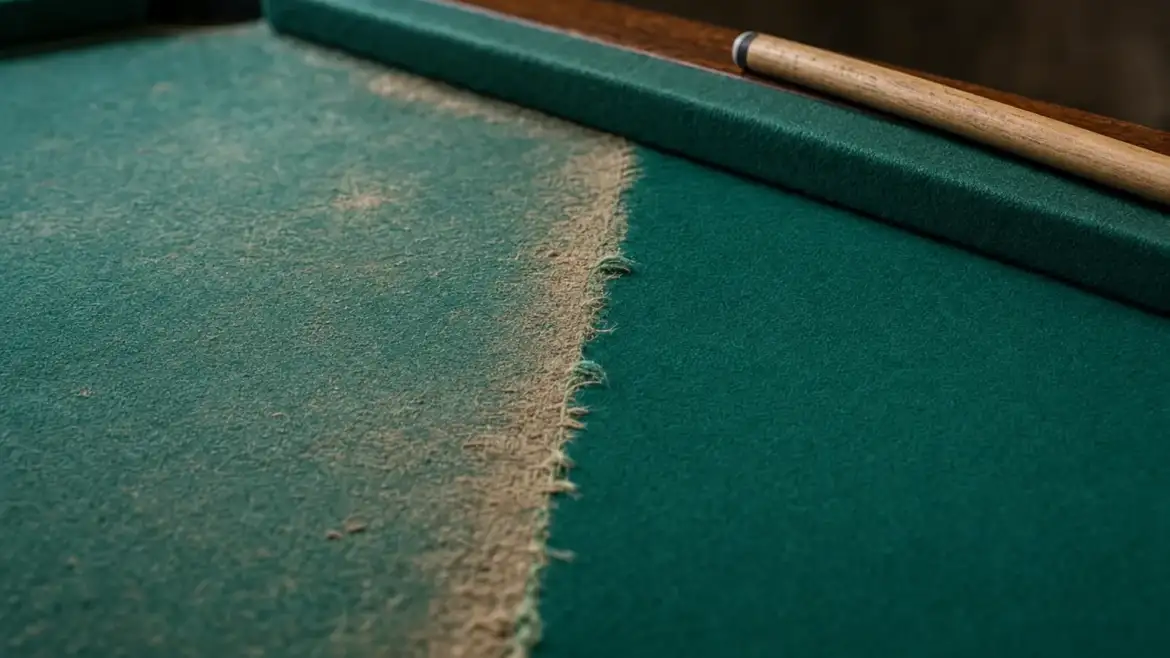
Whether you own a pool table at home or operate a commercial venue in the Dallas-Fort Worth area, the felt on your table takes a beating. Pool table felt is one of the most visible and regularly used parts of your table, and understanding when it needs replacement is key to keeping your game consistent and your table looking sharp.
What Causes Pool Table Felt to Wear
Pool table felt doesn’t wear out on its own. It deteriorates through repeated use, environmental factors, and sometimes neglect. When players strike the cue ball thousands of times a week, the impact and friction gradually break down the fabric fibers. Dust and chalk accumulate in the weave, staining the surface and making the cloth less responsive to ball movement.
Spilled drinks, food, and body oils are common culprits in residential and commercial settings. Sunlight exposure fades the color over time and weakens the fibers. In high-humidity environments or areas exposed to moisture, mold and mildew can grow on felt, making replacement necessary for hygiene reasons as well as playability.
Pets, cigarette smoke, and general wear from movement around the table all contribute to deterioration. Even tables that sit unused for extended periods can develop stains, discoloration, and brittleness in their felt.
Residential Tables: Typical Replacement Timeline
For a pool table in your home used by family and friends a few times a week, quality felt typically lasts 3 to 5 years before noticeable wear becomes a concern. If your table gets casual play and you take care to brush it regularly and keep it clean, you might stretch that to 7 years or longer.
However, this timeline can shrink significantly with heavier use. A family that plays daily or entertains frequently may need to replace felt every 2 to 3 years. Tables in basements or rooms with poor ventilation and humidity problems may need replacement sooner due to moisture damage.
The investment in quality felt and professional installation pays off because premium fabrics resist wear better and maintain their playing characteristics longer than budget alternatives. When you notice the felt starting to pill, become discolored, or losing its smooth response to the cue ball, it’s time to schedule a replacement.
Commercial Venues and High-Traffic Environments
Commercial pool tables experience significantly more stress than residential tables. A bar or entertainment venue with multiple tables sees constant play from different players, drinks spilled regularly, and wear patterns that develop quickly.
In these settings, quality felt may only last 1 to 2 years before replacement becomes necessary for customer satisfaction and game integrity. High-end commercial venues might budget for felt replacement annually on their most-played tables.
The financial case for regular replacement in commercial settings is straightforward: worn felt leads to inconsistent play, customer complaints, and lost revenue. Players notice immediately when the table doesn’t play true, and they’ll take their money elsewhere. Professional maintenance schedules, including regular professional cleaning and felt replacement when needed, keep tables performing at their best and customers satisfied.
Signs Your Pool Table Felt Needs Replacement
You don’t need to guess about whether your felt is ready for replacement. Several clear signs indicate it’s time to call in professionals:
- The surface shows visible wear, pilling, or fraying, especially around high-traffic areas like the center and near the pockets
- Stains that won’t come clean with gentle brushing or professional cleaning
- Discoloration or fading that makes the table look old or neglected
- Loss of speed and consistency in ball movement and roll
- Visible tears, burns from cigarettes, or punctures
- Musty odor indicating mold or moisture damage
- The cloth feels rough or sticky rather than smooth and fast
If you notice any of these issues, a professional inspection can confirm whether cleaning and maintenance will restore the table or if replacement is the better option.
Extending the Life of Your Pool Table Felt
Proper maintenance dramatically extends the time between replacements. Brush your table regularly with a soft-bristled brush designed for pool tables, always brushing in one direction. This removes chalk dust and dust that accumulates in the weave and helps the felt retain its color and texture.
Clean up spills immediately to prevent staining and moisture damage. Use coasters for drinks and consider establishing a "no food on the table" rule in high-traffic settings. Keep the table covered when not in use to protect it from dust, sunlight, and accidental damage.
Have professionals deep clean your felt annually or semi-annually, depending on use. Professional cleaning removes embedded dirt and chalk that household brushing can’t reach, and professionals know which cleaning methods are safe for different felt types.
Control humidity in the room where your table sits. High humidity invites mold and weakens felt fibers. A dehumidifier in basements or damp rooms can make a real difference in felt longevity.
Avoid moving your table yourself. Improper moving or leveling during relocation can stress and damage felt. Professional installation and setup ensure your table plays true and the felt stays intact.
Professional Felt Replacement and Installation
When replacement time comes, hire experienced professionals to handle the job. DFW Billiard Professionals provides professional re-cloth and re-felting services throughout the Dallas-Fort Worth area, with experienced technicians who understand how to remove old cloth, prepare the table slate, and install premium felt for a tournament-quality playing surface.
Professional installation ensures the new felt is perfectly stretched, seams are invisible, and your table plays consistent from rail to rail. The team also handles pockets, rails, and other components as part of the process to deliver a complete restoration.
Replacement timing depends on your use patterns, climate, and maintenance habits. A well-maintained residential table might go 5 to 7 years, while a commercial table might need replacement every year or two. The key is paying attention to how your table looks and plays. When it starts to show wear or perform inconsistently, reach out to experienced professionals who can assess the situation and advise whether cleaning, repair, or full replacement makes the most sense for your table and budget.