
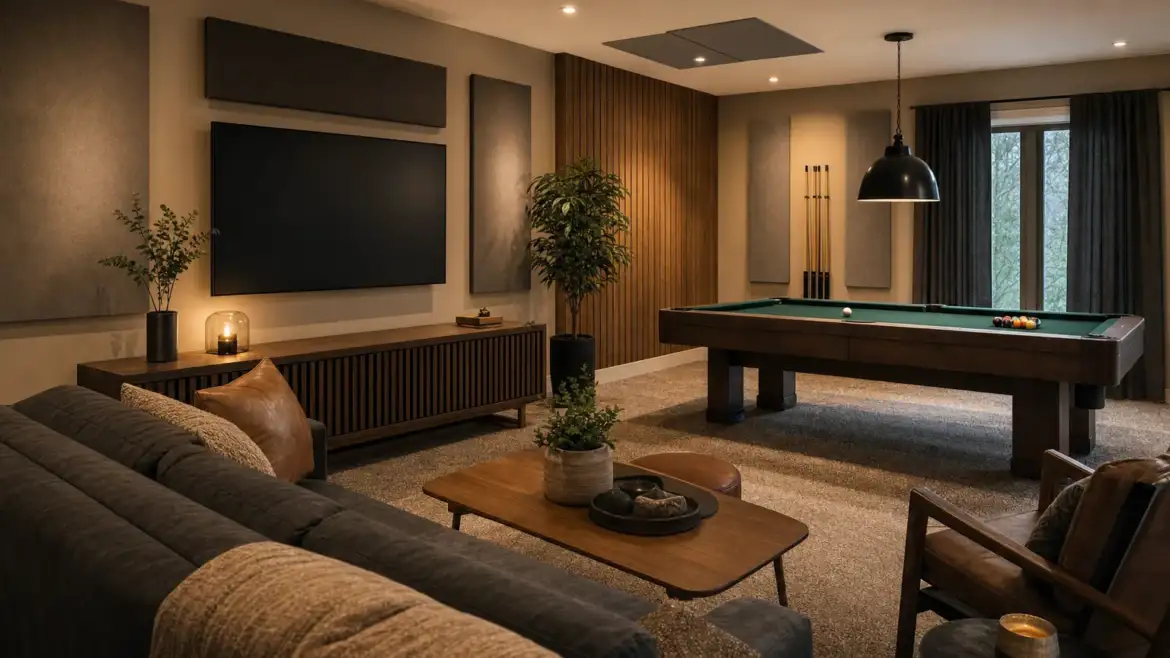
Why Game Room Soundproofing Matters
When you install a pool table in your home or business, you’re adding an activity that generates noise. Balls striking cushions, the crack of the break shot, and player conversations all contribute to sound levels that can travel through walls and floors, affecting other spaces in your building. If your game room is near a bedroom, home office, or quiet living area, acoustic control becomes essential for maintaining comfort and peace.
Game room soundproofing isn’t just about keeping noise contained. Proper acoustic design also improves the playing experience by reducing echoes and creating a more pleasant environment. A well-designed space feels intentional, controlled, and professional rather than loud and chaotic. Whether you’re setting up a casual family game room or a more sophisticated entertainment space, understanding the basics of sound management will help you get it right from the start.
The Basics of Sound and Acoustics
Sound travels in waves and moves through air, solid materials, and structures within your building. When it hits hard surfaces like drywall, wood, or tile, it bounces around, creating echoes and reverb. Soft, porous materials absorb sound energy rather than reflecting it, which is why acoustic treatments are effective.
In a pool room, you’re dealing with two types of sound:
- Impact noise: The sharp, sudden sounds of balls striking wood, slate, and cushions. These are quick, intense sounds that travel easily through structures.
- Airborne noise: General conversation, music, and ambient sounds that float through the air and walls.
Different materials handle each type differently. A comprehensive approach uses multiple strategies rather than relying on a single solution.
Structural Soundproofing Strategies
If you’re designing a new game room or renovating an existing space, structural choices have the biggest impact on sound control.
Insulation and decoupling: Adding insulation between walls and decoupling interior framing from exterior walls reduces vibration transmission. This is especially effective for impact noise from pool tables. Decoupling involves creating an air gap between the inner and outer wall surfaces, preventing sound vibrations from traveling directly through the structure.
Double drywall: Installing two layers of drywall with damping material between them significantly improves sound dampening compared to a single layer. The combination absorbs energy and reduces transmission.
Solid core doors and seals: Sound leaks through cracks around doors and HVAC vents. Heavy, solid core doors with quality weatherstripping create a physical barrier. Sealing gaps around electrical outlets and pipe penetrations also helps.
Floating floors: In spaces above noise-sensitive areas, a floating floor system isolates the pool table room from the structure below. This is particularly effective for impact noise.
These structural upgrades require planning and professional installation, but they provide the most lasting results.
Acoustic Treatments and Materials
Once your basic structure is in place, acoustic treatments fine-tune the sound environment. These materials are often easier to add or adjust than structural changes.
Acoustic panels: Wall-mounted panels with foam or fiberglass cores absorb mid and high-frequency sounds. They’re available in various thicknesses and can be covered with fabric in colors matching your room design. Position them where sound is most likely to bounce, such as opposite walls and above the pool table.
Bass traps: Low-frequency sounds (like the rumble of a heavy break shot) are harder to absorb than higher frequencies. Bass traps, typically placed in corners or behind other treatments, target these deeper tones.
Carpeting and rugs: Hard flooring reflects sound dramatically. Wall-to-wall carpeting or large area rugs dampen noise from footsteps, chairs moving, and ball impact. This also makes the room feel more finished and comfortable.
Heavy curtains: Fabric drapes over windows absorb sound and block external noise from entering. Layered or interlined curtains work better than thin ones.
Upholstered furniture: Sofas, chairs, and cushioned seating naturally absorb sound while providing comfort for spectators.
Soft furnishings: Bookshelves with books, wall hangings, and decorative items break up hard surfaces and scatter sound rather than reflecting it in concentrated patterns.
Layout and Placement Considerations
Where you position your pool table and other equipment influences how sound behaves in the space.
Place the pool table away from shared walls with bedrooms or offices. If that’s not possible, treat those walls with acoustic panels or consider moving noise-sensitive rooms in your layout planning. Avoid corners for the table if possible, as corners create standing waves and amplify low frequencies.
Consider ceiling height and shape. Vaulted or high ceilings can trap sound, while lower ceilings contain it better. If your room has a drop ceiling, ensure there’s acoustic insulation above it.
Leave space for players to move comfortably. Cramped layouts cause people to move furniture around and create additional noise. Proper spacing also makes for a better playing experience.
Combining Strategies for Best Results
The most effective game room soundproofing combines structural work, acoustic treatments, and thoughtful layout. You don’t need everything at once. Start with structural improvements during any renovation work, then layer in acoustic treatments based on what you observe after the table is installed.
For a new installation, DFW Billiard Professionals can help you think through placement and room design to optimize the space. Our team has experience working with designers and homeowners to create game rooms that sound as good as they play.
Final Thoughts
A well-designed game room with proper acoustic management becomes a space you’ll enjoy using without worrying about disturbing the rest of your home or business. Sound control is achievable through a combination of smart structural choices, quality materials, and thoughtful layout. Whether you’re planning a new installation or improving an existing space, these strategies will help you create an environment that’s both functional and pleasant. When you’re ready to install or move your pool table as part of a game room project, our team can help ensure placement and setup support your acoustic goals.