
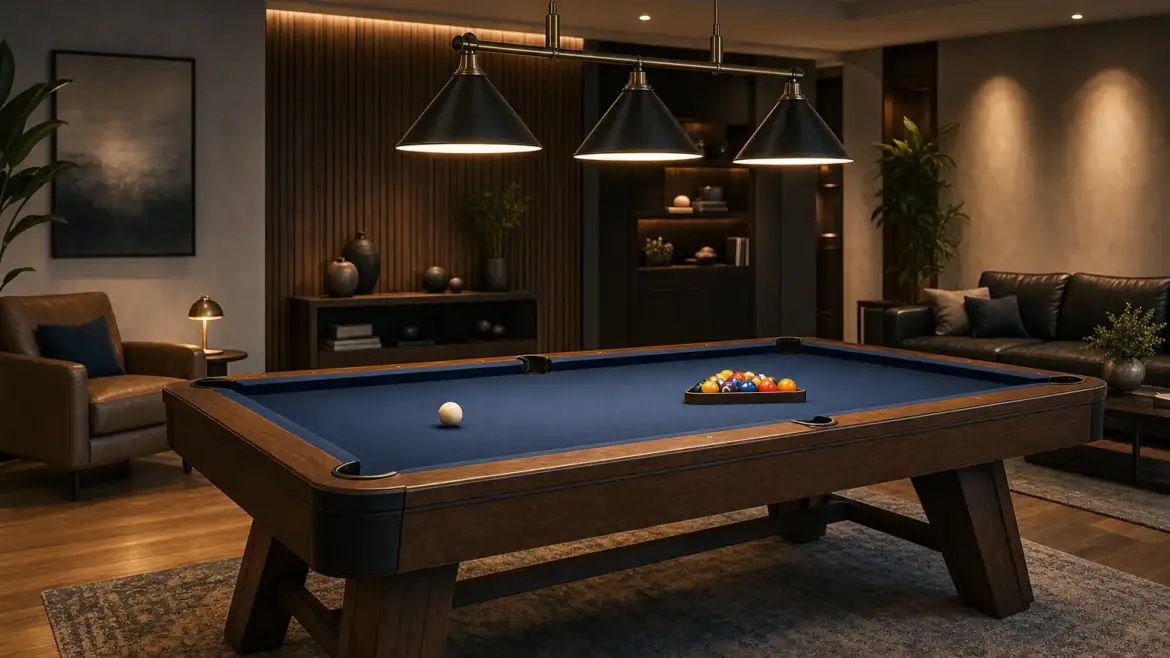
Pool table lighting is one of the most overlooked elements of game room design, yet it fundamentally affects how the table plays and looks. Poor lighting creates shadows that distort angles, makes it hard to judge ball speed, and strains your eyes during long sessions. The right pool table lighting setup, on the other hand, can transform your game room into a space where you actually want to spend time and where the table performs at its best.
Whether you’re setting up a new game room, relocating a table, or upgrading an existing space, understanding lighting principles will help you create an environment that supports both casual play and serious gameplay.
Understanding Pool Table Lighting Height and Placement
The most critical factor in pool table lighting is height. Your fixtures need to be positioned high enough to illuminate the entire playing surface without casting shadows that interfere with your view of the balls and cue stick.
The industry standard for billiard table lighting height is 32 to 36 inches above the playing surface. At this height, light spreads evenly across the felt while minimizing shadows cast by players, cue sticks, and the balls themselves. If your lights hang too low, shadows become pronounced and shift as you move around the table. If they hang too high, the light disperses too widely and loses intensity on the felt.
For most residential game rooms, overhead fixtures should be centered directly above the table, whether you’re using a single large fixture or multiple smaller lights. If your game room has a vaulted ceiling or other architectural constraints, position lights as close to this ideal height as your space allows.
Brightness and Wattage for Optimal Play
Proper brightness matters as much as placement. You need enough light to see the cloth clearly, distinguish ball positions, and judge cue ball contact points. Tournament-grade tables typically operate under lighting levels of 500 to 800 lux, a technical measure of light intensity.
For a standard 7-foot or 8-foot residential pool table, you’ll want:
- LED fixtures rated between 2,000 and 4,000 lumens
- Color temperature of 3,500 to 4,100 Kelvin for warm white light that doesn’t create glare
- Fixtures designed to diffuse light evenly rather than create hot spots
LED technology is now the standard for game room lighting. It offers excellent brightness, produces minimal heat compared to traditional incandescent or halogen fixtures, runs efficiently, and lasts much longer. Avoid overly bright white or cool blue lighting, which causes eye strain and doesn’t replicate the conditions of professional pool halls.
Types of Pool Table Light Fixtures
Several fixture styles work well for billiard tables, depending on your game room design:
Island or Pendant Lights: These hang from chains or rods above the center of the table. They work best in open spaces and are the most common choice for dedicated game rooms. Choose fixtures with shades that direct light downward rather than scattering it sideways.
Recessed Ceiling Lights: If you have a drop ceiling or finished ceiling with recessed fixtures, space them to cover the table evenly. You may need multiple recessed lights rather than one central fixture to avoid dark corners.
Track Lighting: Adjustable track systems allow you to position multiple lights at different angles, useful if your table shares space with other furniture or if ceiling height is limited.
Wall-Mounted Fixtures: Some game rooms use sconces or wall brackets, though these typically supplement rather than replace overhead lighting and work best combined with good overhead fixtures.
Stay away from fixtures designed primarily for ambiance, such as decorative chandeliers without proper downward light distribution or tiffany-style shades that create too much color and shadow distortion.
Balancing Overhead and Ambient Lighting
While overhead pool table lighting is essential, you don’t want your entire game room dark except for the table. Harsh contrast between a brightly lit table and dark surroundings causes eye fatigue when you look away from play.
Include ambient lighting in your game room plan:
- Wall sconces or recessed lights at lower brightness levels around the perimeter
- A separate dimmer switch for overhead table lights so you can adjust intensity
- Accent lighting on any game room storage, bar, or seating areas
This layered approach keeps the table as the focal point with sufficient brightness for play, while the surrounding space remains comfortable and inviting. If you’re working with an interior designer or planning a comprehensive game room renovation, discuss lighting zones so your electrician can install separate circuits for different areas.
Avoiding Common Lighting Mistakes
When installing or upgrading pool table lighting, watch out for these frequent problems:
- Placing lights too far to one side, creating uneven illumination
- Using ceiling-mounted fans with integrated lights, which cast inconsistent shadows
- Ignoring reflective surfaces like glass picture frames or mirrored walls that can create glare
- Installing fixtures too close to skylights or windows that introduce competing natural light
- Choosing warm amber lighting that makes it hard to distinguish ball colors on green or blue felt
If you’re relocating a table to a different room or building a new game space, think through lighting before the table arrives. The right electrical placement and fixture type make a huge difference in the final result.
Professional Setup for Your Game Room
If you’re designing a complete game room or upgrading your existing space, partnering with professionals who understand both pool table requirements and interior design can simplify the process. When planning table placement and lighting, coordinate with your electrician and any designer involved to ensure fixtures are installed correctly and at the proper height before your table setup begins.
DFW Billiard Professionals can advise on table placement and lighting needs as part of a comprehensive game room consultation. Professional table setup and leveling work best when combined with proper lighting design, so the playing surface performs at its best under the lights you choose.
Final Thoughts on Pool Table Lighting
Great pool table lighting doesn’t require expensive custom fixtures. It requires understanding the basics of height, brightness, and light quality, then choosing fixtures that match your game room style. When overhead lighting is properly installed and balanced with ambient room lighting, your table becomes both a functional playing surface and an attractive centerpiece that invites use and enjoyment for years to come.