
Buying a used pool table can be a smart way to own quality equipment without the price tag of a new one. But it also comes with hidden risks. A bargain on the price tag doesn’t mean much if the table has structural damage, worn cloth, or plays poorly. Before you commit to buying a used pool table, you need to know what to look for, what problems are fixable, and how setup costs might add up.
Understand What You’re Actually Buying
When you’re buying a used pool table, you’re acquiring several interconnected systems that all need to work together. The slate surface has to be perfectly level. The rails and cushions need to provide consistent rebound. The cloth has to be in good condition and properly stretched. The pockets need to catch balls cleanly. Any one of these can fail independently, and fixing them costs money.
Unlike furniture, a pool table’s playability depends on precision engineering. Two tables that look identical can play completely differently if one has a warped frame or damaged slate. This is why hands-on inspection matters far more than the seller’s description.
Check the Slate Surface First
The slate is the foundation of everything. Damage to slate is expensive to repair. Here’s what to look for:
- Use a straight edge or level to check for low spots and high spots across the playing surface
- Look for visible cracks, chips, or gouges in the slate
- Check the seams where multiple pieces of slate join together; they should be smooth and level
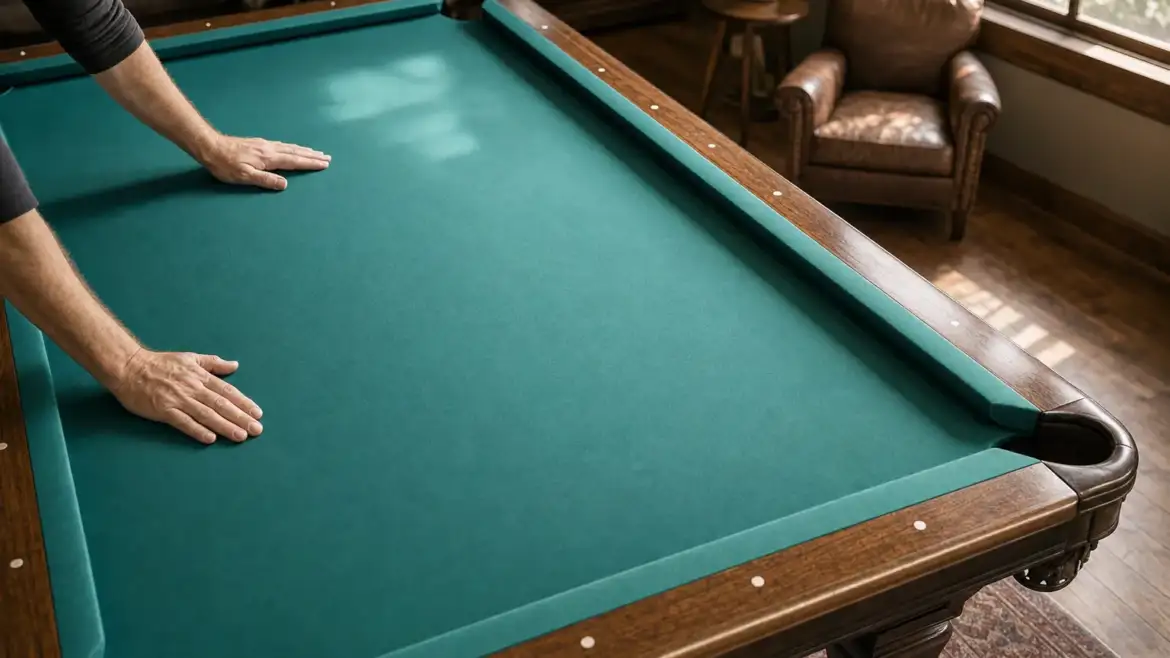
- Run your hand along the surface to feel for bumps or dips
- Ask how the table was moved previously; improper moving causes slate damage
Minor dings can sometimes be filled, but a cracked or severely warped slate usually means a complete replacement. That’s a five-figure job in most cases.
Inspect the Cloth and Rails
Cloth is one of the easier repairs to handle, so minor wear is not necessarily a deal-breaker. Look for staining, burns, holes, or areas where the felt is lifting from the bed. Light color fading is cosmetic. Severe wear or burns mean re-clothing will be necessary, which adds to your total cost.
Check the bumpers and rail cushions by pressing on them with your hand. They should have some give but then spring back firmly. If they feel hard and lifeless, they’re old and should be replaced. Worn cushions affect how balls rebound and play.
Assess the Frame and Structure
The frame holds the slate in place and keeps everything square. A warped or damaged frame can make a table impossible to level properly, even after professional setup.
- Look for visible cracks or splits in the wood
- Check that the table doesn’t rock when you push on the corners
- Make sure the frame is square by measuring diagonals; they should be equal
- Ask about water damage, which weakens wood and can cause warping
Structural repairs are costly and sometimes not worth the effort, depending on the table’s original quality.
Know What Professional Setup Costs
Even a well-maintained used table needs professional setup and leveling when it arrives at your home. Moving a pool table is not a DIY job, and the setup process is critical. DFW Billiard Professionals offers full professional service for used table setup, leveling, and any repairs needed to get the table playing right.
Budget for:
- Professional moving and disassembly at the seller’s location
- Transport to your home
- Reassembly and precision leveling at your location
- Any additional repairs discovered during the setup process
These costs vary based on distance, table condition, and repair scope. Using an online estimator helps you get clear pricing before you buy, so there are no surprises after you’ve committed to the purchase.
Get a Professional Inspection Before Buying
If you’re serious about a used table, consider having a professional billiard technician inspect it before you complete the purchase. They can identify hidden damage, estimate repair costs, and tell you whether the table is worth the asking price.
Red Flags to Walk Away From
Some used pool tables are better left unpurchased. Walk away if you encounter:
- Cracked or split slate
- A frame that rocks or feels unstable
- Evidence of water damage or mold
- Excessively worn or damaged cloth combined with old hard cushions
- A seller who can’t explain the table’s history or refuses inspection
- A price that seems too good to be true for the condition offered
A cheap purchase that requires thousands in repairs becomes expensive fast.
Consider Where You’ll Put It
Before you buy, confirm that the used table will actually fit in your space. Pool tables need clearance around all sides for cue strokes. A table that fit perfectly in the seller’s game room might not work in yours. Measure your doorways and hallways too, since the table needs to be disassembled and moved through those spaces.
Room layout affects how you’ll use the table. If space is tight, poor positioning makes the game less enjoyable.
Get Professional Setup for Best Results
Buying used means you’re taking on some risk, but professional setup and inspection can mitigate that. A skilled technician can often restore an older table to excellent playing condition through re-clothing, bumper replacement, and precision leveling. The key is knowing upfront what you’re buying and what the total cost will be once setup is included.
If you’re buying a used pool table in the Dallas-Fort Worth area, reach out to DFW Billiard Professionals for a free estimate. We can help you evaluate what you’re considering, outline any repairs needed, and handle the entire setup process so your used table plays like new.