
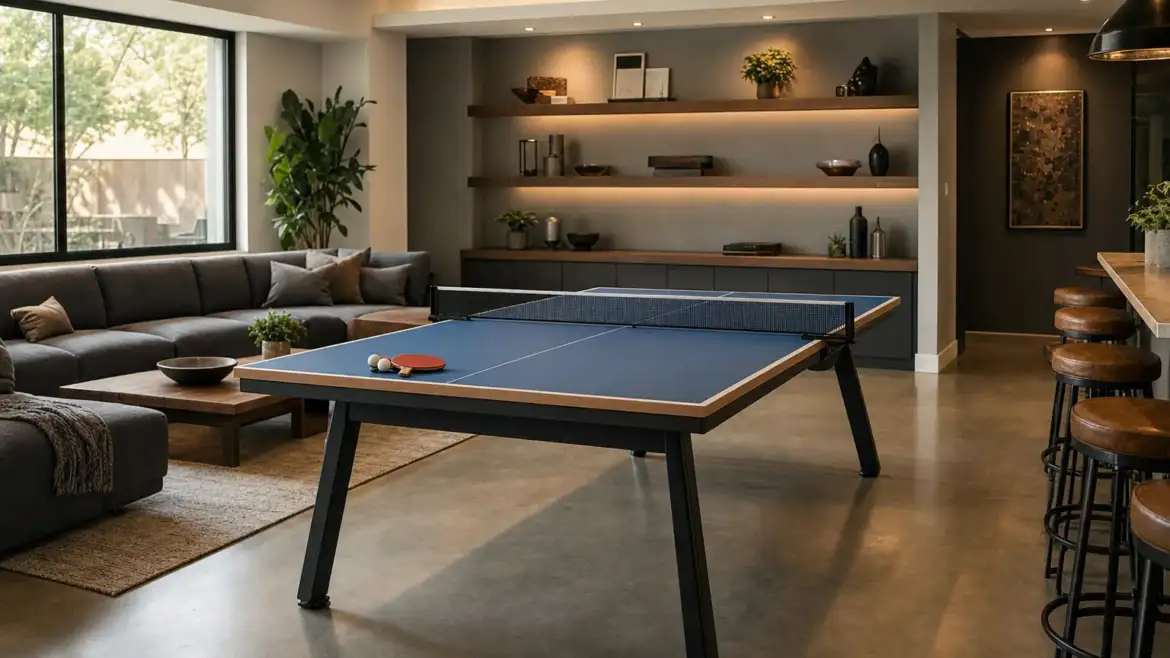
Best Home Game Room Layout With Pool Table
Whether you’re a casual player or serious enthusiast, the way you design your game room around a pool table makes all the difference. A poorly planned space can leave you frustrated with restricted shot angles and awkward traffic flow. A well-designed room transforms your table into the perfect centerpiece for entertainment and competition.
The key is understanding how much space you actually need, then arranging furniture and fixtures to maximize both playability and enjoyment. Let’s walk through the essential considerations for creating a game room layout that works.
How Much Space for a Pool Table
Before you buy or move a pool table into your home, you need to understand the space requirements. This goes beyond just the table’s footprint.
A standard pool table is 8 feet long and 4 feet wide. However, players need room to shoot from every angle around the table. A basic rule of thumb: you need a minimum of 4 to 5 feet of clear space on all sides of the table. This allows players to stand back and execute their shots comfortably without hitting the walls or nearby furniture.
For a more realistic game room, aim for at least 18 by 20 feet if you’re using an 8-foot table. This gives players genuine comfort and room to move. If you have a 9-foot competition table, you’re looking at closer to 20 by 22 feet or larger.
Don’t forget about ceiling height either. A minimum of 8 feet is essential, but 9 to 10 feet is much more comfortable. Many players use cues that are 57 to 58 inches long, and you need overhead clearance to make your full range of shots without the cue hitting light fixtures or ductwork.
Game Room Design Ideas for Your Layout
Once you’ve confirmed your space is adequate, it’s time to think about the overall design. The best game room layouts follow a few core principles.
Position the table for visual balance. Place your pool table toward the center or slightly off-center of the room, not jammed into a corner. This creates better sightlines from the entry point and makes the room feel larger. The table becomes the natural focal point rather than looking like an afterthought.
Create distinct zones. Separate your shooting area from your social area. Spectators and other players waiting their turn should have a comfortable seating area that doesn’t interfere with active play. A sectional couch or high-top bistro seating along one wall works well.
Plan your lighting carefully. Professional pool tables use overhead lighting directly above the table. Install recessed lights or a billiard-specific pendant fixture centered over the table. The goal is even, shadow-free illumination across the entire playing surface. Avoid placing bright lights that create glare on the felt.
Consider additional game tables. If space allows, you might add a shuffleboard table, darts, or arcade games in adjacent areas. This expands your game room’s utility and keeps guests entertained between pool games.
Pool Table Room Size Requirements
Different table sizes and player skill levels drive different space needs. Here’s what to consider:
For a casual home setting with a 7-foot table, you can get by with a smaller footprint, but 16 by 18 feet is still ideal. If you’re serious about straight pool or nine-ball and want tournament-grade play, a 9-foot Diamond table or equivalent demands 20 by 22 feet minimum.
Remember that room shape matters too. A long, narrow rectangle is less functional than a square space. Rectangular rooms work, but they can limit shot angles on the side rails. If your room is tight, positioning the table lengthwise along the longer wall maximizes your available space.
Also account for doorways, windows, and permanent fixtures. You don’t want a window creating glare on the felt or a heating vent blowing cool air across the playing surface. Measure twice, plan once.
Essential Furniture and Accessories
Once your table is positioned, furnish the room strategically:
- Seating: Place chairs and benches around the perimeter, away from active play zones. A few high-back stools work nicely as they don’t take up much floor space.
- Storage: Wall-mounted racks for cues keep them organized and off the floor. Consider a cabinet for scoring equipment, chalk, and bridge accessories.
- Flooring: Concrete or wood works best. Carpet can be problematic because it absorbs sound and can shift under a heavy table’s weight.
- Bar or beverage station: If space permits, a small bar cart or counter along one wall adds function and entertainment value.
- Art and décor: Billiard-themed art, neon signs, or vintage posters enhance the atmosphere without cluttering the play space.
Design Considerations for Different Spaces
Your home’s layout presents unique challenges. A basement offers excellent privacy and climate control for your table. Garages can work but require insulation and climate management to protect the felt and slate. A dedicated spare room or den is ideal.
If you’re converting an existing room, account for humidity and temperature stability. Pool table felt is sensitive to moisture and heat fluctuations. A well-controlled climate keeps the table level and the felt performing consistently.
When you’re ready to move a pool table into your space or need professional setup and leveling, DFW Billiard Professionals can handle everything from pool table setup and disassembly to precision leveling. Their team also offers guidance on custom pool tables and home design if you want a table that matches your room’s aesthetic and architecture.
Making Your Game Room Happen
Designing a great game room layout takes planning, but it’s worth the effort. You’ll spend years enjoying the space, so get the fundamentals right: adequate space around the table, balanced lighting, thoughtful furniture placement, and climate control.
Start by measuring your room carefully and understanding your table’s true footprint and sightline requirements. Then build your design from there. The result is a functional, inviting space where you and your guests can enjoy the game at its best.
Ready to move forward? Whether you’re relocating an existing table or setting up a new one, DFW Billiard Professionals serves the entire Dallas-Fort Worth region with professional installation, leveling, and design consultation. Their team can help ensure your table is positioned and leveled to tournament standards in your new game room.