
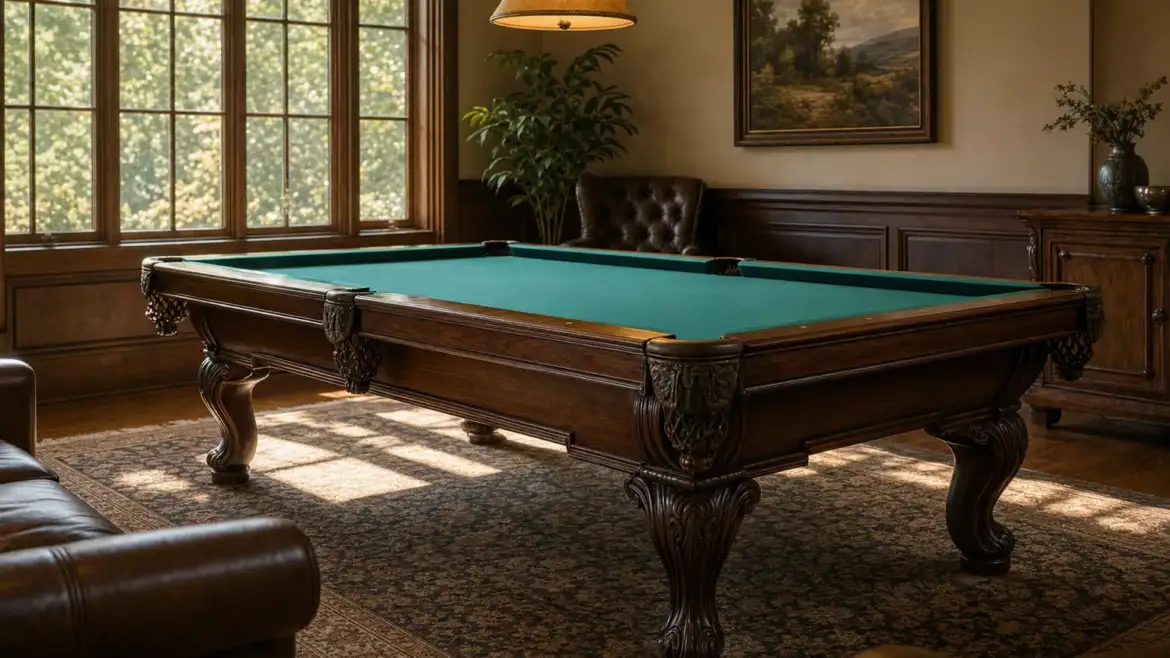
Restoring an antique pool table is a rewarding way to preserve a family heirloom or rescue a neglected treasure. Unlike modern tables, antique tables often feature superior craftsmanship, hand-carved details, and solid wood construction that make them worth the investment to restore. Whether you’ve inherited a Victorian-era table or purchased a vintage piece at an estate sale, understanding the restoration process helps you make informed decisions about what work your table truly needs.
Why Antique Pool Tables Are Worth Restoring
Antique pool tables represent a different era of manufacturing. Many vintage tables were built with solid hardwoods, precision slate playing surfaces, and hand-finished details that modern production tables cannot match. A table from the early 1900s or mid-20th century often features joinery and materials that have proven durability over decades of use.
Beyond function, these tables carry stories. They may have entertained generations of family, sat in historic businesses, or represented significant design movements in American furniture craftsmanship. Restoration allows you to preserve that history while bringing the table back to playable condition and aesthetic beauty.
The challenge is knowing which restoration steps actually matter for your specific table. Not every antique needs a complete teardown, and aggressive refinishing can sometimes remove patina that adds character and value.
Assessing Your Antique Table’s Condition
Before planning restoration work, you need a clear understanding of what you’re working with. Start with these fundamental assessments:
Structural Integrity: Check the frame for cracks, loose joints, or warping. Run your hand along all corners and legs. Listen for creaks or movement when you gently apply pressure to different areas of the table.
Slate Surface: Inspect the playing surface closely. Minor surface wear is normal and cosmetic. Hairline cracks that don’t affect play are cosmetic. Deep cracks that catch a cue tip or cause the ball to bounce unevenly are structural problems that need repair.
Cushions and Rails: Old rubber cushions harden and lose responsiveness. Press on each cushion along the rail. If they feel rock-hard or brittle, replacement is likely needed. Check that the balls rebound consistently when dropped from above.
Cloth Condition: Antique felt often shows wear, fading, or staining. If the cloth is torn, heavily stained, or plays poorly due to pilling, reclothing becomes necessary. Cosmetic surface wear alone doesn’t always require replacement.
Hardware and Details: Examine pockets, corner and side irons, and any decorative elements. Note missing pieces, corrosion, or looseness that requires attention.
Key Restoration Steps for Antique Tables
Professional Leveling and Slate Work
A level playing surface is non-negotiable. Even small deviations affect ball roll and consistency. Antique slate sometimes settles or warps over time. Professional leveling uses precision instruments to measure the surface and adjust support as needed. Seam work where slate pieces meet also becomes critical on older tables.
This is one area where professional expertise truly matters. Improper leveling or slate repair can permanently damage a valuable table.
Cloth Replacement
Reclothing is often the most visible and impactful restoration step. The right cloth choice balances playability with period authenticity. Some owners prefer tournament-grade modern cloth for consistent play. Others choose vintage-style felt that matches the table’s era.
The quality of cloth installation matters as much as the cloth itself. Wrinkles, uneven tension, or poor seaming will frustrate players immediately. Professional installation ensures the new cloth performs correctly from day one.
Cushion and Bumper Replacement
Hardened rubber cushions won’t respond properly to shots. Replacing them restores the responsive, consistent rebound that makes a table playable. This work often pairs naturally with reclothing since the rails are already being handled.
Structural Repairs and Refinishing
Antique wood requires careful attention. Loose joints might need careful re-gluing without complete disassembly. Finish restoration could mean deep cleaning, spot refinishing of damaged areas, or in some cases, complete refinishing if the original finish is severely damaged.
Some owners choose to preserve patina and historical wear as part of the table’s character. Others prefer restoration to original appearance. Both approaches are valid depending on your priorities.
Hardware and Pocket Restoration
Missing or corroded hardware can often be replaced with period-appropriate pieces. Pockets that are torn, stained, or structurally loose can be repaired or replaced. If original hardware cannot be matched, reproduction pieces that respect the table’s style are available.
Avoiding Common Restoration Mistakes
Well-intentioned restoration can sometimes diminish a table’s value or character. Consider these pitfalls:
Aggressive stripping removes not just old finish but also the patina that gives antique wood its character. Sometimes careful cleaning and minor touch-up serve better than complete refinishing.
Incorrect leveling or slate sealing can create bigger problems. This is why professional assessment matters before diving into work.
Using modern materials that clash with the table’s era can look out of place. Period-appropriate cloth, hardware, and finishes keep the restoration cohesive.
Overcomplicating the restoration by replacing parts that don’t need replacement adds unnecessary cost and can remove original elements that add value.
Working with Professional Restoration Specialists
Antique pool table restoration often benefits from professional expertise. Specialists understand the specific challenges of vintage construction, know how to source period-appropriate materials, and can perform delicate work like hand-refinishing or intricate repairs that require skill and experience.
When you choose a professional, ask about their experience with antique tables specifically. Not all billiard service companies have the background to handle restoration that respects a table’s historical integrity and value. DFW Billiard Professionals provides expert repair and restoration services for antique and heirloom tables, combining traditional craftsmanship with modern precision to bring your table back to life while honoring its original construction and character.
Timeline and Budget Considerations
Antique restoration is not quick work. A full restoration might span several weeks or months depending on the table’s condition and the extent of work needed. Structural repairs require time for glue to set. Refinishing involves sanding, staining, and multiple finish coats that cannot be rushed. Professional workshops often have other projects ahead, so plan accordingly.
Budget varies widely based on condition and scope. A simple reclothing might cost significantly less than a table requiring structural repairs, refinishing, and cushion replacement. Getting a detailed estimate before work begins helps you understand the investment and make choices about priority repairs versus nice-to-have upgrades.
Maintaining Your Restored Table
Once your antique table is restored, basic maintenance preserves your investment. Keep the cloth clean and protected from spills. Maintain humidity and temperature stability in the room, as extreme swings can cause wood movement and eventual warping. Use a cover when the table is not in use. Have the table re-leveled periodically if you notice play degradation.
Treating your restored antique with the same care that went into restoration will keep it playable and beautiful for another generation.
If you own an antique pool table that needs assessment or restoration work, DFW Billiard Professionals offers expert evaluation and comprehensive restoration services throughout the Dallas-Fort Worth region. Contact us for a free estimate or to discuss your table’s specific needs.