
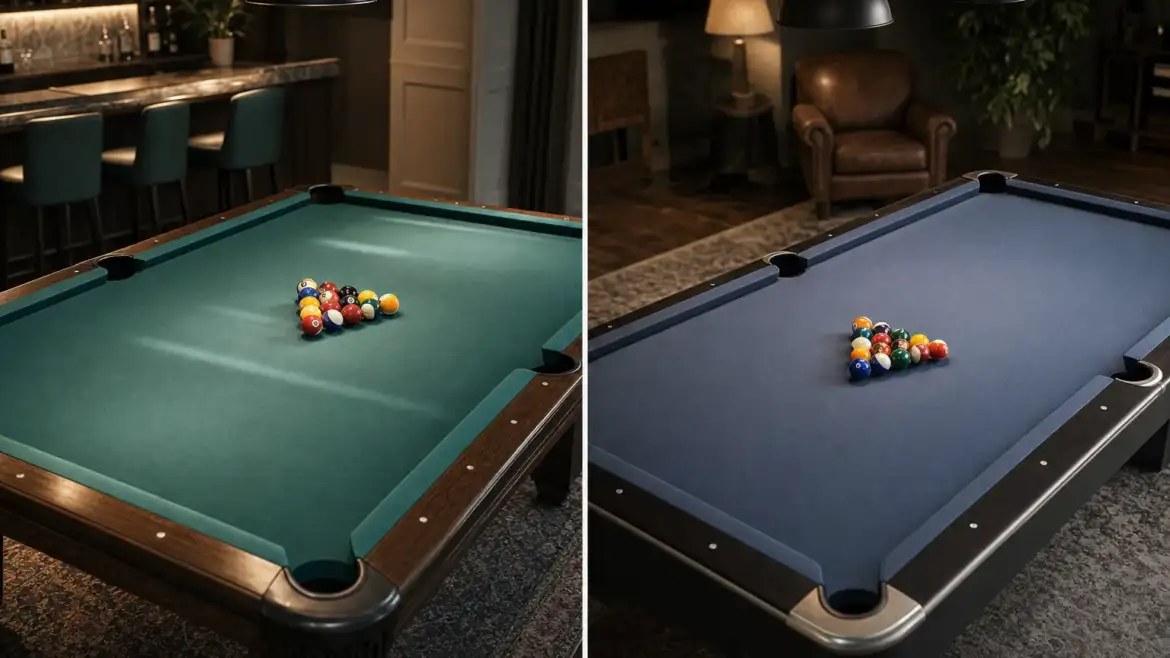
Understanding Pool Table Surfaces
When you’re shopping for a pool table or evaluating your current setup, one of the most important decisions centers on the playing surface. The slate vs non-slate choice affects everything from how the ball rolls to how long your table will last and what you’ll pay upfront. Whether you’re furnishing a home game room or considering a commercial venue table, understanding the key differences between slate pool table and non-slate options will help you choose the right surface for your needs.
The surface of a pool table is far more than decoration. It’s the foundation of every shot, every game, and every moment you spend playing. Get this choice right, and you’ll enjoy decades of consistent play. Get it wrong, and you might find yourself frustrated with uneven bounces or replacing your table sooner than expected.
What Makes Slate the Gold Standard
Slate is a natural stone that has been the preferred playing surface for professional and high-quality tables for over a century. When quarried and finished properly, slate offers an incredibly flat, dense surface that maintains its levelness over time. A quality one-piece or three-piece slate surface is ground to tolerances of within 0.01 inches across the entire playing area, which means the ball responds predictably every single time.
Slate’s density also means it resists warping. Unlike wood or synthetic materials, slate doesn’t expand or contract significantly with humidity changes or temperature fluctuations. This is why slate tables can be moved and re-leveled without losing their precision. Professional players and serious enthusiasts prefer slate because it provides the honest feedback they need to develop their skills and trust their stroke.
The downside is cost. A slate table carries a higher initial price tag, and slate requires professional installation and leveling. When you do need maintenance like re-clothing or repairs, the work must be done with precision and care.
Non-Slate Alternatives and Their Trade-Offs
Non-slate pool table surfaces typically use engineered materials such as plywood, particle board, or synthetic composite tops with a thin felt covering. These materials are much lighter than slate and significantly cheaper to manufacture, which translates to lower retail prices.
The appeal is clear: non-slate tables cost less upfront and are easier to move and assemble. For casual players, kids’ tables, or budget-conscious buyers, they offer a way to own a pool table without a large investment.
However, non-slate surfaces come with real limitations:
- Warping over time: Wood-based materials absorb moisture and can swell, warp, or develop dead spots where the ball no longer rolls true
- Lower ball response: The softer surface doesn’t provide the crisp, consistent feedback that slate delivers
- Shorter lifespan: Non-slate tables typically last 5 to 10 years with moderate use before playability deteriorates
- Difficulty leveling: Once warped, a non-slate surface is extremely difficult or impossible to true up properly
- Limited resale value: They depreciate quickly and have little appeal in the used market
Durability and Longevity Comparison
Slate tables, when properly installed and cared for, routinely last 50 years or more. Some slate tables are over a century old and still play beautifully. The material simply doesn’t degrade the way engineered wood products do.
Non-slate tables, by contrast, have a finite lifespan tied directly to how stable their substrate remains. A table kept in a climate-controlled basement might hold up better than one in a garage where temperature swings are extreme, but eventually the felt wears out, the bounce becomes inconsistent, and the table reaches the end of its useful life.
If you plan to own your table long-term or want something that will pass to the next generation, slate is the investment that pays dividends. If you’re testing the market or furnishing a casual space temporarily, non-slate can make sense from a budget perspective.
Installation, Leveling, and Maintenance
Proper installation is critical for both types, but slate demands more expertise. A slate table must be set on a perfectly level foundation and the slate pieces must be shimmed and leveled to within very tight tolerances. This is why professional installation through experienced technicians is essential.
Once installed correctly, slate tables require minimal intervention. You may need to re-level after moving the table to a new location, but the maintenance routine is straightforward: brush the felt, keep it clean, and enjoy years of consistent play.
Non-slate tables are simpler to install initially, but they don’t respond well to leveling adjustments over time. Once warping begins, no amount of shimming will restore true playability. Maintenance becomes increasingly futile as the underlying material deteriorates.
When you do need professional care like re-clothing or repairs, slate tables are the clear choice because skilled technicians can restore them to like-new condition. Our team at DFW Billiard Professionals handles everything from professional pool table setup and reassembly to advanced restoration work for tables that deserve a second life.
Cost Considerations Across the Table’s Lifetime
A slate table costs more initially, but the math changes when you factor in longevity. A $3,000 to $5,000 slate table used for 30 years costs roughly $100 to $170 per year. A $1,000 non-slate table that lasts 8 years costs $125 per year, and then you’re buying another table.
Add in the cost of re-clothing and repairs, and slate becomes the more economical choice over time. Non-slate tables are cheaper to replace than to properly maintain, which is why many owners eventually upgrade to slate when they become serious about the game.
For businesses, the decision is even clearer. A bar or entertainment venue that invests in a quality slate table will see reliable performance and draw consistent patronage. A non-slate table might save money upfront but will require replacement within a few years, negating any savings.
Making the Right Choice for Your Space
Your decision should hinge on how serious you are about pool, how long you plan to own the table, and whether your space can accommodate the weight and installation requirements of slate.
Choose slate if you:
- Plan to own the table for many years
- Want consistent, tournament-quality play
- Are willing to invest in professional installation and occasional maintenance
- Value the table as a lasting centerpiece in your home or business
Consider non-slate if you:
- Are new to pool and uncertain about long-term interest
- Have a very limited budget
- Need a lightweight, portable table
- Are furnishing a temporary or casual space
Whichever surface you choose, professional installation and care matter tremendously. The best slate table plays poorly if not properly leveled, and even a non-slate table can provide decent short-term enjoyment with good upkeep.
If you’re purchasing a pre-owned table, inspect the playing surface closely for signs of warping or damage. If you’re moving an existing table, professional handling protects your investment regardless of surface type. DFW Billiard Professionals serves homeowners and businesses throughout the Dallas-Fort Worth region with expert moving, installation, leveling, and restoration services. Whether your table is slate or non-slate, we’ll make sure it’s set up perfectly and plays true for every shot.