
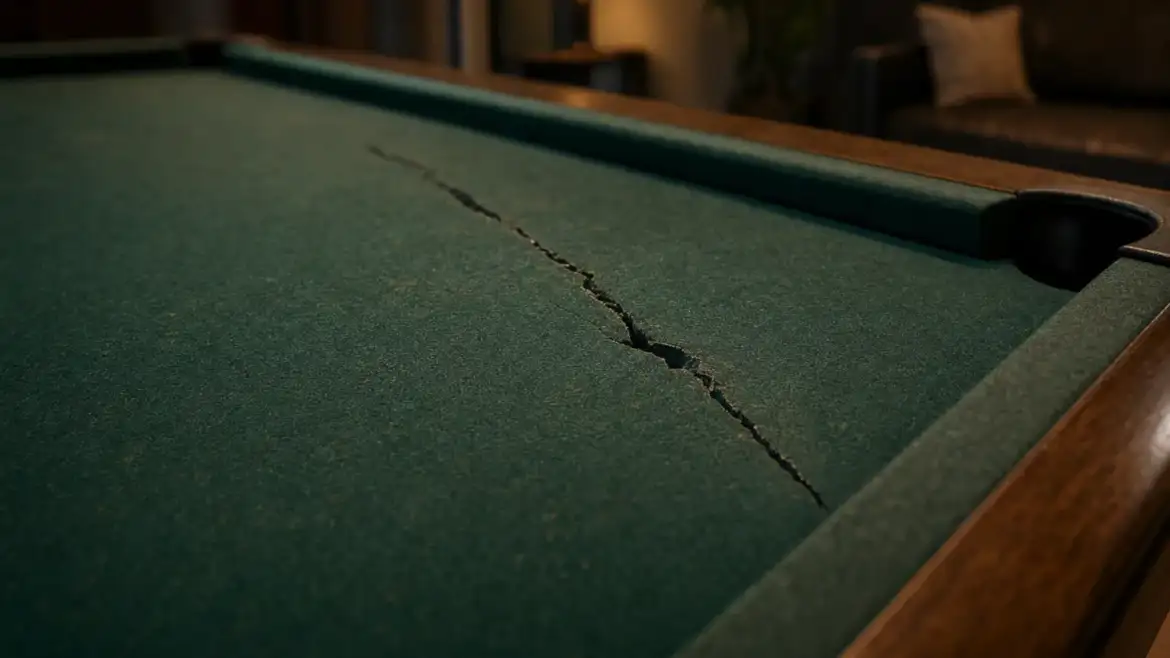
Slate is the gold standard for pool table playing surfaces. It’s durable, level, and consistent in a way that no other material can match. But slate is also stone, and stone can crack. Whether you own a beloved family table or a high-end custom piece, discovering a crack in your slate top can be unsettling. The good news is that not every crack means the end of your table.
Understanding the difference between repairable cracks and those requiring slate replacement will help you make the right decision and protect your investment.
Why Slate Cracks Happen
Slate cracks develop for several reasons, and understanding the cause matters for deciding the best repair approach.
Temperature swings are one of the most common culprits. Slate expands and contracts with humidity and temperature changes. A table positioned near a window, in an unheated garage, or close to a heating vent experiences stress that can eventually lead to cracking. Slate is strongest when its environment remains stable.
Direct impact is another frequent cause. A heavy object dropped on the playing surface, rough handling during a move, or even aggressive play in some cases can create cracks. This is why professional pool table moving is crucial, especially for slate tables. Inexperienced movers can inadvertently damage slate during transport or setup.
Subsurface settling occurs when the table’s support structure shifts or warps underneath the slate. If the frame weakens or legs become uneven, pressure concentrates in certain spots, causing cracks to form over time.
Manufacturing defects are rare but possible. Some slate contains small stress points that can propagate into larger cracks years after purchase, particularly if the table experiences environmental stress.
Hairline Cracks vs. Structural Breaks
Not all cracks are created equal, and this distinction is critical.
Hairline cracks are thin, typically less than 1/8 inch wide. They run superficially across the slate surface and don’t affect the structural integrity of the table or playing surface. Many hairline cracks can be sealed with epoxy or specialized stone filler, allowing play to continue safely. These repairs are relatively affordable and preserve the table’s value.
Structural cracks are wider, deeper, and often run completely through the slate or involve multiple sections of the slate bed. A structural crack may span several inches, show visible separation between slate sections, or indicate that the slate is actually broken into separate pieces. These cracks compromise playability because the playing surface is no longer level and true. Ball roll becomes unpredictable, and the table becomes unsafe for consistent play.
If you’re unsure whether a crack is hairline or structural, professional inspection is worth the investment. Technicians at DFW Billiard Professionals can evaluate the crack’s depth, direction, and impact on the table’s playability, then recommend whether repair or replacement is the right path.
Repairable Cracks
Many cracks can be successfully repaired, especially when caught early.
Hairline cracks in the playing surface that don’t affect leveling are usually good candidates for repair. A qualified technician will clean the crack thoroughly, apply a color-matched epoxy or stone sealant, and polish the area to restore smoothness. The repaired section bonds with the surrounding slate and typically holds up well under normal play.
Cracks along the slate seams, where individual pieces of slate join together, can also be repaired if the pieces haven’t shifted. Reseaming involves removing old seam filler, re-leveling the joint if needed, and applying new epoxy to bind the sections. This type of work requires expertise because the seam must remain perfectly flat and level.
Cracks at the table’s edge or in areas that don’t affect the playing surface may also be repairable. Edge cracks are less critical to play quality and can often be sealed without extensive work.
The key advantage of repairing cracks is cost. A professional repair typically costs a fraction of full slate replacement, and your table returns to reliable service within days rather than weeks.
When Replacement Is the Better Choice
Some cracks make replacement the only practical option.
Deep structural cracks that run completely through the slate are usually not repairable. Once slate is fractured through its full thickness, the structural integrity is compromised, and epoxy cannot reliably restore the table’s strength and playability. Playing on a severely cracked slate risks further damage and unpredictable ball behavior.
Multiple cracks across the slate bed indicate systemic problems, often related to environmental stress, frame issues, or prior damage. Repairing one crack won’t address the underlying cause if more cracks are likely to develop. Replacing the slate addresses the root problem.
Large cracks spanning several inches are difficult to repair invisibly. While the repair may hold functionally, the visual appearance of the table may be permanently altered. For valuable tables or those in prominent spaces, replacement preserves the aesthetic quality.
If the table frame or legs have also been damaged, requiring structural repair alongside slate replacement may make the total investment similar to or less than repairing only the slate. In these cases, full restoration or replacement becomes more attractive.
Age and overall table condition also factor into the decision. If your slate table is vintage, heirloom quality, or has high sentimental value, extensive restoration including slate replacement may be worthwhile. For older tables with other wear and tear, replacement might coincide with a complete restoration.
What Repair and Replacement Actually Involve
If your table needs crack repair, the process typically includes cleaning the crack, applying specialized stone epoxy or filler, leveling the area, resanding if needed, and refinishing to match the existing slate. Simple hairline repairs can often be completed on site in a single visit.
For slate replacement, the table must be disassembled, the old slate removed, and a new slate bed installed with precision leveling and seam work. This is considerably more involved and usually requires a professional shop facility. The table may be out of service for several weeks depending on whether the entire slate bed is replaced or whether individual slate sections can be swapped.
Making Your Decision
The choice between repairing and replacing slate comes down to a few practical questions:
- Is the crack affecting playability, or is it purely cosmetic?
- Is the table valuable, sentimental, or frequently used?
- Are there other problems with the table’s structure or frame?
- How old is the slate, and does it show other signs of stress?
If you’re unsure, a professional assessment can clarify your options. DFW Billiard Professionals provides expert evaluation of slate damage and can explain exactly what repair or replacement would involve, what it costs, and what the outcome will look like. Many table owners find that this guidance helps them make the decision that best protects their investment and keeps their table in reliable service for years to come.
Whether you need a simple crack repair or a full slate replacement, the key is acting quickly. Untreated cracks tend to worsen over time, especially if environmental stress continues. Getting a professional opinion early keeps your options open and prevents small problems from becoming major ones.