
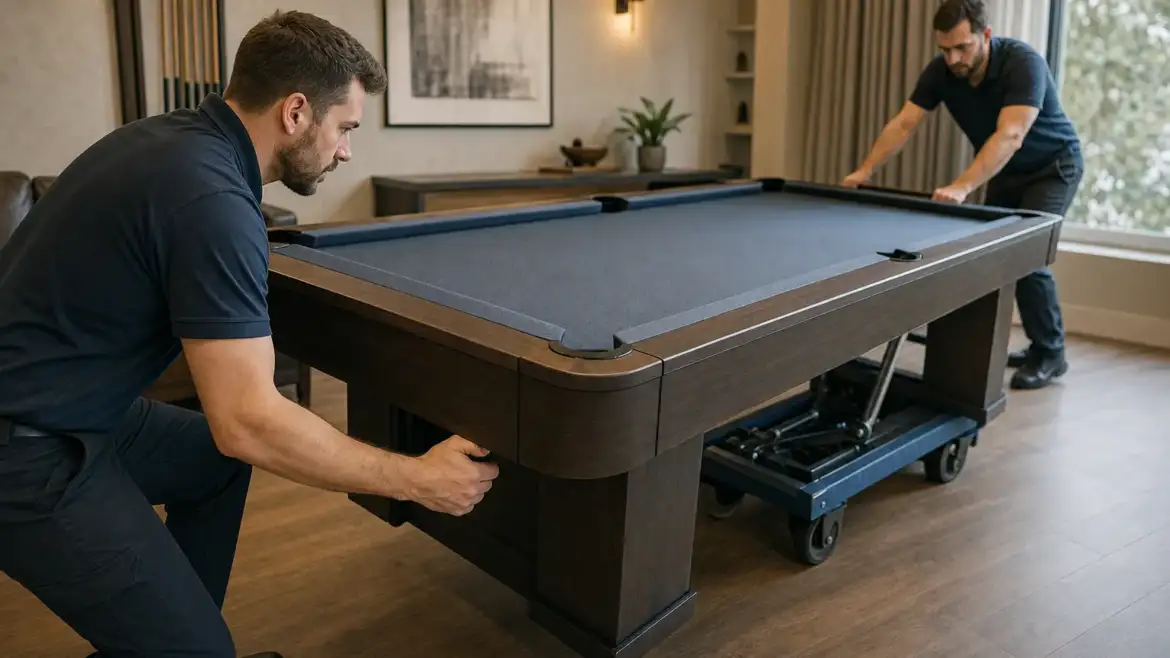
Moving a pool table across your game room might seem straightforward, but it’s actually one of the trickier home projects you can attempt. Unlike furniture you can simply slide across the floor, a pool table contains precision components, a delicate playing surface, and significant weight concentrated unevenly. A single mistake can throw off the slate leveling, damage the felt, or even crack the frame. Understanding the right approach before you start makes all the difference.
Why Moving a Pool Table Across a Room Is Different
When you’re moving a pool table to a different location, the process differs from a full relocation to another house. You’re working in a controlled environment where you can manage the space, but you still need to protect the table’s integrity. The slate surface must remain level throughout the move, and the felt cannot be bunched, torn, or marked.
A pool table’s weight distribution is misleading. The slate slab alone weighs 500 to 1,500 pounds depending on table size, and that weight isn’t evenly spread across the frame. The legs bear most of the load, which means improper support during the move can cause the frame to flex, the slate to shift, or the rails to misalign.
Prepare the Space and Gather Equipment
Before you even touch the table, clear both the current and new locations completely. You need a clear path with no obstacles, stairs, or tight doorways. Measure doorways and hallways if the table must pass through other rooms.
Gather the right equipment:
- Furniture sliders or moving blankets (at least 4-6)
- A furniture dolly or piano dolly rated for at least 2,000 pounds
- Level (a long one, ideally 4 feet)
- Tape measure
- Pencils for marking
- Work gloves
- Helper or two (do not attempt this alone)
Do not use standard furniture movers or hand trucks. These are not designed for the weight distribution of a pool table.
Step-by-Step Moving Process
Protect the Felt and Rails
Start by placing moving blankets over the entire playing surface. Tape them loosely around the sides so they stay in place but can be removed without tearing the felt. The blankets protect against dust, contact, and accidental damage as you work.
Support Under the Frame, Not the Legs
This is critical. Slide furniture sliders under the frame rails rather than directly under the legs. The frame is designed to distribute weight, and the legs are not. Position sliders along the long sides of the table, spacing them roughly 2 feet apart.
Lower the table gently onto the sliders. You want the table to rest on these sliders, not on the felt or slate.
Position the Dolly Correctly
Slide the furniture dolly under the center of the table, perpendicular to the length. The dolly should support the frame at a point where weight distribution is most balanced. If you’re moving the table only a few feet within the same room, you may not need the dolly, but it’s safer to use it.
If you use a dolly, have one person keep steady downward pressure on the opposite end of the table to prevent tipping as you push.
Move Slowly and Check Alignment
Push the table slowly. Stop every few feet to ensure nothing has shifted. Look at the legs to confirm they’re still vertical and the table frame remains square. If the table catches on anything or feels uneven, stop and investigate before proceeding.
Do not drag the table across hard floors, even with sliders. The weight can cause sliders to catch or the frame to hang up on floor imperfections.
After You’ve Reached the New Spot
Once the table is in its final position, do not immediately assume it’s ready to play on. Remove the moving blankets carefully. Check the felt for wrinkles or damage.
Use a long level to check the playing surface in multiple directions: lengthwise, widthwise, and diagonally. Even small moves can shift the slate slightly. If you notice the table is no longer level, this is the moment to address it. Do not attempt to shim or level the table yourself if you lack experience; doing it wrong can make the problem worse.
When to Call the Professionals
If the table is valuable, antique, or features specialty materials like a premium slate or custom cushions, moving it yourself carries real risk. Professional pool table movers like DFW Billiard Professionals have the equipment and expertise to move tables within a room while maintaining perfect leveling and protecting the cloth. They can also re-level the table after placement if needed.
Additionally, if your room has uneven flooring, the table won’t sit level no matter how carefully you move it. A professional can assess the floor and make proper adjustments.
Common Mistakes to Avoid
- Lifting the table by the rails: The rails are attached to the frame but are not designed to support the table’s weight during a move.
- Dragging without sliders: This damages the floor and increases friction, making the table harder to control.
- Skipping the level check: A table that looks level often isn’t. Always verify with a proper level after moving.
- Moving too quickly: Rushing increases the chance of catching, tilting, or damaging the felt.
- Working alone: One person cannot safely control a 1,000+ pound table. You need at least two people.
Final Thoughts
Moving a pool table within your home is possible if you plan carefully, use proper equipment, and move slowly. However, the margin for error is small. If anything feels uncertain during the process, stop and reach out to a professional. DFW Billiard Professionals serves the entire Dallas-Fort Worth area and can handle moving your table across the room with precision, then verify and adjust the leveling to tournament standards. Get a free estimate online to see how their service compares to a DIY approach for your specific situation.