
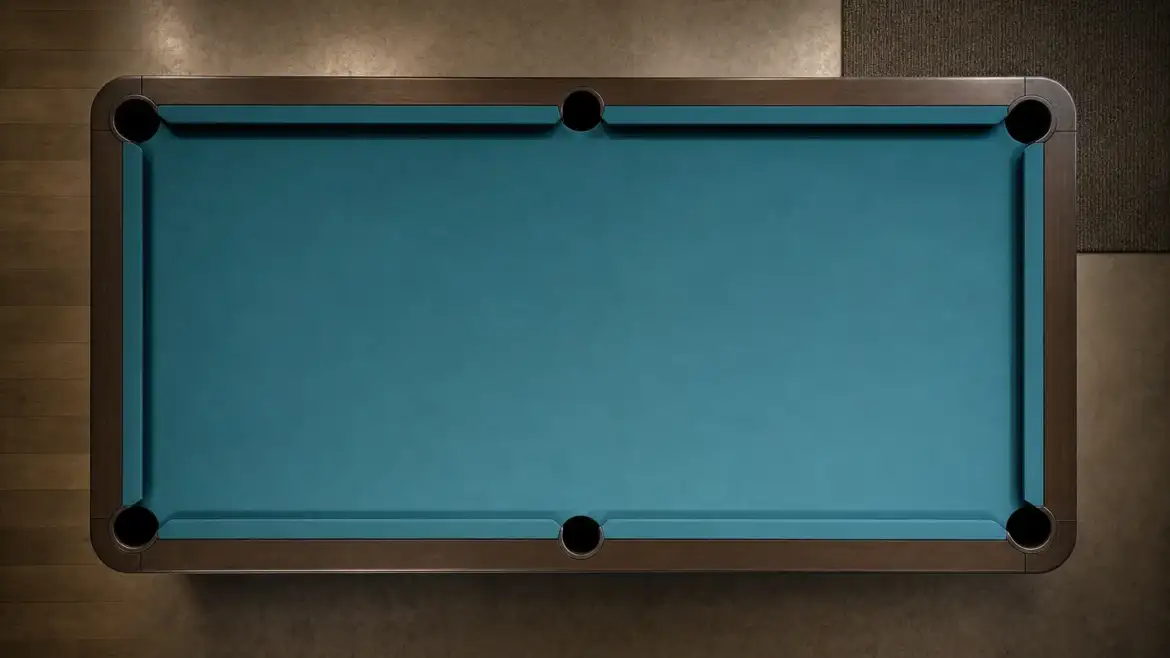
Understanding Tournament Pool Table Specifications and Standards
When you’re shopping for a pool table or having one restored, understanding tournament pool table specifications matters more than you might think. Whether you own a professional-grade table or are considering one for your home, knowing the official standards ensures you have equipment that plays fair and maintains its value.
A regulation pool table isn’t just about size. The term encompasses precise dimensions, playing surface characteristics, cushion performance, and pocket specifications that combine to create a level, predictable playing experience. This guide walks you through what makes a professional pool table meet tournament standards.
Official Regulation Pool Table Size
The standard regulation pool table size in the United States is 9 feet long by 4.5 feet wide. This is the official size used in competitive play and sanctioned tournaments. However, 8-foot and 7-foot tables are also common in homes and casual venues, though they don’t meet full tournament specifications.
The 9-foot dimension refers to the playing surface itself, measured rail-to-rail (the inner edges where the cushions begin). This exact measurement is critical. Even a variance of half an inch can affect ball roll and corner angles, which is why professional table mechanics measure and adjust precisely during installation and maintenance.
Beyond length and width, the height of a regulation pool table is also standardized. The cloth-covered playing surface must be between 29.25 and 30.25 inches from the floor. This height allows players to maintain proper shooting posture and reach across the table comfortably.
The Playing Surface: Slate and Leveling
A true professional pool table uses slate as its playing surface. Slate is a dense, fine-grained stone that remains flat and stable over decades when properly installed and maintained. This is what separates tournament-grade tables from cheaper alternatives that use plywood or medium-density fiberboard.
Slate playing surfaces are typically three-quarter inch thick or one inch thick. They’re installed in sections, often three pieces for a full-size table, and must be leveled to tournament specifications. This means the entire surface must not deviate more than 1/4 inch in a 10-foot straightedge measurement. For many professional installations, the standard is even tighter.
The cloth covering the slate, called the felt, must also meet standards. Tournament cloth is typically a worsted wool blend that provides consistent ball roll and minimal friction variation. The cloth must be stretched evenly and secured properly so it doesn’t shift during play.
Cushion and Bumper Standards
The rails that surround the playing surface contain cushions that bounce balls back into play. These aren’t just rubber strips, cushion quality directly affects how the table plays.
Regulation cushions are made from vulcanized rubber with specific density and hardness specifications. The height and profile of the rail must meet exact measurements. When a ball strikes a cushion at any angle, it should rebound at a predictable angle relative to the incoming trajectory. Poor cushions cause unpredictable bounces and make the table play inconsistently.
The cushion height is typically 1 3/8 inches from the playing surface to the top of the rail. This measurement affects how balls interact with the cushions and must be maintained through proper installation. Over time, cushions can flatten or harden, which is why professional tables sometimes need rail and cushion replacement.
Pocket Specifications
Pockets on a regulation pool table aren’t simply holes cut into the table. They have precise dimensions and angles.
The four corner pockets must have openings of 4 5/8 inches wide. The two side pockets, positioned midway along the long rails, must be 5 1/16 inches wide. These measurements might seem minor, but they’re critical to fair play. Slightly different pocket widths would change the difficulty of banking shots and edge shots.
Below the pocket openings, the pockets themselves angle inward to guide balls smoothly into the collection box. The angle and shape of the pocket is standardized so that balls drop consistently regardless of approach angle.
Diamond Markers and Aiming Points
While not a structural specification, the diamond markers on regulation pool tables follow a standard pattern. These small, typically wooden or plastic inlays mark specific points along the rails and are essential for aiming and banking shots.
On a 9-foot table, diamonds are positioned at precise intervals along each rail. Players use these markers to calculate angles for bank shots and kicks. The diamonds must be positioned accurately so that mathematical shot angles are reliable. Improperly positioned diamonds make banking shots unreliable, which is why accurate installation matters.
What Makes a Professional Pool Table vs. Standard Tables
Not all pool tables meet tournament specifications. Here’s what separates professional tables from recreational models:
- One-piece or multi-piece slate playing surface vs. composite materials
- Vulcanized rubber cushions with precise profile vs. basic rubber bumpers
- Worsted wool or wool-blend cloth vs. synthetic felt
- Accurately measured and leveled playing surface within tight tolerances
- Proper installation by experienced table mechanics
Many retailers and buyers confuse professional appearance with professional performance. A table might look nice but play poorly if the underlying construction doesn’t meet standards. This is why professional pool table installation from experienced mechanics ensures your table performs as intended.
Maintaining Tournament-Grade Performance
Even a properly installed regulation pool table requires ongoing maintenance to stay within tournament specifications. The playing surface can shift slightly from temperature and humidity changes, requiring periodic re-leveling. Cloth wears unevenly and eventually needs replacement. Cushions flatten and need resurfacing or replacement.
Why Standards Matter for Your Table
Whether you’re a serious player, a casual enthusiast, or someone furnishing a game room, understanding tournament pool table specifications helps you make informed decisions. It guides your purchasing choices, helps you evaluate used tables, and tells you what to expect from professional service.
When you own a table that meets these standards, you know the game plays fairly. Banks respond predictably. Angles are reliable. The table performs the same way today and five years from now. That consistency is what tournament specifications ensure.
If you have a pool table that needs verification, restoration, or professional setup to meet tournament standards, DFW Billiard Professionals can assess your table and bring it into compliance. With master-level table mechanics and a professional shop facility, we handle everything from precision leveling to complete restoration. Contact us today for an evaluation.