
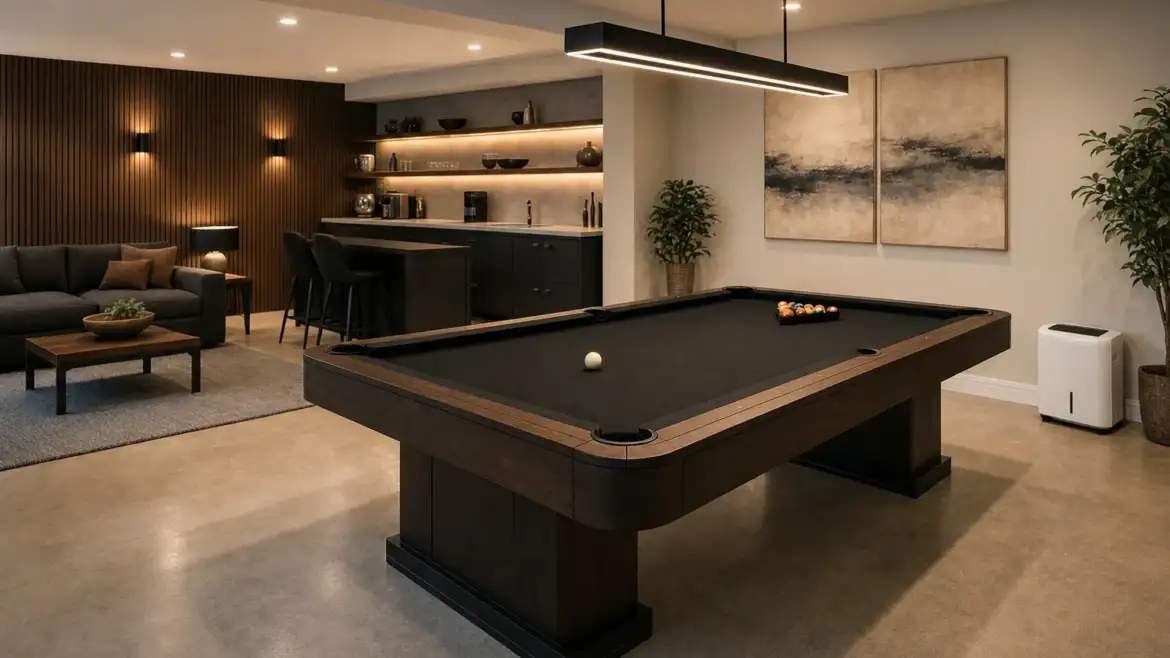
Basement Pool Table Installation Considerations
Installing a basement pool table is a popular choice for homeowners in the Dallas-Fort Worth area. Basements offer dedicated space, climate control, and natural separation from the main living area. However, a basement pool table setup requires careful planning and professional installation to ensure the table plays well and lasts for years.
Understanding the unique challenges of basement environments will help you make informed decisions before your table arrives. From moisture control to proper leveling, several factors demand attention that you might not encounter if the table were installed upstairs.
Humidity and Moisture Management
The most significant challenge for a basement pool table is humidity. Basements in Texas naturally retain moisture due to underground conditions, even in climate-controlled spaces. Excess humidity warps wood components, damages cloth, and causes slate to swell unevenly, all of which destroy playability.
Key humidity considerations include:
- Keep basement humidity below 50 percent using a dehumidifier during hot, humid months
- Install a quality dehumidifier rated for your basement’s square footage
- Ensure basement walls are properly sealed and insulated
- Check for any water intrusion or seepage before installation
- Monitor humidity levels regularly, especially during summer
Before you schedule a basement pool table installation, address any existing water damage or moisture issues. If your basement has experienced water problems in the past, have those resolved first. DFW Billiard Professionals can assess environmental concerns during the consultation and recommend solutions.
Structural Foundation and Leveling
Concrete floors in basements present their own challenges. While concrete is stable, it is rarely perfectly level. Your basement pool table must sit on a perfectly level surface to play correctly. Even slight slopes cause balls to roll toward one end, making the table unplayable.
Leveling a basement pool table involves:
- Measuring floor level with precision instruments
- Using adjustable table feet or shims to achieve exact leveling
- Accounting for concrete settling over time
- Ensuring the subfloor can support the table’s weight (typically 800 to 1,200 pounds)
Professional installation is critical here. Attempting to level a pool table with temporary fixes or DIY methods almost always results in poor play and future problems. Proper leveling ensures your table plays true for years to come.
Space Planning and Clearance
Basements often feel tighter than they actually are, and pool table installation requires adequate room for comfortable play. You need at least 54 inches of clearance on all sides of the table for a standard cue length. Tighter spaces demand shorter cues, which changes the game experience.
Measure your basement carefully before ordering or moving your table:
- Allow 54 inches minimum on long sides for full cue play
- Verify doorway dimensions if the table must fit through existing openings
- Consider support columns, ductwork, or electrical panels that reduce usable space
- Plan furniture and lighting placement to avoid shadows on the playing surface
- Ensure the table is not positioned directly under pipes or vents
If your basement has limited space, game room design consultation can help you optimize the layout and make the most of available square footage.
Lighting and Visibility
Proper lighting is essential for accurate play and safety. Basements typically lack natural light, so you must install adequate artificial lighting centered above the table. Poor lighting leads to eye strain and makes it difficult to aim accurately.
Recommendations for basement pool table lighting:
- Install overhead lighting fixtures directly above the table at least 48 inches high
- Use LED fixtures with neutral white color temperature for consistent visibility
- Avoid shadows cast by overhead joists or beams
- Install additional wall lighting to illuminate the surrounding play area
- Prevent glare on the table surface by positioning lights correctly
- Consider dimmable fixtures to adjust brightness based on preference
Your lighting plan should be finalized before the table arrives. Running electrical work afterward creates disruption and safety concerns.
Climate Control Considerations
Basements are naturally cooler than upper floors, but temperature swings still affect pool tables. Wood frames expand and contract with temperature changes, and slate can shift slightly over time. Consistent climate is ideal.
Maintain these baseline conditions:
- Keep basement temperature between 65 and 75 degrees Fahrenheit
- Run your air conditioning consistently, not just on hot days
- Avoid extreme temperature fluctuations between seasons
- Use the dehumidifier year-round in most Texas basements
- Monitor humidity and temperature with a basic monitor
Stable climate conditions protect your table and keep it playing consistently. These investments pay off over the life of the table.
Professional Installation Makes the Difference
While basement pool table installation may seem straightforward, the environmental factors and technical requirements demand professional expertise. DFW Billiard Professionals has installed hundreds of basement tables throughout the Dallas-Fort Worth region and understands the specific challenges Texas basements present.
Professional installation includes:
- Complete assessment of basement conditions before installation
- Precision leveling and slate seam verification
- Table assembly and cloth installation
- Guidance on humidity and temperature management
- Quality assurance testing to ensure proper play
Attempting a basement installation yourself often leads to costly mistakes. Improper leveling, inadequate clearance planning, and overlooked moisture issues can damage your investment within months.
Getting Your Basement Ready
Before your table arrives, prepare the space. Seal any visible cracks in the basement walls or floor. Install a dehumidifier appropriate for your space and run it for several weeks to establish baseline humidity. Have your electrical work completed and lighting installed. Measure everything twice and confirm table dimensions will fit your space.
If you are relocating an existing pool table to your basement, the moving and reinstallation process requires the same attention to detail as a new installation. Your table must be disassembled, transported safely, and reassembled with complete re-leveling.
Basement pool tables are a fantastic addition to any Dallas-Fort Worth home when installed properly. The key is addressing environmental challenges upfront and working with experienced professionals who understand how basements affect table performance. Contact DFW Billiard Professionals for a free consultation and to discuss your basement pool table installation needs. Our team will assess your space, answer your questions, and ensure your table is set up for years of reliable, enjoyable play.