
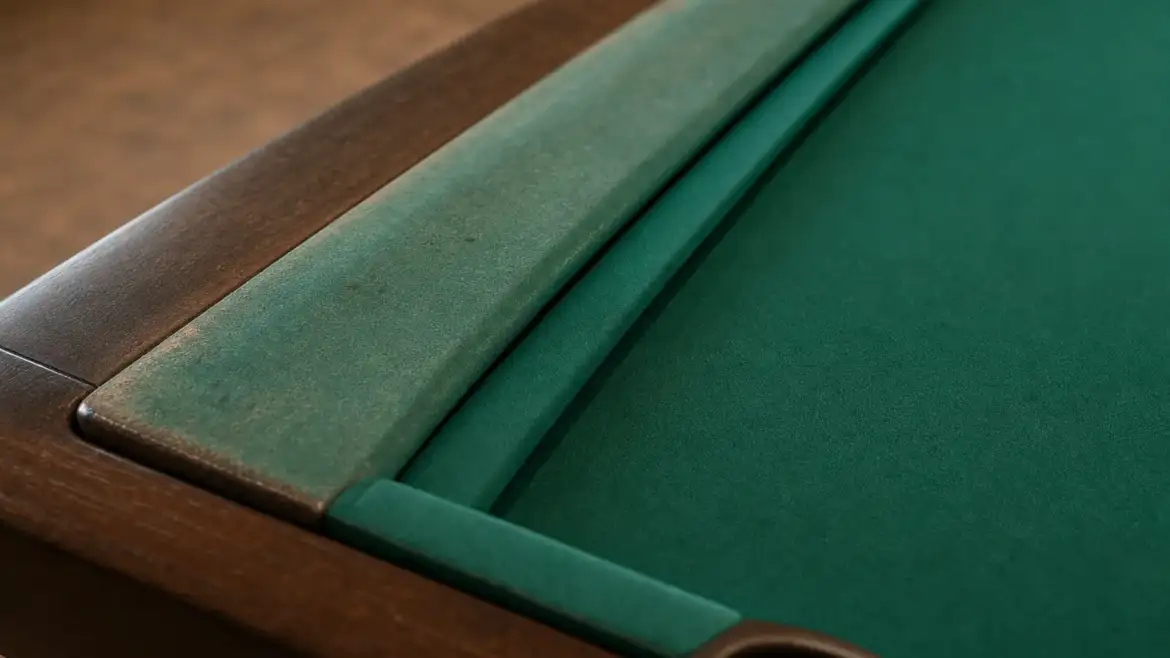
Your pool table’s cushions and bumpers are essential to consistent, quality play. When they wear out, your game suffers. Shots lose predictability, ball response becomes inconsistent, and your table feels less enjoyable to play. Understanding the signs of cushion wear and knowing when replacement is needed helps you maintain tournament-quality play and protect your investment.
What Pool Table Cushions and Bumpers Do
Pool table cushions, also called bumpers or rails, are more than just padding. They’re precision components engineered to provide reliable ball response and consistent rebound angles. The rail system includes the rubber cushion material bonded to wooden rail supports, and this combination creates the playing surface you rely on for every shot.
When cushions are in good condition, they deliver predictable bank shots and kick shots. The ball rebounds at the angle physics dictates, allowing skilled players to control outcomes. As cushions age and compress, they lose resilience. The ball doesn’t bounce back with the same energy or accuracy, throwing off angles and making the table feel dead or inconsistent.
Early Signs Your Cushions Need Attention
Cushion wear is gradual, but several signs point to replacement being near:
- Loss of responsiveness: Balls don’t spring back from the rail with their former energy. Your shots feel sluggish or less lively than they should.
- Inconsistent rebound: Different parts of the same rail respond differently. One bank shot works perfectly; the next, similar shot feels flat.
- Visible discoloration or fading: The rubber shows color loss, particularly in heavily used zones where players frequently shoot.
- Compression marks: You see permanent indentations in the rubber where balls have repeatedly struck the same spots.
- Hardness or brittleness: The rubber feels stiff or, conversely, overly soft in places, losing the uniform firmness required for precision play.
- Audible change: The sound of ball contact with the rail becomes dull or lacks the crisp response of a healthy cushion.
How Often Should You Replace Pool Table Bumpers
Replacement timeline depends on several factors:
Heavy use (commercial venues, entertainment spaces): 2 to 4 years. Bars, pool halls, and game rooms with multiple games daily see faster wear. Continuous impact from heavy play compresses the rubber quickly.
Moderate use (home tables played weekly): 4 to 8 years. Home tables used several times a week maintain better cushion integrity but eventually need replacement.
Light use (occasional home play): 8 to 15 years or longer. Tables played monthly or less frequently can last many years before cushions require work.
Professional or tournament tables: 3 to 5 years if used regularly. These tables are held to higher standards, and slight wear becomes noticeable faster because players expect perfect consistency.
Environmental factors also matter. Humidity, temperature fluctuations, direct sunlight, and smoke exposure can degrade rubber faster than normal wear alone. Tables in climate-controlled environments last longer than those exposed to seasonal extremes.
What Happens When You Delay Replacement
Ignoring worn cushions creates problems beyond lost performance. As the rubber compresses and loses shape, stress transfers to the rail structure itself. Wooden rails can warp, crack, or develop damage that’s more expensive to repair than simple cushion replacement would have been.
Worn cushions also affect related components. Bent or misaligned rails put pressure on the slate bed or frame, potentially creating level issues or pocket alignment problems. A professional inspection catches these secondary issues early, preventing cascading damage.
Pool Table Bumper Replacement Process
Replacement is straightforward when performed by experienced technicians. The old cushion rubber is removed from the wooden rail, the rail is cleaned and prepared, and new cushion material is bonded in place. The technician then ensures the new cushions are properly seated, aligned, and ready for play.
The rail system must be checked for squareness and levelness during this work. If the wooden rail has warped, it may need planing or replacement to ensure the new cushion surface is perfectly aligned with the slate bed. This attention to detail separates professional work from DIY attempts that often result in bumper seams that stick up or rails that sit unevenly.
When to Combine Cushion Work with Other Services
If you’re already having your pool table serviced for other reasons, bundling cushion replacement with cloth work or releveling often makes sense. Many jobs require partial disassembly of the table, and coordinating multiple services reduces total downtime and labor costs.
For instance, if you’re having your table releveled or the felt replaced, asking about cushion condition during that service gives you a complete picture of your table’s needs. Sometimes a professional inspection reveals that one or two rails need attention while others remain good, allowing you to prioritize work by playing impact.
Choosing Quality Cushion Materials
Not all cushion materials are equal. Professional-grade rubber provides superior response and longevity compared to budget alternatives. The best cushions use composition rubber that maintains its firmness and resilience over many years, even under heavy use.
When you have cushion work done, ask about the materials being used. Premium cushions cost more upfront but deliver better playing experience and last longer, making them a smart investment for serious players or businesses.
Keeping Your Cushions in Good Condition
While wear is inevitable, proper care extends cushion life:
- Clean the rails regularly with a soft cloth to prevent dirt and chalk dust buildup, which can degrade rubber over time.
- Keep the table covered when not in use to protect cushions from sunlight and dust.
- Maintain stable room temperature and humidity. Extreme fluctuations cause rubber to expand and contract, accelerating aging.
- Avoid leaning or placing objects on the rails, which can cause compression or permanent deformation.
- Use proper cue technique to distribute impact force rather than hitting rails in the exact same spot repeatedly.
Regular maintenance and professional inspection help you catch cushion wear early, before it affects your game or damages supporting structures. When replacement is needed, professional technicians at DFW Billiard Professionals can evaluate your specific situation and provide cushion and bumper replacement services tailored to your table’s condition and your playing needs.
If you’re noticing changes in how your table responds, or if you simply want an expert assessment of your cushions’ condition, our team can help. Get in touch for a free evaluation and learn exactly what your table needs to perform at its best.