
When you’re buying a used pool table, the decision hinges on what you can’t see until you look closely. Many buyers discover expensive damage only after purchase, when the table is already in their game room. A thorough inspection before committing to a secondhand pool table can save you thousands in restoration costs and months of frustration.
Whether you’re acquiring a pre-owned table from a private seller, estate, or liquidation, this checklist walks you through the critical inspection points professionals use to evaluate billiard tables.
Frame and Structure
Start with the table’s skeleton. Examine the wooden frame from all angles, looking for signs of water damage, cracks, warping, or soft spots. Press gently on different areas of the frame with your hand, particularly along the corners and center seams where weight concentrates. A solid frame should feel rigid and unyielding.
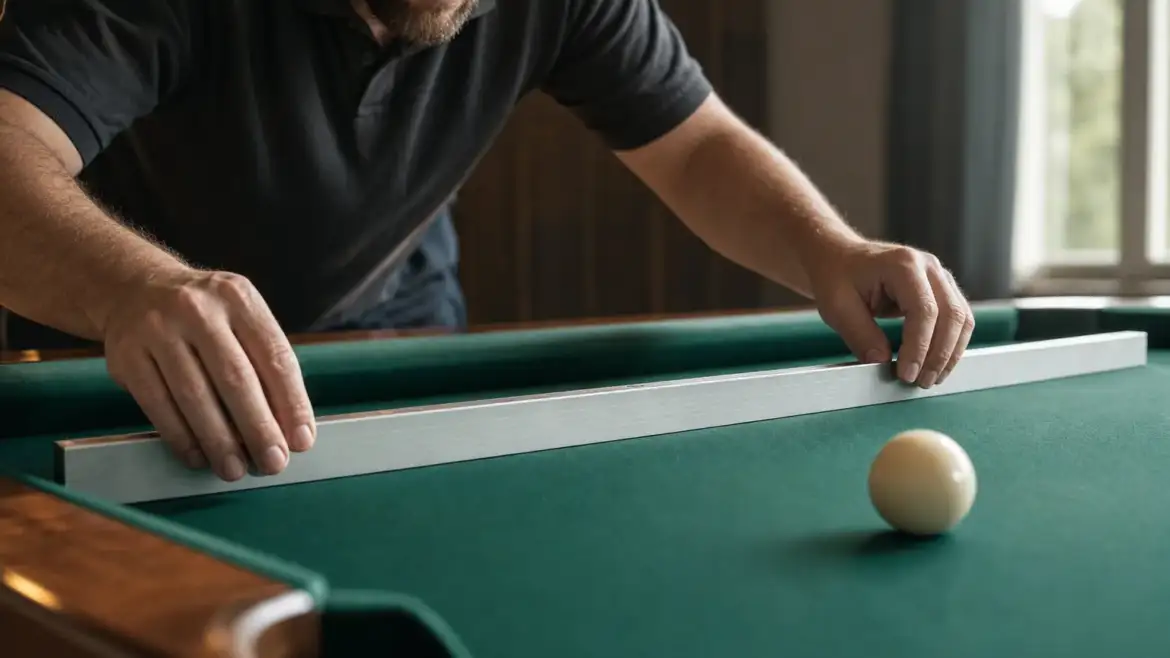
Check that the table sits level on the floor. Use a straightedge across the length and width to spot dips or humps. Even minor warping compounds over time, making the table impossible to level properly.
Inspect corner pockets and center pockets for damage to the pocket liners, cracks in the wood, or missing components. Damaged pockets are expensive to repair and affect play quality.
Slate Playing Surface
The slate bed is the heart of a pool table’s performance. Run your hand across the playing surface to feel for high spots, divots, chips, or rough areas. Professional slate should feel glass-smooth.
Examine seams where multiple slate pieces join, particularly the center seam on larger tables. Gaps or uneven seams prevent the table from playing true and require professional remediation.
Look for cracks in the slate itself, especially along seam lines or near pocket openings. Minor hairline cracks may be repairable, but large fractures often mean replacing the entire slate, a costly undertaking.
If the table has been stored in a damp environment, check for water stains or mineral deposits on the slate surface. These suggest past moisture exposure that may indicate deeper structural issues.
Rails and Cushions
The rails keep balls in play and must respond consistently. Press on each rail cushion with your hand and release, watching how the cushion returns. Quality cushions bounce back quickly and feel firm but not rigid.
Inspect the cushion rubber for hardening, cracking, or discoloration. Old or degraded cushions lose responsiveness and affect shot consistency dramatically. If cushions have aged significantly, budget for replacement.
Examine the rail tops for cracks, warping, or delamination where layers of wood are separating. Check that rails are securely fastened to the frame with no visible gaps or movement.
Felt or Cloth Condition
The playing cloth tells a story about how the table was used and maintained. Look for worn spots, particularly around the center area where players shoot most frequently. Heavy wear creates dead zones where balls slow unexpectedly.
Search for tears, burns, or stains that won’t come clean. Minor wear is normal on a used table, but extensive damage means budgeting for re-clothing, which improves both appearance and playability.
If the cloth looks pristine, question whether the table was actually used or if the previous owner recently invested in re-felting.
Balls and Equipment
While you’re there, check the condition of the ball set. Look for cracks, chips, or uneven wear on the cue ball and numbered or striped balls. Damaged balls don’t roll true and can damage the slate.
Verify that a full set of balls is included. A complete set matters for play quality and value.
Signs of Water Damage
Water damage is a dealbreaker for many used pool tables. Look for discoloration on the wood frame, warping, soft spots, or musty odors. Check under the table as well as on top.
If the table has been in a flooded basement, basement with high humidity, or near a window with exposure to weather, assume structural compromise and walk away unless you’re prepared for extensive restoration.
Leveling and Installation Concerns
A table that’s out of level in the current location might be leveled during installation in yours, but only if the frame is straight. Major warping cannot be corrected through leveling adjustments alone.
Ask the seller how long the table has been in its current location and whether it’s always been level. Tables that shift due to settling floors or foundation issues may develop problems that follow them to the next home.
Getting a Professional Opinion
If you’re serious about a particular secondhand pool table, consider hiring a professional to inspect it before you buy. Experienced table mechanics spot structural and playability issues that untrained eyes miss.
DFW Billiard Professionals can evaluate used tables and provide detailed reports on their condition, playability, and any repairs needed. This insight helps you negotiate fairly or decide whether the table is worth purchasing at all.
A professional inspection costs far less than discovering post-purchase that your bargain table needs thousands in restoration or that the slate is beyond repair.
Making Your Decision
Buying a secondhand pool table can be an excellent value, especially if you find a quality table that was well maintained. Use this checklist to separate good buys from tables with hidden problems.
If you spot multiple red flags during inspection, remember that prices for used tables vary widely. Walking away from a problematic table means you can invest in one that will serve you reliably for years.
Once you’ve purchased your pre-owned table, professional setup and leveling ensures it plays at its best. DFW Billiard Professionals provides complete pool table setup and installation services throughout the Dallas-Fort Worth area, helping new owners get maximum enjoyment from their tables, whether they’re recent purchases or long-time pieces.