
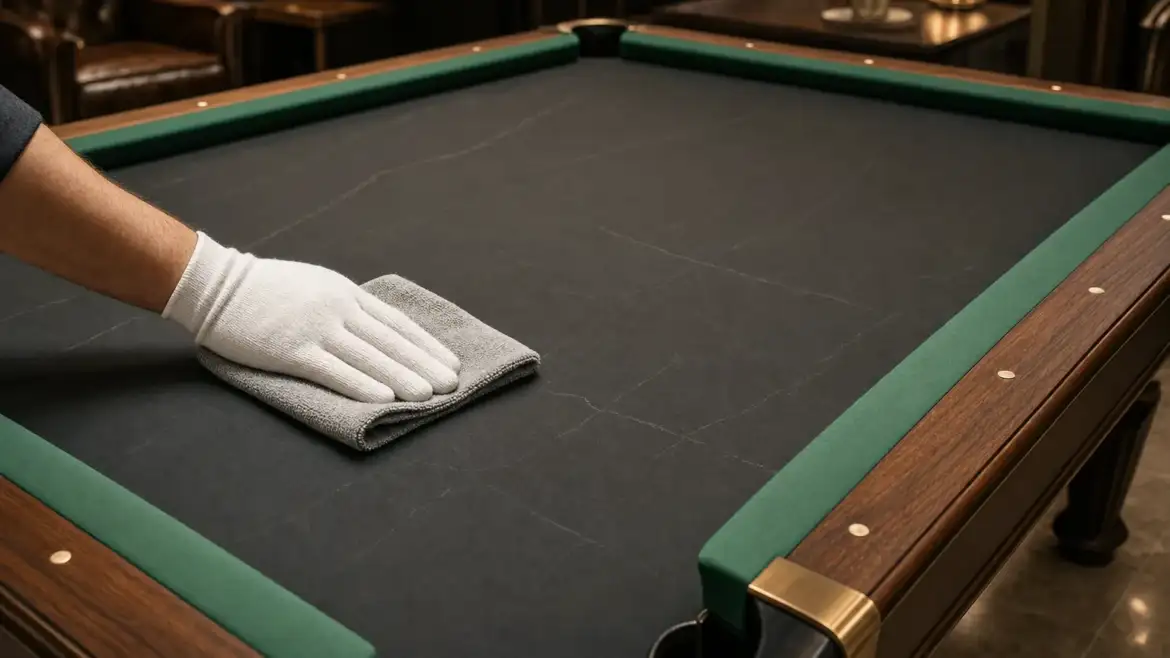
Slate is the gold standard for serious pool players, and for good reason. A quality slate surface provides the consistent, level playing field that competitive play demands. But slate’s performance depends entirely on proper care. Unlike cheaper synthetic surfaces, slate requires ongoing attention to maintain its flatness, protect its finish, and keep it playing at tournament quality for decades.
If you own a slate pool table, understanding how to maintain it is essential. The good news: proper slate maintenance is straightforward and doesn’t require expensive equipment or expert knowledge for everyday care.
Why Slate Matters
Slate offers durability and playability that no other material can match. A slate bed, typically one to two inches thick, remains flat under normal conditions and resists warping from temperature and humidity changes far better than wood or composite surfaces. This flatness is what allows the cue ball to roll consistently and predictably across the table.
But slate is also a natural stone. It can develop problems if neglected or if subjected to excessive moisture, temperature swings, or physical damage. Protecting your investment means learning what slate needs to stay in peak condition.
Regular Cleaning and Dust Control
The first step in slate maintenance is keeping the playing surface clean. Dust, chalk residue, and particles left behind by cue tips are more than unsightly; they affect ball roll and can scratch the slate if left on the surface.
Follow these cleaning steps weekly or after each play session:
- Use a soft-bristled brush designed for billiard tables to sweep the entire playing surface. Work from the center toward the rails.
- Brush along the rails and into the pockets to remove accumulated dust and chalk.
- For stubborn chalk buildup, dampen a microfiber cloth slightly and wipe the slate gently. Never soak the slate.
- Dry the surface immediately with a clean, dry cloth.
- Use a pool table cleaner formulated for slate surfaces if needed, but avoid harsh chemicals that can damage the finish.
Keep a dedicated brush and microfiber cloths near your table so cleaning is convenient. The easier you make regular maintenance, the more likely it is to happen.
Leveling and the Seam
Slate pool tables are made from multiple pieces of slate fitted together with a seam running down the middle of the table. Even the best installation will show a slight seam in the center line of play. Over time, settling, humidity changes, or impacts can cause the seam to develop a small ridge or depression that affects ball roll.
If you notice balls rolling inconsistently along the center line or if the table plays noticeably different from side to side, leveling may be needed. A professional how to level a pool table on carpet service uses specialized tools to measure the playing surface precisely and make micro-adjustments to the table’s legs or support structure.
This is not a do-it-yourself job. Improper leveling can crack slate or create new problems. If your table has been in place for several years or has been moved, having it professionally leveled every few years keeps it playing its best.
Protecting Against Moisture and Temperature
Slate expands and contracts slightly with changes in humidity and temperature. In Texas, air conditioning and heating systems can create these swings, especially in homes with poor climate control. While slate is more stable than wood, excessive moisture or extreme temperature fluctuations can cause warping, cracking, or separation at the seams.
To protect your slate table:
- Keep the room at a consistent temperature and humidity level. Aim for 50 to 55 percent humidity.
- Avoid placing the table in direct sunlight or near heating vents and air conditioning units.
- Do not allow water to sit on the slate surface. Wipe up spills immediately.
- Ensure the room has adequate ventilation to prevent moisture buildup.
- If the table is in a basement or other damp space, consider a dehumidifier.
These steps are especially important if your table will be stored or not used for extended periods. A slate table left in an uncontrolled environment can develop problems that are expensive to repair.
When to Recloth Your Table
The felt covering your slate table will wear, fade, and develop pilling or snags over time. Reclothing is not just cosmetic; worn felt affects ball speed and direction. Most players should recloth their table every 3 to 5 years, depending on usage.
During reclothing, the felt is removed and replaced with new material. This is an opportunity for professionals to inspect the slate underneath, check leveling, and address any minor issues. A re cloth re felting service includes felt replacement, careful seam stretching to ensure a smooth playing surface, and precise stapling around the rails.
Choosing the right felt quality and color is part of the process. Tournament-grade felt plays differently from recreational felt, and color affects visibility and playing experience.
Protecting the Slate from Damage
Accidents happen. A cue tip strike that misses the cue ball and hits the slate, a dropped object, or impacts from moving the table can chip or crack slate. While some minor surface damage is cosmetic, deep cracks or chips require professional restoration.
Prevent slate damage by:
- Requiring chalk only on cue tips, never loose on the table.
- Keeping drinks and food away from the table.
- Never placing heavy objects on the slate.
- Using professional moving services when relocating the table; improper moving is a common cause of slate damage.
- Keeping the table out of high-traffic areas where elbows or shoulders might bump it.
If your table does sustain damage, address it promptly. What starts as a small chip can spread into a larger crack if left untreated, especially if moisture seeps into the break.
Professional Maintenance and Inspection
Beyond routine cleaning and care, your slate table benefits from periodic professional inspection. A skilled technician can spot early signs of problems like seam separation, leveling issues, or felt wear before they become serious.
DFW Billiard Professionals offers comprehensive table repair and restoration services, including leveling, seam inspection, structural repairs, and full restoration work. Whether your table needs a checkup or significant restoration, professional expertise ensures the work is done right and your table returns to peak playing condition.
Keep Your Table Playing Its Best
Slate pool tables are built to last decades with proper care. Regular cleaning, attention to leveling, climate control, and professional service when needed will keep your table looking sharp and playing true. A well-maintained slate table is a joy to play on, and the effort invested in care pays dividends in performance and longevity.
If you have questions about your slate table or need professional leveling, reclothing, or restoration, reach out to DFW Billiard Professionals. With 8 years serving the Dallas-Fort Worth area and a reputation for master-level work, we’re here to keep your table in championship condition.