
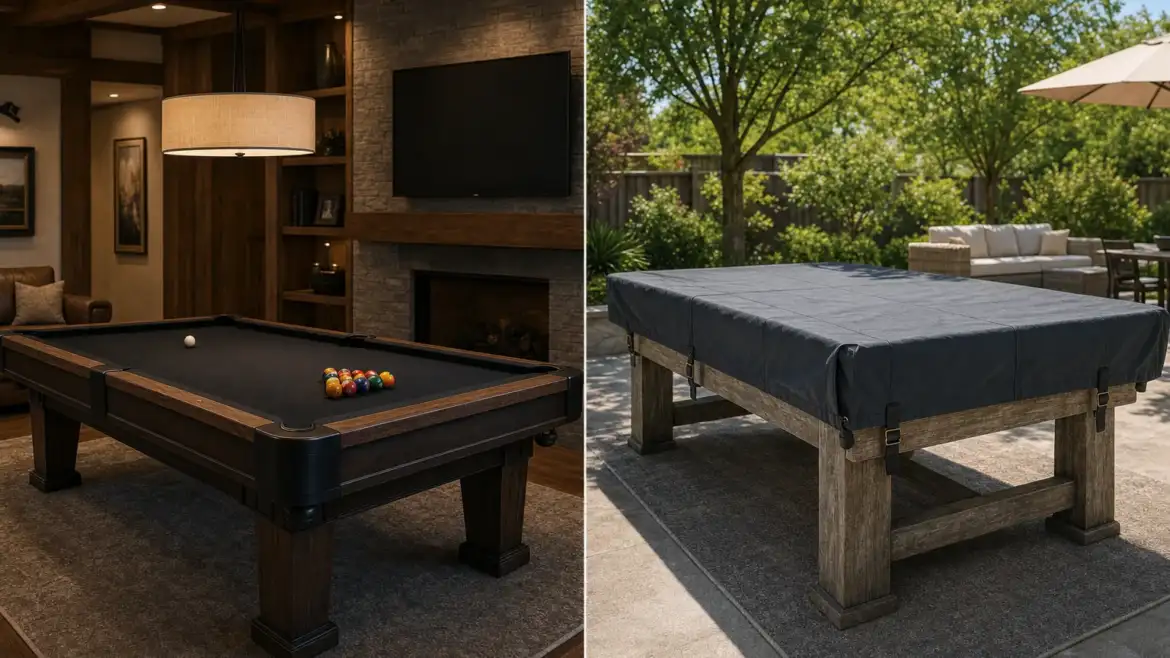
When you’re thinking about adding a pool table to your home or business, one of the biggest decisions is whether to go with an indoor or outdoor pool table. While both serve the same basic purpose, they’re built from fundamentally different materials and designed for completely different environments. Understanding these differences will help you choose the right table for your space and budget.
The Core Differences Between Indoor and Outdoor Pool Tables
Indoor and outdoor pool tables are not interchangeable. An outdoor pool table won’t deliver the same playing experience indoors, and an indoor table will deteriorate quickly if left exposed to the elements.
Outdoor pool tables are engineered to withstand sun exposure, temperature swings, humidity, rain, and UV damage. They use weather-resistant materials like vinyl, composite wood, and specialized felt that won’t warp or fade in direct sunlight. Indoor tables, by contrast, are built for climate-controlled environments with traditional slate playing surfaces, premium cloth, and fine wood finishes that provide superior playability but are vulnerable to moisture and temperature fluctuations.
The price difference reflects these material choices. Outdoor tables typically cost 30 to 50 percent less than comparable indoor models because weatherproof materials are less expensive than tournament-grade slate and hardwood construction.
Playing Surface and Felt Quality
This is where the differences become most noticeable during gameplay. Indoor pool tables almost always feature a one-piece or three-piece slate bed, which provides a perfectly flat, consistent, and durable playing surface. Slate is naturally hard and level, making it ideal for serious play. Premium indoor cloth, often made from worsted wool blends, offers predictable ball roll and excellent durability under regular use.
Outdoor tables typically use a permacel or vinyl-laminated playing surface instead of slate. These materials resist moisture and sunlight but don’t provide quite the same level of ball response. Outdoor felt is generally thicker and more durable against weather but may play slightly slower or less consistently than indoor tournament-grade cloth.
If you play frequently or care about competition-level accuracy, an indoor table with a slate surface will serve you better. If you prioritize durability and low maintenance, an outdoor table with a vinyl or composite surface is the practical choice.
Weather Resistance and Material Construction
Indoor tables have exposed wood frames, often finished with stain or varnish. The rails are typically made from hardwood with leather or synthetic pockets. While these materials are attractive and perform excellently indoors, they can warp, crack, or rot if exposed to outdoor humidity and temperature changes.
Outdoor tables use marine-grade aluminum or powder-coated steel frames that won’t rust or corrode. Hardware is stainless steel. Pockets are reinforced nylon or vinyl. The entire structure is designed to shed water and resist fading. Cloth covers are standard on outdoor tables to protect the surface when not in use.
Even if you have a covered patio, temperature fluctuations and humidity in outdoor spaces can eventually compromise an indoor table. Conversely, outdoor tables left indoors may feel out of place and won’t benefit from their weather-resistant advantages.
Maintenance and Upkeep
Indoor tables require moderate maintenance. You’ll need to brush the felt regularly, keep the room at stable humidity levels (ideally 40 to 50 percent), and avoid direct sunlight through windows. Occasionally, you may need professional re-felting, cushion replacement, or minor structural repairs. These services are routine maintenance for any well-maintained billiard setup.
Outdoor tables need different care. The vinyl or composite surface should be cleaned regularly with appropriate outdoor cleaners. The protective cover must be used when the table isn’t in play to prevent UV damage and water accumulation. Drainage holes in the frame help prevent water pooling. In harsh climates, even outdoor tables benefit from seasonal inspection and professional maintenance to catch any wear early.
The good news is that modern outdoor tables are built to last many years with minimal intervention. However, they’ll eventually show weathering that’s cosmetic but noticeable.
Space and Aesthetics
Indoor tables are designed to be showpieces. Wood finishes range from classic dark stains to modern light oak or cherry, and they coordinate with home décor. An indoor table makes a statement in a game room, basement, or entertainment space. The investment is partly aesthetic, partly functional.
Outdoor tables prioritize function over appearance. They’re typically available in basic colors like dark green, black, or gray. They look like what they are: durable recreational equipment. If appearance matters as much as playability, an indoor table is the better choice. If you simply want a fun table for family gatherings and casual play outdoors, an outdoor table fits the bill.
Cost Comparison and Long-Term Value
Outdoor tables generally cost less upfront, ranging from $1,000 to $3,000 for quality models. Indoor tables start around $2,000 for entry-level options and can exceed $10,000 for slate tournament tables.
However, total cost of ownership includes maintenance, repairs, and lifespan. An indoor slate table properly maintained can last decades and hold its value. An outdoor table may need replacement sooner due to weathering, though the lower initial cost means less total investment over time.
Choose an outdoor table if you want lower upfront cost and don’t mind eventual cosmetic wear. Choose an indoor table if you value long-term playability, aesthetics, and are willing to invest in a piece that can last a lifetime.
Making Your Decision
Start by asking yourself these questions: Where will the table live, and can you keep it protected from direct weather exposure? How often will it be used, and by whom? How important is tournament-level play versus casual entertainment? What’s your budget for both purchase and maintenance?
If your space is a climate-controlled room indoors, an indoor table is the right choice. If you’re furnishing a covered patio or open backyard and want durability and low maintenance, an outdoor table wins. Some people with both spaces keep one of each.
When you’re ready to move, set up, or restore a pool table, whether indoor or outdoor, DFW Billiard Professionals can help. Our team handles everything from installation and leveling to professional moving and restoration. We work with both types of tables and can advise you on setup, maintenance, and performance optimization. If you already own a table and want professional care, we offer complete service throughout the Dallas-Fort Worth region.
Whether you choose indoor or outdoor, the right table paired with expert professional service ensures years of enjoyment and reliable play.