
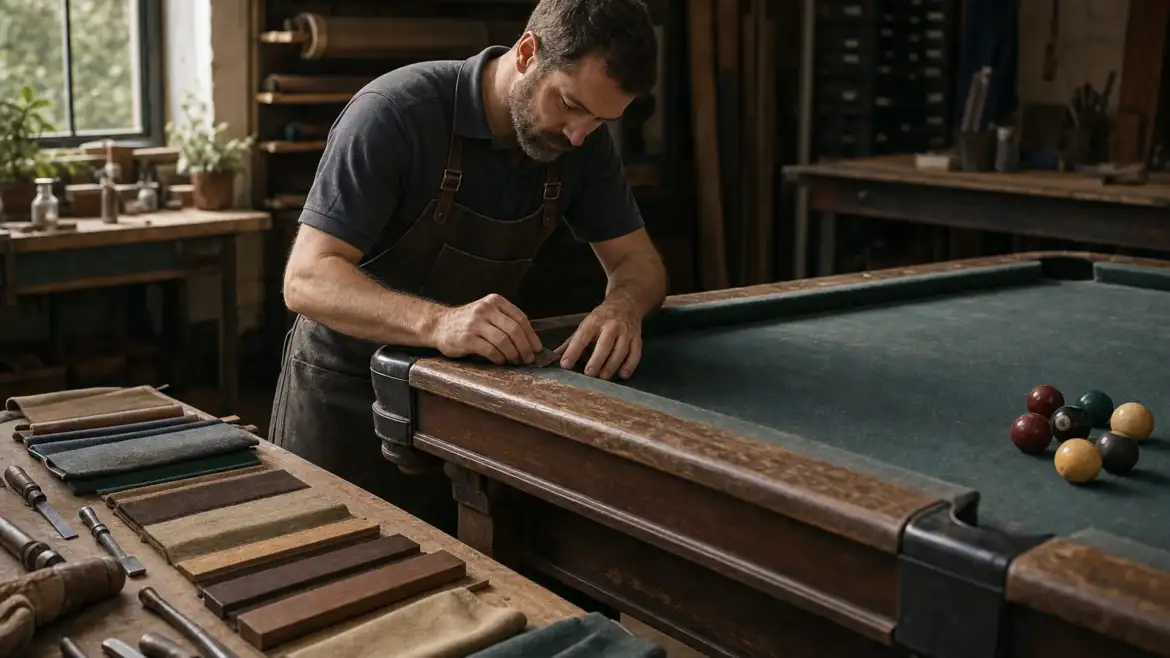
Antique and vintage pool tables are more than game equipment. They are family heirlooms, pieces of history, and sometimes significant investments. A table that has been in your family for decades or one you have acquired from an estate carries stories and craftsmanship that deserve respect and proper care.
Unlike modern tables, antique pool table restoration requires a deep understanding of period-appropriate materials, construction methods, and the structural integrity that made these pieces last generations. Whether your vintage table needs minor repairs or a complete overhaul, knowing when to restore versus replace and understanding what professional restoration involves will help you make the right decision.
What Makes Antique Pool Tables Special
Vintage pool tables, particularly those manufactured before 1970, were built to different standards than today’s production models. Early manufacturers used hand-selected hardwoods, slate that was quarried and finished by hand, and joinery techniques that prioritized longevity over assembly speed.
These tables often feature distinctive design elements: ornate wooden legs, hand-carved details, unique pocket styles, and finishes that developed character over time. The playing surface on a quality antique table remains true and level if the frame has not been compromised by water damage, structural settling, or poor storage conditions.
The challenge with restoring antique pool tables is balancing historical preservation with functional playability. A well-restored vintage table should play as well as when it was new, but the restoration process must respect the table’s original character and construction.
Common Issues Found in Antique Pool Tables
When you acquire an older table or inherit one from an estate, several problems are typical:
- Warped or separated frames from moisture exposure or uneven settling
- Worn or deteriorated felt that may have stains, tears, or thin spots from decades of play
- Loose or damaged rails with worn cushions that no longer provide proper ball response
- Slate cracks or separations along seams, particularly if the table was moved improperly
- Pocket wear including cracked wood, loose netting, or misaligned openings
- Structural wood damage from insects, moisture, or previous repairs using modern materials incompatible with the original construction
- Missing or non-functional leveling systems on older tables without built-in height adjustment
Not all of these issues require professional restoration. A table with cosmetic wear but a solid, level playing surface may need only a new felt and minor adjustments. A table with structural problems or significant deterioration needs expert evaluation before you invest in restoration.
The Antique Pool Table Restoration Process
Professional restoration begins with a thorough assessment. A qualified table mechanic will examine the frame for structural integrity, check the slate for flatness and cracks, inspect all wooden components, and evaluate the rails and cushions.
Once the scope of work is clear, restoration typically follows these steps:
-
Disassembly: The table is carefully taken apart, with each component documented and stored to prevent loss or damage.
-
Frame assessment and repair: The wooden frame is evaluated for rot, insect damage, or structural weakness. Repairs use period-appropriate wood species and joinery methods when possible.
-
Slate work: The slate playing surface is cleaned thoroughly. If there are minor chips or cracks, they may be repaired with epoxy or similar materials that blend with the slate. Significant cracks may require slate replacement or seam work.
-
Rail and cushion replacement: Original cushions in vintage tables often lose resilience. Modern replacement cushions are engineered to provide consistent ball response while fitting the original rail structure.
-
Pocket restoration: Pockets may be relined, have new netting installed, or in some cases be rebuilt to match original specifications.
-
Felt installation: New cloth is selected to match the table’s era and original appearance when possible. The felt is carefully installed to ensure a smooth, true playing surface.
-
Leveling and final adjustment: The reassembled table is leveled precisely, with all components tested for function and playability.
-
Wood finishing: If the wooden frame or legs show significant wear, professional refinishing may be applied. The goal is to restore appearance while maintaining the table’s historical character.
Choosing Materials for Your Restoration
One key decision in antique pool table restoration is selecting materials that balance authenticity with performance. Modern felt comes in many colors and performance levels. Vintage tables that originally had green cloth can be restored with traditional green, or you might choose a color that complements your space while respecting the table’s era.
Rail cushions must meet modern playability standards while fitting the table’s original structure. Pockets can be restored to original specifications or updated slightly for ease of play, depending on your priorities.
Wood finishes should enhance the table’s appearance without looking artificial. A skilled craftsman will assess whether the original finish can be restored, or whether refinishing is needed to address decades of wear and use.
When to Restore Versus When to Replace
Not every vintage table is worth restoring. Consider restoration if:
- The frame is structurally sound and level
- The slate has no major cracks or significant deterioration
- The table has historical or sentimental value
- The cost of restoration is reasonable relative to the table’s replacement value and your attachment to it
A table may not be a good restoration candidate if the frame is severely warped, the slate is extensively damaged, or structural repairs would cost more than replacing the table entirely.
A professional assessment is the best first step. Experienced table mechanics can evaluate your specific table and give you honest guidance on whether restoration makes sense.
Working with Professional Restoration Specialists
Antique pool table restoration is specialized work that demands experience with older tables and period-appropriate techniques. DFW Billiard Professionals provides table repair and restoration services including expert work on vintage and antique tables through both mobile service and a professional workshop facility.
When you work with experienced professionals, you get several advantages. They understand how to handle delicate old wood, match original construction methods where possible, source appropriate materials, and ensure the final result plays well while maintaining the table’s historical character.
They also know when modern upgrades improve playability without compromising authenticity, and they can guide you through choices about materials, finishes, and functional upgrades.
Caring for Your Restored Table
Once your antique table is restored, proper care extends its life and maintains playability. Cover the table when not in use to protect it from dust and damage. Keep the room temperature and humidity relatively stable, as wood and slate can warp with extreme changes.
Clean the cloth regularly with a soft brush to remove chalk dust and debris. Avoid placing heavy objects on the rails or frame. Have the table professionally leveled and checked annually, particularly if it is in a high-traffic space or experiences seasonal temperature changes.
With proper maintenance, a well-restored antique table will provide decades of reliable play and remain a beautiful centerpiece in your game room.
Next Steps
If you own an antique or vintage pool table that needs assessment or restoration, the first step is having it evaluated by experienced professionals who understand older tables. DFW Billiard Professionals serves the Dallas-Fort Worth region with expert restoration work on collectible and family heirloom tables.
Reach out for a consultation to discuss your table’s condition, restoration options, and what you can expect throughout the process. Whether your table needs minor repairs or comprehensive restoration, skilled craftsmanship makes all the difference in bringing an heirloom back to its best condition.