
Your pool table is a significant investment. Whether you play casually or competitively, keeping your table in good condition is essential for consistent play and longevity. Many owners don’t recognize the early signs of wear and damage until a problem affects how the table plays. Learning to spot these issues early can save you money and prevent frustration during your game.
Damage on pool tables comes in many forms, from obvious cracks to subtle wear that only becomes apparent when you’re lining up a shot. Some damage affects the playing surface directly, while other issues impact the mechanics that keep everything working smoothly. This guide covers the most common types of damage and what they mean for your table.
Felt and Cloth Damage
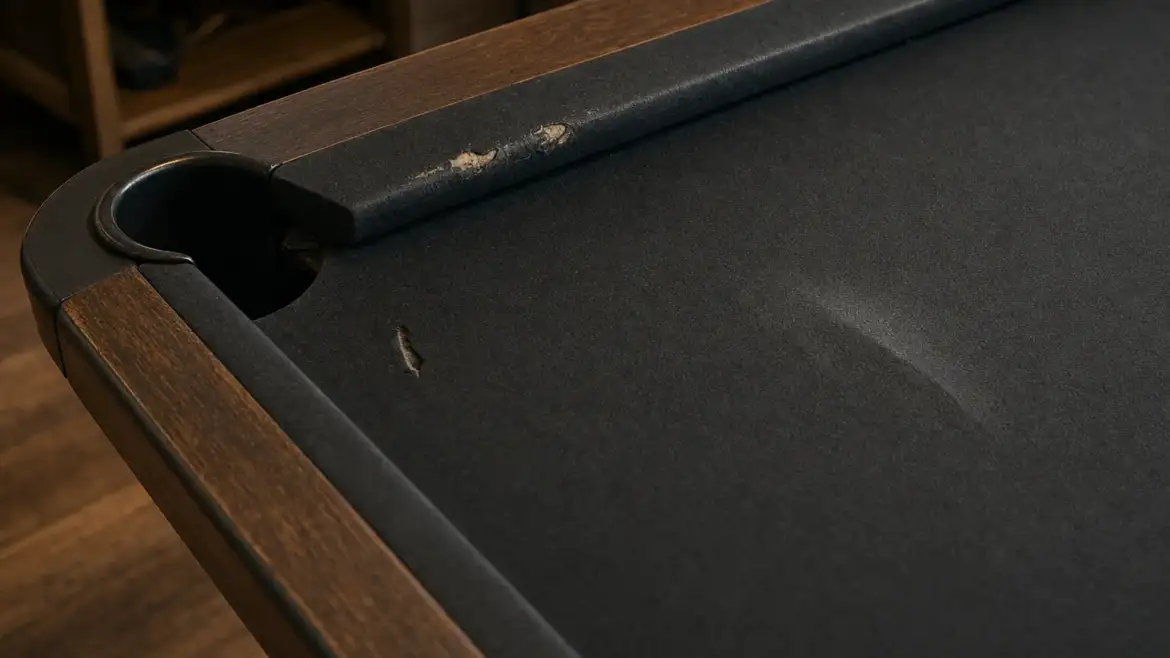
The playing surface cloth is often the first place damage appears, and it’s usually easy to spot. Look for these signs:
- Tears, rips, or small holes in the felt
- Fraying or matted fabric along edges or in high-traffic areas
- Pilling or bobbling, where the surface becomes fuzzy or lumpy
- Fading or discoloration from sunlight or spills
- Stains that don’t come out with regular cleaning
- A slick or slippery surface where the felt has worn thin
Felt damage can happen from normal play over time, but it also comes from accidents like cigarette burns, dragging the cue across the table, or spills that soak into the cloth. Minor wear is natural, but once tears appear, the table plays inconsistently. Ball roll becomes unpredictable because the cloth no longer provides a smooth, uniform surface.
Small damage can sometimes be repaired temporarily, but significant felt problems require professional re-clothing. When your table feels sticky, looks worn, or has visible damage, it’s time to talk to a professional about re-felting options. The good news is that fresh cloth restores both the appearance and playability of your table.
Slate and Surface-Level Problems
The slate bed under the cloth is what gives your pool table its durability and accuracy. Even though slate is hard, it can develop issues that affect play.
Check for these warning signs:
- Visible cracks or chips in the slate
- A bump, ridge, or low spot when you roll a cue ball across the surface
- Water stains or discoloration on the playing surface
- Areas where the ball rolls differently than others
- Separation or gaps where the slate seams meet
Slate damage usually becomes obvious when the ball doesn’t roll true. If your table used to play level and now the cue ball veers to one side, or if balls don’t stop where you expect them to, the slate may be cracked or warped.
Water damage is particularly serious. If your table has been near a leak, flood, or high humidity, moisture can seep under the cloth and into the slate, causing it to warp or crack as it dries unevenly. If you suspect water damage, professional inspection is important because the damage may not be visible until it progresses.
Small slate chips sometimes don’t affect play, but cracks always do. They alter the ball’s path and make consistent play impossible. Seam separation is also critical because it creates a dip where the two slate sections meet, throwing off your shots.
Rail and Cushion Wear
The rails and cushions around the table’s perimeter are crucial for consistent ball return and play quality. Over time, they show signs of wear that affect gameplay.
Look for these issues:
- Hardened or cracked rubber cushions that don’t bounce the ball back smoothly
- Areas where the cushion feels dead or doesn’t rebound at all
- Visible damage to the cushion surface from impact or age
- Rails that rock or are no longer firmly attached to the table
- Missing or damaged bumpers at the corners and along the rails
Worn cushions are one of the most common issues in older tables. When rubber hardens with age or exposure to temperature changes, it stops responding properly. A ball that should bounce back with energy instead dribbles off the rail. This makes precise shots impossible and changes how the entire table plays.
If your table feels slow or sluggish, or if the ball doesn’t respond the way it used to, the cushions may be the culprit. Professional cushion replacement restores the table’s bounce and playability.
Pocket Damage and Wear
Pockets are high-stress areas on a pool table. They get hit repeatedly and can develop problems that affect the game.
Common pocket issues include:
- Cracked or chipped pocket openings
- Loose or missing pocket liners
- Leather or rubber edging that’s worn, torn, or missing
- Pocket walls that are splintered or rough
- Pockets that are misaligned or don’t drop balls cleanly
Damaged pockets can cause balls to get stuck or bounce out unexpectedly. Sharp edges on a cracked pocket can damage the cue ball or leave marks on it. Worn liners can cause balls to hang up instead of falling cleanly into the pocket.
Small pocket repairs are often straightforward, but severe damage may require replacement of the entire pocket assembly. Either way, addressing pocket damage improves both safety and playability.
Structural and Frame Issues
The table’s frame and legs support everything above. Structural damage can undermine the entire table’s stability and performance.
Watch for these signs:
- Legs that aren’t firmly planted on the floor or seem loose
- Gaps between the frame and the playing surface
- Visible cracks or splits in the wood frame
- Wobbling or movement when you push on the sides
- Warping that makes the table look uneven from the side
Structural problems are serious because they eventually affect leveling and slate alignment. A warped or cracked frame can’t hold the slate level, which makes the table unplayable no matter how good the cloth is.
Framework damage often results from impact, water damage, or poor moving practices. If you’re moving a table, professional movers know how to disassemble, transport, and reassemble it safely. Improper handling during a move can crack the frame or warp the structure.
If you notice wobbling or see gaps opening up, have the table inspected before the damage spreads. Structural repairs can be complex, but they’re necessary to restore the table to playable condition.
When to Call a Professional
Some pool table problems homeowners can manage, but many require expert attention. You should contact a professional if you notice:
- Any crack in the slate
- Felt that’s torn or severely worn
- Leveling issues that affect ball roll
- Cushions or bumpers that need replacement
- Water damage or signs of warping
- Structural damage to the frame
- Any issue that affects how the table plays
DFW Billiard Professionals has master-level table mechanics who can diagnose damage accurately and recommend the right repairs. Whether your table needs minor tweaks or comprehensive restoration, professional service ensures the work is done correctly the first time.
Regular Inspection and Maintenance
Spotting damage early starts with regular inspection. Every few months, take time to examine your table carefully.
During inspection:
- Look at the felt from different angles under good lighting
- Roll a cue ball slowly across all areas to check for level spots
- Inspect rail cushions by pressing gently and checking for firmness
- Examine pocket openings and liners
- Check that all legs are level and stable
- Look for dust, debris, or signs of moisture under the table
Regular cleaning also helps you catch problems early. As you brush and clean the cloth, you’ll notice wear patterns, discoloration, or small tears before they become serious.
Keep your table in a climate-controlled space away from direct sunlight and moisture. Temperature swings and humidity changes can warp slate and damage wood components. A cover when the table isn’t in use protects it from dust and accidental damage.
Your pool table is built to last decades with proper care. Recognizing damage early and addressing it promptly keeps your table playing perfectly and protects your investment. When you spot something that concerns you, reach out to a professional who understands the mechanics of pool tables and can restore your table to top condition.