
Buying a used pool table is a smart way to get quality equipment at a lower price, but it comes with real risks if you don’t know what to look for. A poorly maintained table won’t play true, and fixing hidden damage can cost as much as buying new. This checklist helps Dallas-Fort Worth shoppers inspect a used pool table before committing to a purchase, so you end up with a table that plays well and lasts.
Inspect the Slate Surface First
The slate bed is the heart of any pool table. Check it before anything else, because slate damage is expensive to fix.
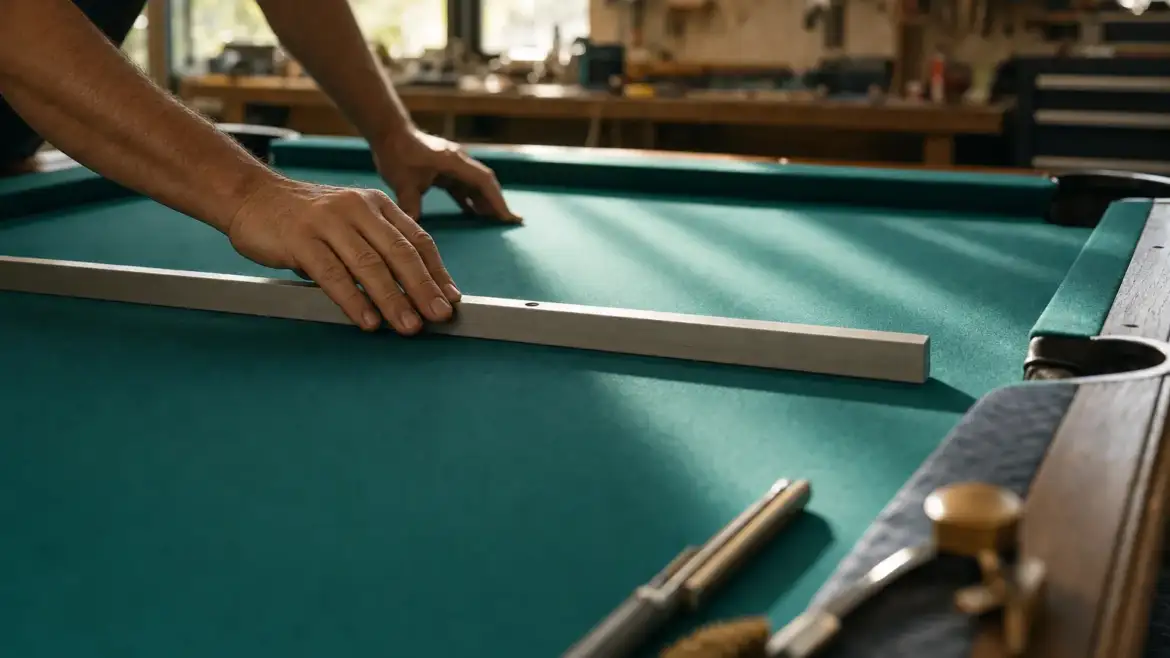
Grab a straightedge or level and place it across the playing surface in multiple directions: lengthwise, widthwise, and diagonally. Rock the straightedge gently and look for gaps underneath. Any daylight showing means the table is not level and may have structural issues.
Run your hand slowly across the felt to feel for bumps, dips, or soft spots in the slate. A playing surface should feel smooth and consistent. If you feel a hump or hollow area, the slate is warped or damaged.
Look at the seams where slate sections meet, especially on larger tables. Seams should be tight and flush. If they are raised or sunken, water damage or age is likely the cause.
Check underneath the table if possible. Water stains, rust, or mold on the underside suggest the table has been exposed to moisture, which damages slate and wood over time.
Test the Rails and Cushions
Rails take a beating during play, and worn or damaged cushions affect every shot.
Press the rail cushions firmly with your hand. They should feel springy and uniform. If some areas feel harder or softer than others, the cushions are unevenly compressed or worn. Cushions that are too soft or too firm will throw off your game.
Bounce a cue ball gently against each rail at different angles and speeds. Listen and watch how the ball rebounds. The bounce should be consistent and predictable. A sluggish or unpredictable rebound means the cushions need replacement.
Check the rubber bumpers for cracks, hardening, or flat spots. Aged rubber loses its resilience and won’t perform well.
Look at where the rails attach to the slate. Loose bolts or bent mounting brackets mean the rails are not secure, which affects play and safety.
Examine the Cloth Condition
Pool table cloth, or felt, wears out and affects playability significantly. Inspect it carefully.
Run your hand lightly across the playing surface. The nap should feel consistent in one direction. If some areas feel rough or matted while others feel smooth, the cloth is worn unevenly. Stained or discolored areas may not come clean.
Look for tears, cigarette burns, or bleached spots. Small holes or burns are permanent and will only get worse during play.
Check the pockets. The cloth around pocket openings wears fast. Fraying, holes, or loose stitching at the pockets suggests heavy use.
If the cloth is worn or stained, factor in the cost of professional reclothing. Quality cloth replacement from DFW Billiard Professionals includes labor and premium materials, so budget accordingly.
Check the Legs and Frame
The table structure must be solid. Wobbly or damaged legs compromise the entire playing surface.
Gently rock the table side to side and end to end. It should not move at all. Even slight shifting signals loose bolts or warped wood. Get under the table and look for cracks in the wood frame or legs.
Inspect each leg where it connects to the frame. Bolts should be tight and free of rust. If bolts are corroded, they may break during future moves.
Look for water damage, stains, or soft spots in the wood. These suggest moisture exposure and potential structural weakness.
Check that the table sits flat on the floor. Uneven legs or a warped base will prevent proper leveling, even after professional setup.
Ask the Seller Key Questions
The seller’s history of the table matters. Don’t skip this step.
Ask how long they owned the table and how often it was played on. Heavy use shows up as wear and tear. A table played twice a week for five years may be in worse condition than one played casually for ten.
Find out where the table was stored. Basements and garages expose tables to moisture, temperature swings, and humidity. Tables stored in climate-controlled indoor spaces hold up better.
Ask if the table was ever flooded, damaged by fire or smoke, or exposed to mold. Environmental damage is often hidden and costly to repair.
Determine if the table has been serviced recently. Professional leveling, cloth replacement, or cushion work suggests the owner maintained it. Lack of service may hide deferred maintenance.
Get the table’s age and original manufacturer if possible. Older tables may be harder to source replacement parts for. Some premium brands hold value and play quality better than others.
Understand Moving and Setup Costs
Buying a used table is only half the equation. Getting it to your home and set up properly matters just as much.
Never move a pool table yourself. Improper moving damages the slate, frame, and cushions. The cost of professional moving typically ranges from a few hundred dollars to over a thousand, depending on distance and table size.
Setup and leveling after the move is essential. Even if the table was level at the seller’s home, transport and a new location can shift the playing surface. Professional setup ensures the table plays true.
If the table needs cloth replacement or cushion work before or after you buy it, add those costs to your budget. These services are not included in the purchase price.
Put Your Findings Together
After inspecting the table, take a step back. Add up the purchase price plus estimated repair or service costs. If the total is close to the cost of a new table from a reputable dealer, buying used may not save you money.
If you find significant issues during inspection, ask the seller to reduce the price or walk away. A used table is only a good deal if it plays well and arrives safely.
Once you’ve decided to buy, prioritize professional moving and setup. Attempting to move a pool table without experience wastes money and creates problems that take time and cost to fix.
DFW Billiard Professionals serves Dallas-Fort Worth homeowners who buy used tables and need professional inspection, moving, leveling, or restoration work. Whether your used table needs a fresh start or ongoing care, experienced table mechanics can evaluate the condition, handle transport safely, and make sure it plays at its best. Get a free estimate online to learn exactly what your table needs and what professional service costs.