
A pool table that plays well is easy to take for granted. But over time, even a quality table will show signs that it needs attention. Some problems are obvious. Others are subtle enough that owners write them off as a bad shot or bad luck. Either way, putting off repairs usually means higher repair bills later.
Here are five signs your pool table is telling you something is wrong, and what each one typically means.
1. The Balls Roll in Unexpected Directions
If a ball consistently drifts toward one side of the table or rolls in a curve on what should be a straight shot, the table is likely out of level. This is one of the most common issues technicians see, and it happens more than most owners expect.
Leveling problems often develop gradually. A house settles, a floor flexes, or a previous mover did not complete the leveling process correctly. The result is a playing surface that looks flat to the eye but is off by enough to affect every shot.
Proper leveling is not just about shimming the legs. On a slate table, the seams between slate pieces have to be set and sealed precisely. That work requires tools and experience that most homeowners do not have on hand. If your balls are drifting, this is a job for a professional.
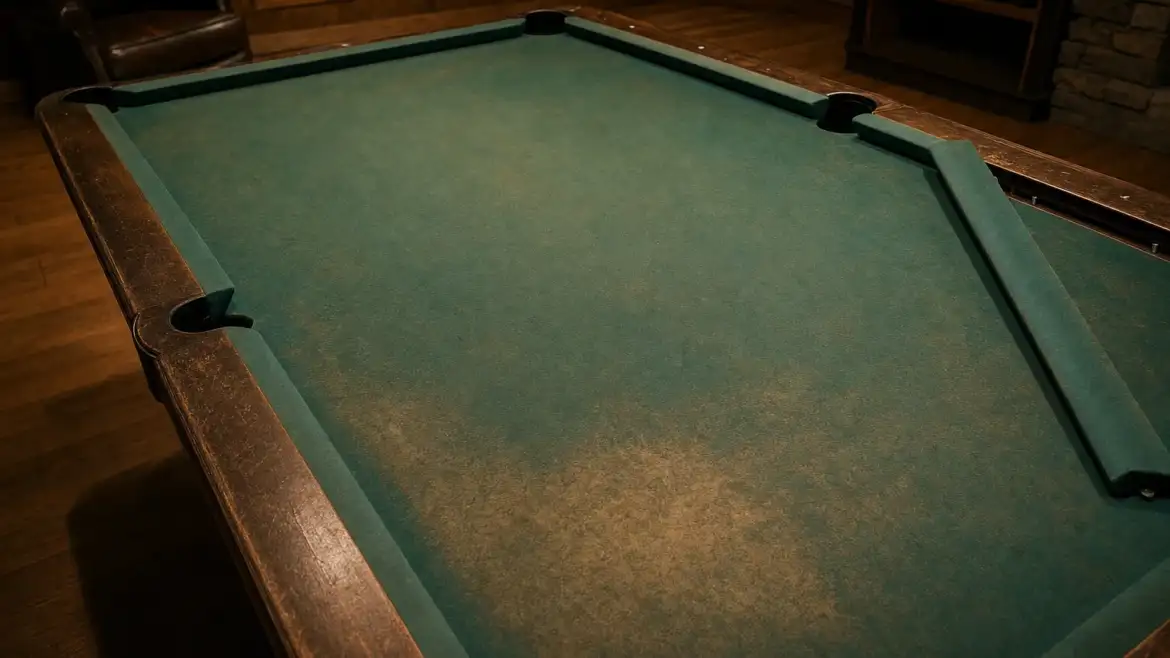
2. The Cloth Is Worn, Torn, or Discolored
Pool table cloth takes a lot of abuse. Chalk buildup, friction from repeated shots, pet hair, spilled drinks, and general age all degrade the cloth over time. Signs that the cloth needs replacing include:
- Visible thin spots or bare patches where the fibers have worn through
- Pilling or fuzziness that slows ball speed and affects spin response
- Tears or burns that catch on the ball or change its path
- Permanent stains that cleaning cannot remove
- Fading or color inconsistency that signals the cloth is past its useful life
New cloth makes a real difference, both in how the table plays and how it looks. Replacing pool table cloth is one of the most common services requested, and it transforms the playing experience quickly. A skilled technician stretches and staples the cloth correctly so there are no wrinkles or loose areas that could affect ball roll.
3. The Rails and Cushions Are Dead or Inconsistent
Good cushions return the ball at a predictable angle with consistent speed. When cushions start to fail, that predictability disappears. You might notice:
- Rails that feel unusually hard or soft compared to normal
- Balls that die against the rail instead of bouncing cleanly
- Inconsistent rebound angles from one rail to another
- A hollow or slapping sound when the ball strikes the cushion
Cushion rubber degrades over time, especially when exposed to temperature swings or dry indoor air. Age alone will harden the rubber even if the table is barely used. Once the rubber loses its elasticity, no amount of adjusting the cloth over it will bring back proper rebound.
Cushion and bumper replacement is a specialized repair. The old rubber has to be removed, the rail surface cleaned and prepared, and new rubber bonded and trimmed precisely. Done right, it restores the table to like-new playing conditions.
4. The Pockets Are Loose, Torn, or Misaligned
Pockets take direct hits from balls every time someone sinks a shot. Over time, the leather or synthetic material stretches and tears. The mounting hardware can loosen, causing the pocket to shift out of position or rattle during play.
Loose pockets are more than an annoyance. A misaligned pocket opening affects how balls drop and can even cause balls to bounce back out on shots that should have gone in. Worn pocket leather looks bad and signals to guests that the table is not being maintained.
Pocket repair and replacement restores both function and appearance. It is usually a straightforward job when caught early, but if mounting hardware has been damaged or the rail has been stressed from repeated loose pocket movement, the repair becomes more involved.
5. The Table Has Visible Structural Damage
Sometimes the problem is more serious than cloth or cushions. Structural damage can include:
- Warped or cracked slate that creates a permanent high or low spot
- Cabinet damage from water, humidity, or impact
- Broken or missing leg components that affect stability
- Frame separation where the cabinet has come apart at the joints
Water and humidity damage are particularly common in Texas, where seasonal humidity swings are significant. Tables stored in garages or outbuildings, or that have been near flooding or plumbing leaks, are especially vulnerable.
This type of damage is worth taking seriously. A structurally compromised table cannot be leveled properly no matter how skilled the technician. In some cases the slate can be resurfaced or replaced. In others, full restoration work at a professional workshop is the right answer.
What to Do When You Notice a Problem
The smartest move is to get a professional evaluation before the problem gets worse. A qualified technician can inspect the table, identify what is actually wrong, and recommend the most cost-effective path forward.
DFW Billiard Professionals has been serving residential and commercial customers throughout the Dallas-Fort Worth area for over eight years. The team handles everything from leveling and cloth replacement to full structural restoration, with master level mechanics endorsed by industry authority Mark Gregory. The company operates both mobile service teams and a dedicated shop facility, which means no job is too simple or too involved.
For homeowners who want to skip the phone tag, DFW Billiard Professionals offers the only online estimator and scheduling tool in the region, so you can get accurate pricing and book service on your own schedule without waiting for a callback.
Whether you are in Dallas, Plano, Fort Worth, Frisco, Arlington, or any of the surrounding communities, a qualified technician can get your table back to playing the way it should.
FAQ
How often should a pool table be professionally serviced?
For tables that see regular use, most technicians recommend a cloth inspection every one to two years and a full leveling check any time the table is moved or the surrounding floor changes.
Can a warped slate be fixed without replacing the table?
In many cases, yes. Minor warping or seam issues can be corrected by a skilled technician. Severe cracks or breaks may require slate replacement, which a professional shop can evaluate properly.
Does moving a pool table always require re-leveling afterward?
Yes. Any time a table is relocated, it should be re-leveled at the new location. Even a short move within the same house can shift the slate seams enough to affect play.
A pool table is a real investment, and most problems that show up early are inexpensive to fix. The same problems ignored for a year or two rarely stay inexpensive. If your table is showing any of the signs above, reach out to a professional and find out what it actually takes to get it right.